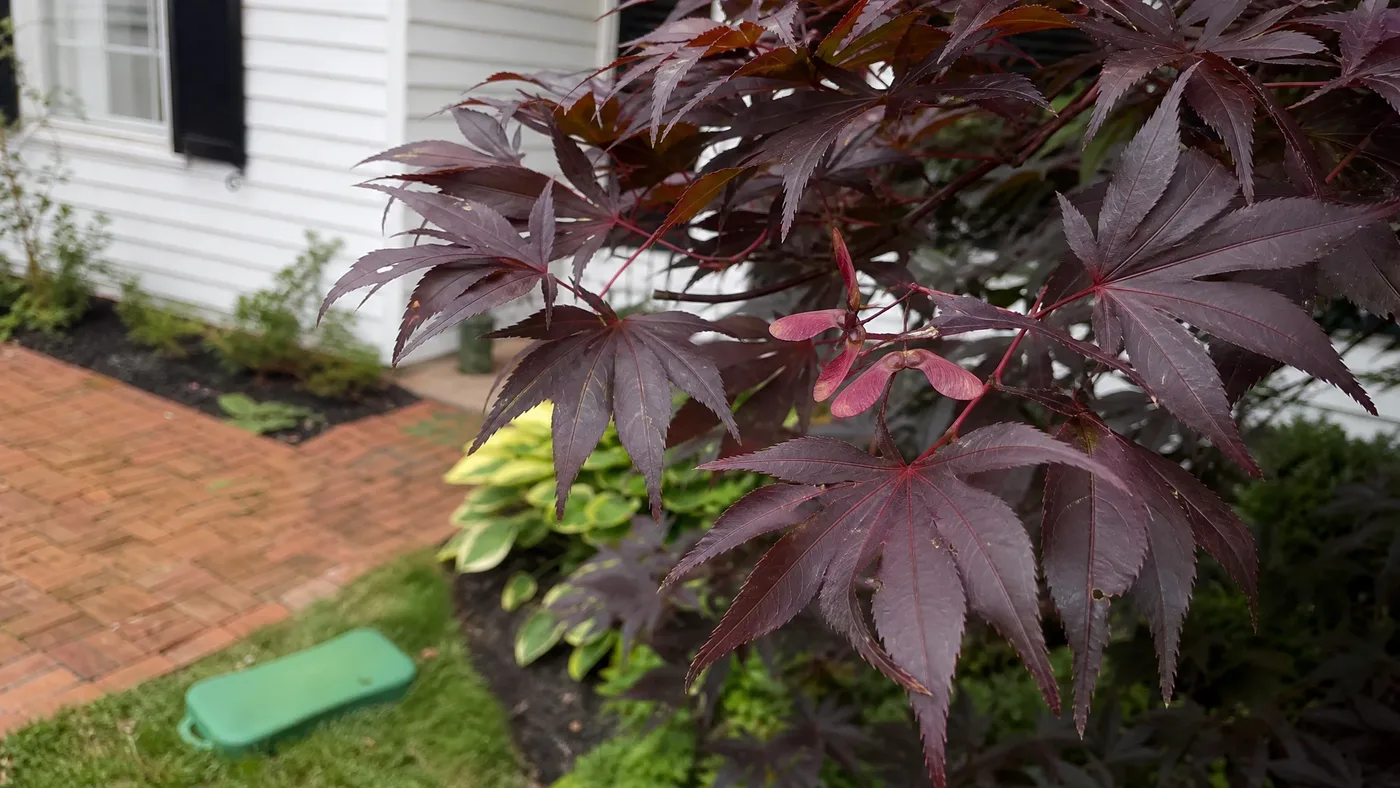
Bloodgood Japanese Maple Leaf Scorch and Brown, Curling Leaves
Picture a Bloodgood at four in the afternoon, when the sun drops low and rakes across the bed. The red-purple leaves go flat and glossy, almost silver along the edges where the glare lands, and the whole canopy looks lit from behind. Nothing is wrong yet. A few days later those margins turn tan, then brown and papery.
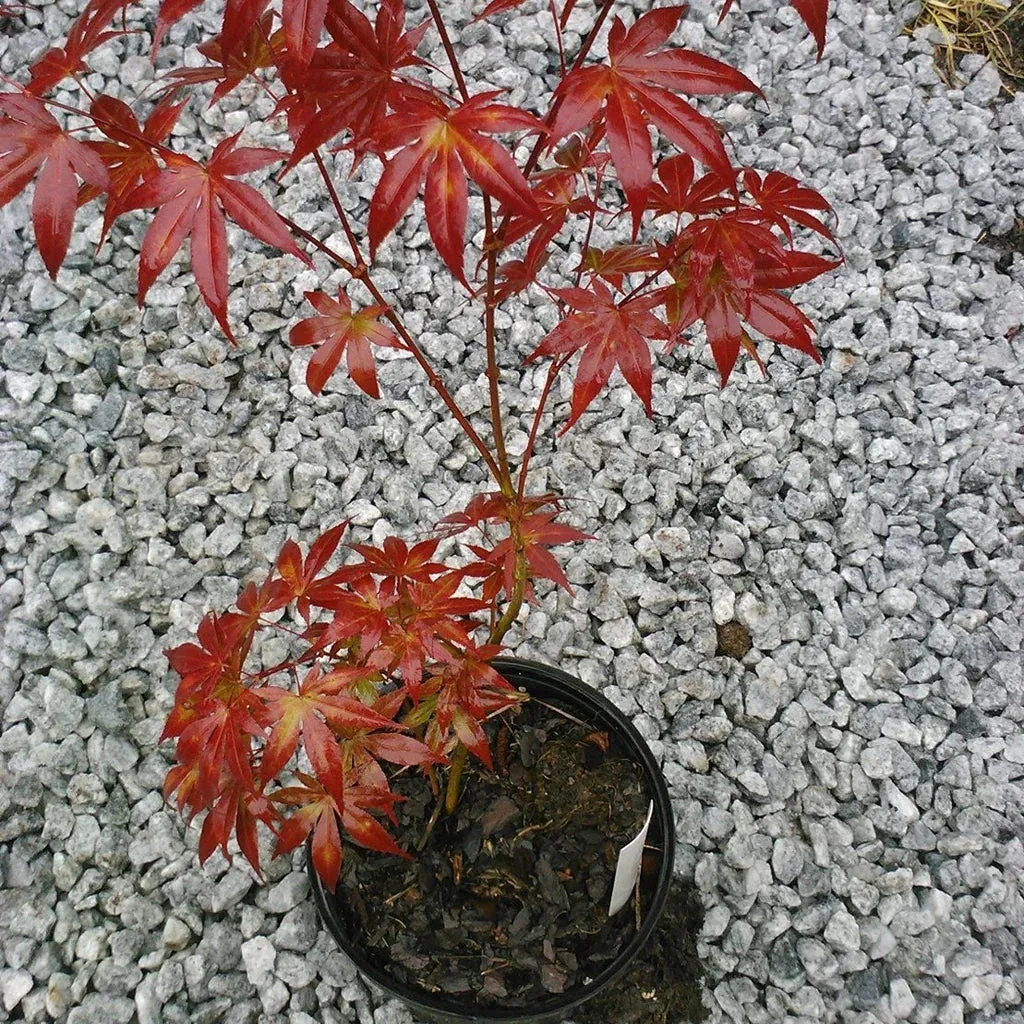
That glare is the warning, and it is far easier to answer than the damage that follows. Bloodgood carries thin, deep red-purple leaves with five to seven slender lobes, and those fine margins show stress before anything else on the tree does.
Below, you'll find out all about reading scorch and curl by yard, including a narrow side bed, a windy corner lot, a pot on a hot deck and a dry slope, with a recovery plan for each.
Bloodgood Japanese Maple in a Narrow Side Bed
A strip between a house wall and a fence looks like perfect shade in the morning. By midafternoon it can be the hottest ground on the property, and a Bloodgood planted there takes the full force of it.
Why Reflected Heat Burns the Leaf Edges
Start by working out where the light actually comes from, because the sun overhead is only half of the story.
Pale siding, masonry, a driveway or a bank of windows all throw light and heat back into the canopy. The margins of a Bloodgood leaf sit farthest from the veins and dry first, so the burn begins as a tan rim and creeps inward between the lobes. The cultivar suits full sun to partial shade, but a tight bed delivers the harshest kind of full sun, arriving from two directions after lunch.
Read the damage by its direction. Scorch on the side facing the wall or the west, with clean leaves on the shaded side, points to light and heat. Scorch spread evenly around the whole tree points to the roots, which we cover in the slope section below.
Recovery Steps for the Side Bed
Work through these in order, starting the day you see the first tan rim.
- Water slowly at the root zone in the morning, so the soil is moist before the heat peaks. Check a few inches down first, because a bed under an eave often stays drier than it looks.
- Stand shade cloth or lattice on the west side, set back from the canopy so air still moves through the branches.
- Mulch bare soil and cover bright pavers near the trunk so the ground stops radiating heat. Keep the mulch pulled back from the trunk itself.
- Leave scorched leaves on the tree. They still shade the buds and thin branches beneath them.
- Wait until the next spring's leaf-out before you cut anything. Dead twigs will be obvious by then.
One of the most common questions we get is whether a half-brown Bloodgood will leaf out again. In most cases it does, because scorch burns the leaves and leaves the wood alone. If the bed can never be shaded in the afternoon, move the tree in the dormant season to a spot that can. Our Bloodgood light requirements guide shows what a better site looks like.
The Windy Corner Lot and Its Bloodgood Japanese Maple
A corner lot funnels air along two streets and across the yard at once. Wind does its damage to a Bloodgood quietly, and it often gets blamed on the sun.
How Wind Strips Thin Red Leaves
Wind pulls moisture out of a leaf faster than the roots can send it up, and the thinnest tissue pays first.
On a Bloodgood that means the slender lobe tips and the margins. They crisp, curl inward and sometimes tear between the lobes, usually on the windward side only. NC State Extension says to plant in dappled shade and protect the tree from drying winds, and notes the species may suffer leaf scorch with excess sun, wind, or drought. Young spring leaves are the most exposed, since the same source calls them frost sensitive and not drought tolerant.
Frost deserves a quick check. A late cold night blackens a whole flush of new growth at once, while wind scorch builds slowly on the exposed side over days. In our rows, the plants at the windward end of a block always show it first, long before the sheltered ones.
Build a Screen That Filters Wind
The goal is to slow the air, not stop it, so choose a screen that lets some wind through.
A solid fence tends to throw turbulence over the top and into the tree. A slatted fence, lattice, a row of evergreen shrubs or burlap stretched between stakes does better. Set it on the windward side, a few feet from the canopy, and make it taller than the tree for as long as the tree is young. Burlap works as a quick fix this season while shrubs grow in.
Adjust Watering for Wind
Windy sites dry the soil surface and the leaves together, so the watering schedule has to shift.
Water more often rather than in bigger doses, and always soak slowly so the water reaches the roots. Check the soil a few inches down before each watering, since the surface can look dry while the root zone is fine. Our Bloodgood watering guide covers the full routine. Leaves that have already curled will not flatten again, so judge your progress by the new growth.
A Hot Deck and a Potted Bloodgood Japanese Maple
A Bloodgood in a pot on a sunny deck gets heat from above and from below. Deck boards and dark containers hold warmth long after the sun moves on.
Root-Zone Heat in a Container
The roots of a potted tree have nowhere to retreat, so the pot's sun-facing wall matters as much as the canopy.
A dark container baking against warm boards heats the soil from the sides and bottom, and the roots stop supplying the leaves. The tell is a tree that wilts and curls by early afternoon even though the soil was damp that morning, followed by brown edges a few days later. The container growing guide covers pot choice and soil mix in detail.
Move or Shade the Pot
You have three options, and the first is nearly always the best one.
Move it. Slide the pot to the east side of the deck or under an eave, where it gets morning sun and afternoon relief. Lift the pot onto feet so air passes beneath it and the boards stop heating the base.
Shade the pot, not just the tree. Place a larger container around it, or stand lattice or a shade panel on the hot side. Keep the foliage in light, since Bloodgood color is best in partial shade and a fully shaded tree can look dull.
Group it. Set the pot among other pots so the group shades the container walls.
Recover the Scorched Potted Tree
Once the pot is somewhere cooler, the recovery is slow and quiet.
Water until it runs freely from the drainage holes, and check again before watering after that, because a pot dries faster than a bed. Skip repotting and fertilizer until the tree has rested, and leave the damaged leaves in place. We often see decks where the tree is fine but the pot position never changes, and the browning repeats every July.
The Dry Slope With Thirsty Roots
A sloped bed sheds water. Rain and irrigation run past the roots, and the upper part of the slope stays driest.
Why a Slope Starves the Roots
Drought scorch looks different from sun scorch, and the pattern gives it away.
Instead of one burned side, the browning starts at the tips and margins all over the canopy. Leaves curl upward, then drop, often in late summer. Scorch on this cultivar can be caused by lack of soil moisture or excessive exposure. UF/IFAS rates the species' drought tolerance as moderate, which is a poor fit for a bank of fast-draining soil. Our drought and heat tolerance guide goes deeper into the limits.
A Recovery Plan for the Slope
The fix is to hold water where the roots are, then give the tree a steady supply.
Shape a shallow basin on the downhill side of the trunk so water pools instead of running off. Soak the basin slowly with a hose at a trickle, and repeat as the soil dries. Cover the ground with mulch to slow evaporation. Do not feed a stressed tree, because the focus belongs on moisture. Expect the tree to drop its damaged leaves and rest, then push new growth the next spring.
When It Is the Roots, Not the Water
Sometimes the slope is wet enough and the tree still wilts. That is a different problem.
This cultivar may be susceptible to Verticillium wilt, acer leaf scorch and honey fungus. If the soil is moist and the leaves still droop, or one branch dies back in summer while the others stay green, stop adding water. Adding more will not help, and an extension service or a certified arborist can examine the roots and wood.
Reading the Light Across All Four Yards
Four yards, four different problems, and one habit that solves most of them: read the tree before reaching for the hose.
What Each Yard Shows First
This table sets the visible clue beside the likely cause and the first move.
| Yard | What the leaves show | First move |
|---|---|---|
| Narrow side bed | Tan rim on the side facing the wall | Shade the west side and cool the ground |
| Windy corner | Curled, torn lobes on the windward side | Add a permeable screen and water often |
| Hot deck | Midday curl even with damp soil | Move or shade the pot itself |
| Dry slope | Even browning and curling, leaf drop | Build a basin and soak slowly |
Light and Shelter Come First
The common thread is afternoon exposure. Morning sun is gentle, and the afternoon hours do the harm.
Common advice says a red maple needs full sun for good color. What we tell customers is the opposite: Bloodgood leaf color is best in partial shade, though full sun can be tolerated. Give it bright morning light and shelter after lunch, from walls, wind and heat alike. For other symptoms, our common problems guide gives each cause a short paragraph.
Recovery Takes a Full Season
A burned leaf never turns green or red again, so recovery is measured in new growth.
Expect the tree to hold its damaged leaves or drop them early, then leaf out normally the next spring if you have fixed the cause. Resist heavy pruning in the meantime. Judge the tree by the leaves that emerge, not by the ones already scorched.
Your Bloodgood Japanese Maple Next August
Fix the exposure, keep the roots evenly moist, and a Bloodgood recovers more often than not. Scorch is a signal about site, and every case above comes down to light, wind or water reaching the leaf margins unevenly.
Bloodgood Japanese Maple
Nursery-grown Bloodgood Japanese Maple in sizes from QT Container, shipped to your door.
From $49.49
Shop Now →Next summer, watch the edges. If they stay soft and the deep red-purple color holds through August, you got the site right. We are a small business. Every Bloodgood we ship is potted with a healthy root system and packed to arrive ready to plant, so a good site is the only job left to you.