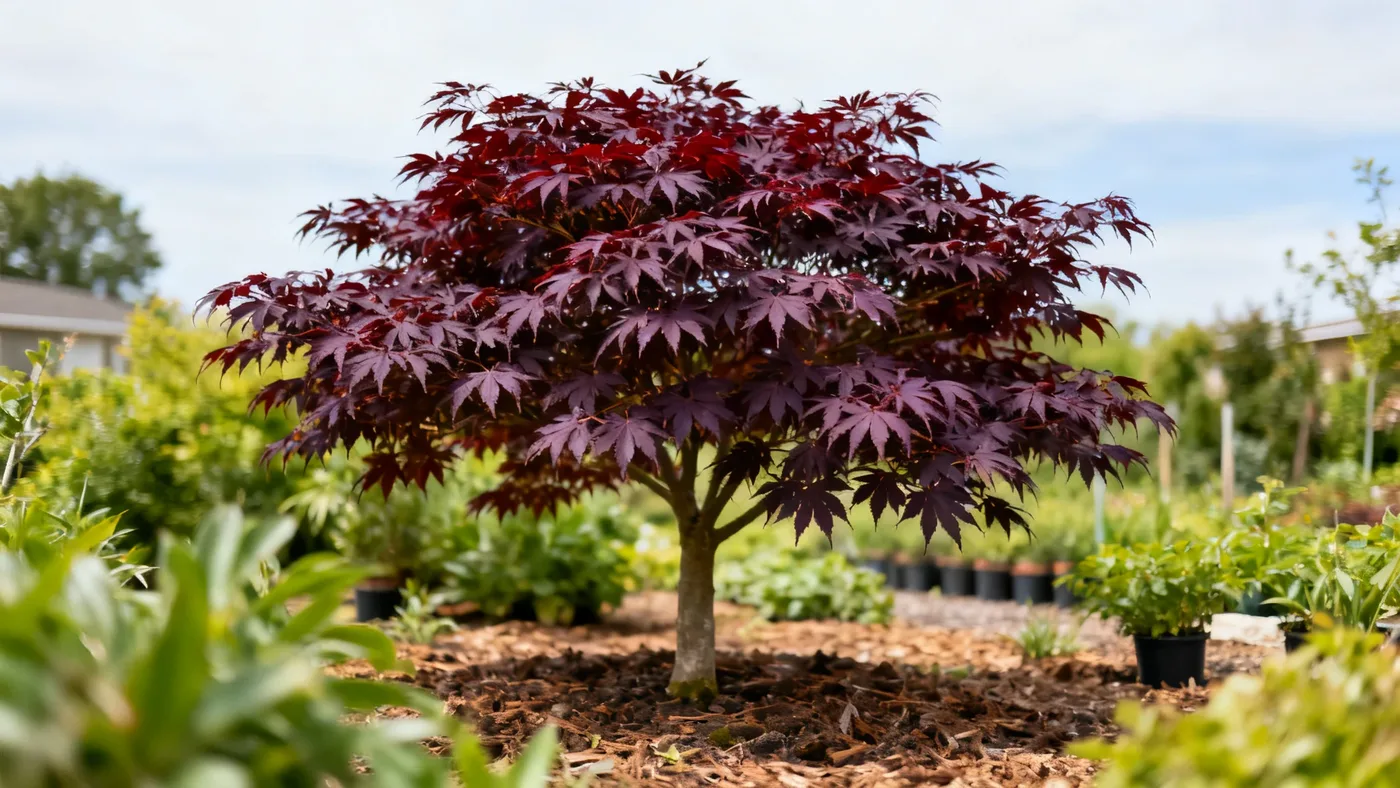
Watering Bloodgood Japanese Maple: A Complete How-To Guide
Watering is one of the most important aspects of keeping your Bloodgood Japanese Maple healthy and vibrant. Getting it right means the difference between a tree with deep burgundy foliage and one that struggles with leaf scorch or root rot. This guide walks you through exactly how to water bloodgood japanese maple at every stage, from the day you plant it through its mature years.
Understanding Your Bloodgood Japanese Maple's Water Needs
Bloodgood Japanese Maple requires moderate, consistent moisture to thrive. Unlike drought-tolerant species, this cultivar is not drought tolerant and needs regular water, especially during its first growing season. However, it is equally sensitive to waterlogged soil and poor drainage, which can lead to root rot. The goal is consistent moisture in well-drained soil, not wet soil. Established trees can tolerate brief dry spells, but don't count on that as routine.
Materials and Tools You'll Need
Before you start watering, gather these items:
- A hose with an adjustable nozzle or soaker hose
- A soil moisture meter or simple finger test method
- Organic mulch (2 to 3 inches)
- A bucket or rain gauge to measure water depth
- Work gloves
- A timer for automated watering systems (optional)
How to Water Your Bloodgood Japanese Maple: Step-by-Step
For Newly Planted Trees (First Year)
Newly planted trees need frequent watering because their roots have not yet spread into surrounding soil. Follow these steps:
- Water immediately after planting. Water deeply at the base to settle the soil and eliminate air pockets around the roots. Use a gentle stream to avoid washing soil away from the planting hole.
- Water every 2 to 3 days for the first 4 weeks. During the critical establishment period, check the soil at 3 to 4 inches deep. If it feels dry, water. This is especially important if you planted in late spring or early summer.
- Water at the base, not on the foliage. Direct water to the soil around the tree's root zone. Wet leaves can promote fungal diseases and leaf spotting. Keep water off the trunk as well.
- Use a soaker hose or drip irrigation. A soaker hose delivers water slowly and directly to the roots where it matters most. This reduces water waste and keeps foliage dry.
- Water deeply to moisten soil 3 to 4 inches deep. Slow, deep watering encourages roots to grow deeper into surrounding soil rather than staying near the surface.
- Gradually reduce frequency after 4 to 6 weeks. As the tree establishes, space waterings to every 3 to 5 days. By the end of the first growing season, your tree should need water once or twice per week during the active growing season.
For Established Trees (Year 2 and Beyond)
- Check soil moisture before each watering. Stick your finger 2 to 3 inches into the soil. If it feels moist, wait another day or two. If it feels dry at that depth, it is time to water.
- Water once or twice per week during the growing season. Most established Bloodgood Japanese Maples need water once per week during spring and summer under normal conditions. During hot, dry spells, increase to twice per week.
- Water until the soil is moist 3 to 4 inches deep. Apply water slowly to the base until the soil around the tree feels moist to that depth. This thorough watering is more effective than frequent light watering.
- Water in early morning or late evening. These times minimize evaporation and allow the tree to absorb moisture efficiently. Morning watering is preferable because foliage dries quickly afterward.
- Reduce watering as fall arrives. As temperatures drop and growth slows, your tree needs less water. Once leaves drop in fall, water much less frequently, typically only during extended dry spells.
Watering Schedule by Season
| Season | Frequency | Notes |
|---|---|---|
| Spring | Once or twice per week | Increase frequency if rainfall is sparse. New growth requires consistent moisture. |
| Summer | Once or twice per week (more during heat waves) | Watch for leaf scorch. Afternoon shade is recommended in hot southern climates to prevent scorch. Mulch helps retain moisture. |
| Fall | Once per week or as needed | Reduce frequency as temperatures drop. Rainfall often increases in fall; adjust accordingly. |
| Winter | Rarely, only during dry spells | The dormant tree needs minimal water. In colder zones, avoid late-fall or winter watering to prevent frost damage to new roots. |
Signs of Overwatering Japanese Maple
Overwatering is one of the most common mistakes with Japanese maples. Watch for these warning signs:
- Yellowing leaves: Leaves that turn yellow or pale, especially if they feel soft or mushy, often signal waterlogged soil.
- Wilting despite moist soil: Roots in waterlogged soil cannot absorb oxygen, so the tree wilts even though moisture is present.
- Soft, black, or mushy bark at the base: This indicates root rot, which develops when poorly drained soil stays too wet.
- Fungal growth or mold on the soil surface: Excessive moisture creates conditions for fungal problems.
- Stunted or stopped growth: An overwatered tree stops growing because roots cannot function properly.
Signs of Underwatering
Conversely, insufficient water causes distinct problems:
- Leaf scorch: Brown, crispy leaf margins and tips, especially on new growth, indicate insufficient water combined with sun or heat stress.
- Leaves curling or drooping: The tree may wilt even though the soil is not waterlogged.
- Delayed or reduced growth: Without adequate water, growth slows or stops.
- Premature leaf drop: The tree may shed leaves early if stressed by drought.
Watering Tips by Zone
Bloodgood Japanese Maple is hardy in USDA zones 5 to 8, with some sources extending to zone 9 if afternoon shade is provided. Gardeners in warmer zones (8 to 9) should prioritize afternoon shade to prevent leaf scorch, especially during hot summers. This is not optional in those zones; it is recommended. Trees in zones 5 and 6 should be protected from excessive winter moisture, which can damage new roots. Zone 7 and 8 gardeners should focus on consistent summer moisture during dry spells. No matter your zone, mulch is your ally.
For comprehensive care beyond watering, see the complete Bloodgood Japanese Maple care guide.
Common Watering Mistakes to Avoid
Watering on a fixed schedule without checking soil: Your tree's water needs change with weather, season, and soil type. Always check the soil before watering. Giving water when soil is already moist does more harm than good.
Planting in poorly drained soil: Perfect watering technique cannot compensate for clay-heavy, compacted, or poorly drained soil. Bloodgood Japanese Maple demands well-drained, rich loam. If your native soil is heavy clay, amend it with compost and peat moss before planting.
Using overhead sprinklers: Watering from above wets the foliage, which promotes fungal diseases. A soaker hose or drip line at the base is far more effective and efficient.
Watering in late evening in humid climates: In regions with high humidity, evening watering can leave foliage damp overnight, increasing disease risk. Morning watering is better.
Neglecting mulch: A 2 to 3 inch layer of organic mulch around the tree (kept a few inches away from the trunk) helps retain soil moisture, regulates soil temperature, and reduces watering frequency significantly.
Newly Planted vs. Established Trees: Key Differences
Newly planted trees: These are the most critical. A young Bloodgood Japanese Maple has not yet developed a deep root system and cannot access water stored deeper in the soil. Frequent, consistent watering during the first growing season is essential. Expect to water more often than you might guess.
Established trees: Once a tree reaches year 2 or 3 and has developed a deeper root system, it becomes more self-sufficient. Established trees tolerate brief dry spells better than newly planted ones, but they still require regular moisture during the growing season. The difference is frequency, not depth: you water less often but still deeply.
Expected Results of Proper Watering
When you follow a consistent watering routine, your Bloodgood Japanese Maple will display these signs of good health:
- Deep reddish-purple to burgundy foliage throughout the growing season that holds color better than many red Japanese maples
- Steady growth of roughly 12 to 18 inches per year
- No leaf scorch or spotting
- Firm, vibrant leaves, not drooping or curled
- Strong new growth in spring
- A full, well-structured canopy as the tree matures
A nursery-grown Bloodgood Japanese Maple typically reaches a landscape-usable size of 6 to 8 feet tall in about 5 to 7 years. Proper watering during this period sets the foundation for decades of healthy growth. To learn more about how large this tree grows, see how big a Bloodgood Japanese Maple gets.
Quick Reference: Watering Checklist
| Task | Newly Planted (Year 1) | Established (Year 2+) |
|---|---|---|
| Watering frequency | Every 2-3 days for first 4 weeks, then 3-5 days | Once or twice per week during growing season |
| Soil moisture target | Moist 3-4 inches deep at all times | Moist 3-4 inches deep; check before watering |
| Best time of day | Early morning | Early morning |
| Delivery method | Soaker hose or drip at base | Soaker hose, drip, or hose with gentle spray |
| Mulch layer | Apply 2-3 inches after planting | Maintain 2-3 inches year-round |
| Winter watering | Minimal; stop before first frost | Water rarely; only during dry spells |
| Reduce frequency by | After 4-6 weeks | Fall arrival signals reduced needs |