Bloodgood Japanese Maple
A slow-growing red maple that rewards consistent care with brilliance
About Bloodgood Japanese Maple
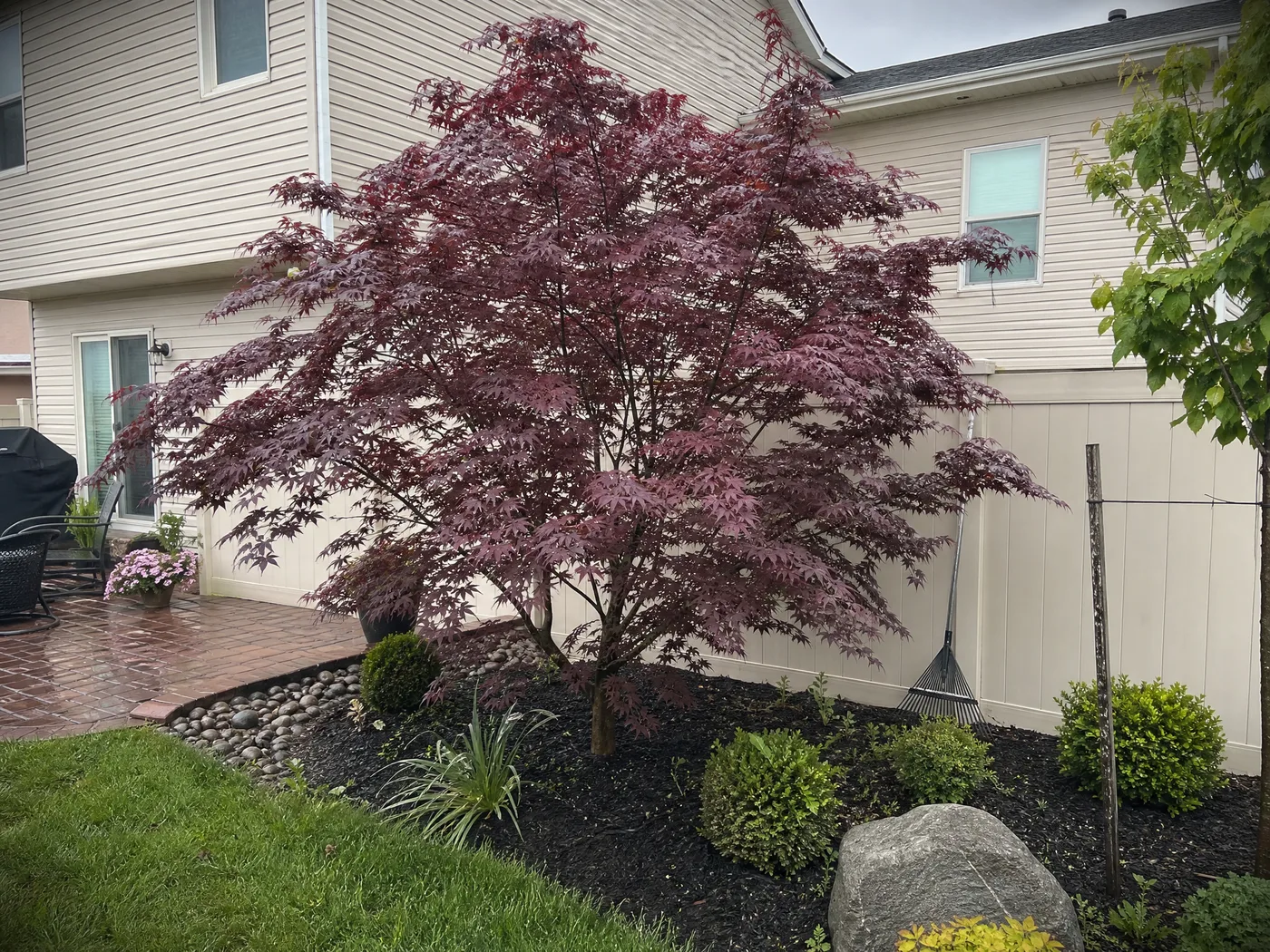
The Bloodgood Japanese Maple holds vivid crimson foliage from late spring through fall, keeping its color longer than most red-leafed trees. Its fine-textured, deeply lobed leaves create delicate silhouettes that anchor Japanese gardens, patio spaces, and smaller yards. Gardeners value this tree for its reliable color, graceful form, and slow maturity to 15-20 feet.
This guide walks you through planting your Bloodgood maple in the right zone and light conditions, keeping it consistently watered during the critical growing season, and troubleshooting common issues like leaf scorch. We cover everything from selecting a healthy specimen to seasonal care routines that help your tree thrive and deepen its color for decades.
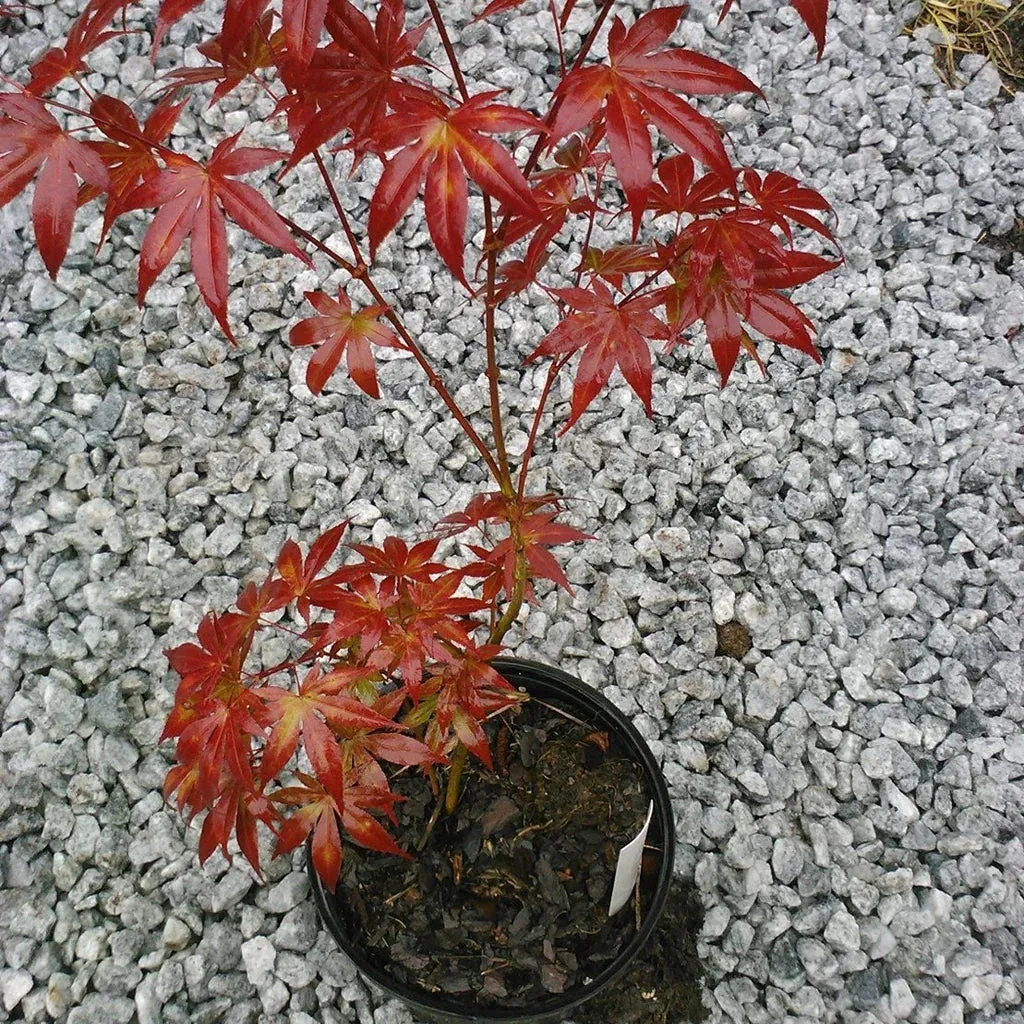
Buy Bloodgood Japanese Maple
Nursery-grown plants shipped in their container, with our planting and care guides to go with them.
From $49.49
Sizes: QT Container
Shop Bloodgood Japanese MapleQuick facts
- USDA zones
- 5-8, some sources extend to 9 with afternoon shade
- Mature height
- 15-20 ft (some sources say up to 20-25 ft over many decades)
- Mature width
- 15-20 ft
- Sun
- full sun to part shade; afternoon shade recommended in hot southern climates to prevent le
- Water
- moderate, consistent moisture; not drought tolerant once established without regular water
- Bloom time
- mid-spring (April-May)
- Bloom color
- small reddish-purple flowers, not showy
- Growth rate
- slow to moderate, roughly 12-18 inches per year
- Deer resistance
- moderate to good (occasionally browsed, not a preferred food)
- Plant type
- deciduous tree (small ornamental)
- One of the most popular red-leaved Japanese maples for holding color all summer
- Reaches about 15-20 ft tall and wide at maturity
- Hardy in USDA zones 5-8
- Slow to moderate grower, roughly 12-18 in. per year
- Prefers well-drained soil and some afternoon shade in hot climates
- Brilliant crimson fall color
- Not known to be toxic to pets
Growing guides
 Core guide
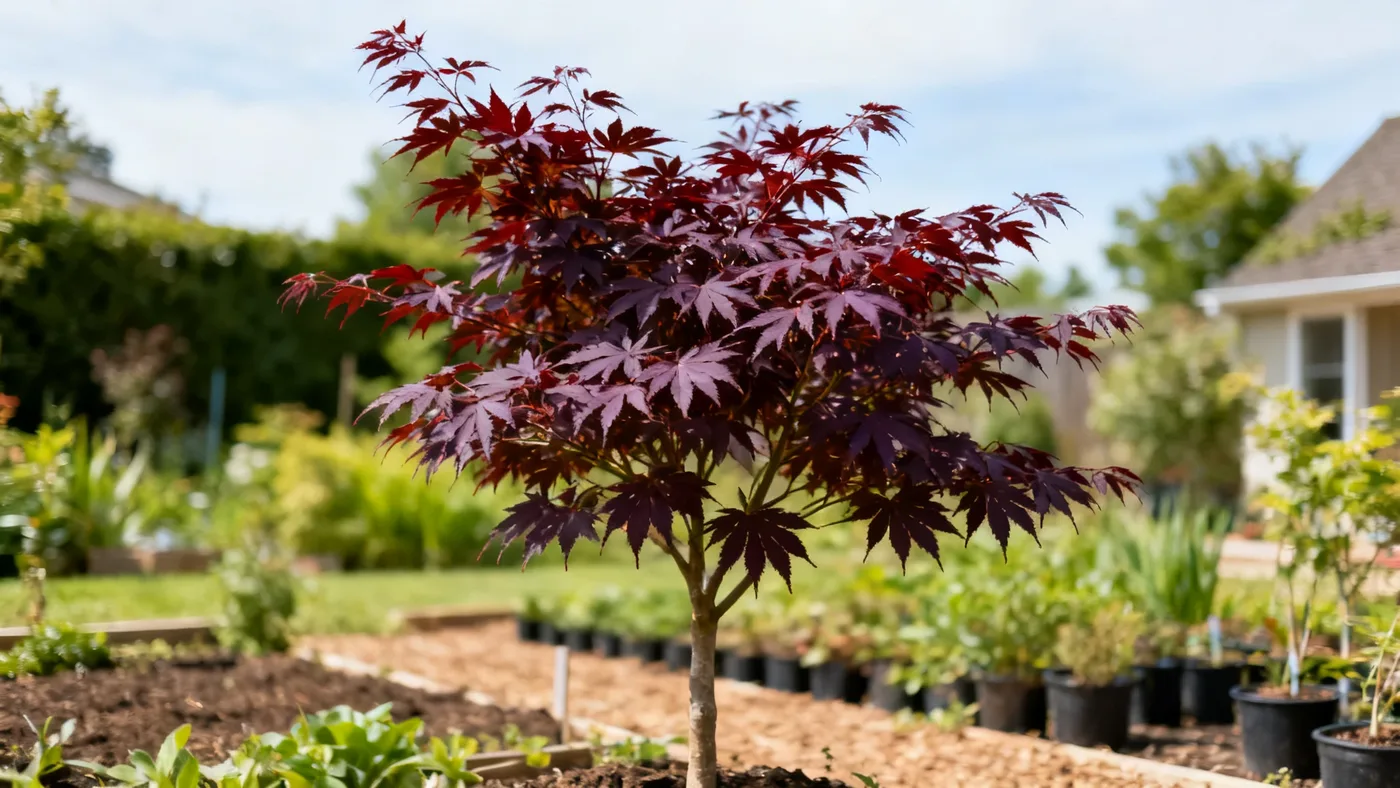
The Complete Bloodgood Japanese Maple Care Guide
Learn complete care for Bloodgood Japanese Maple: planting, watering, sunlight, pruning, and solutions to common problems.
 Core guide
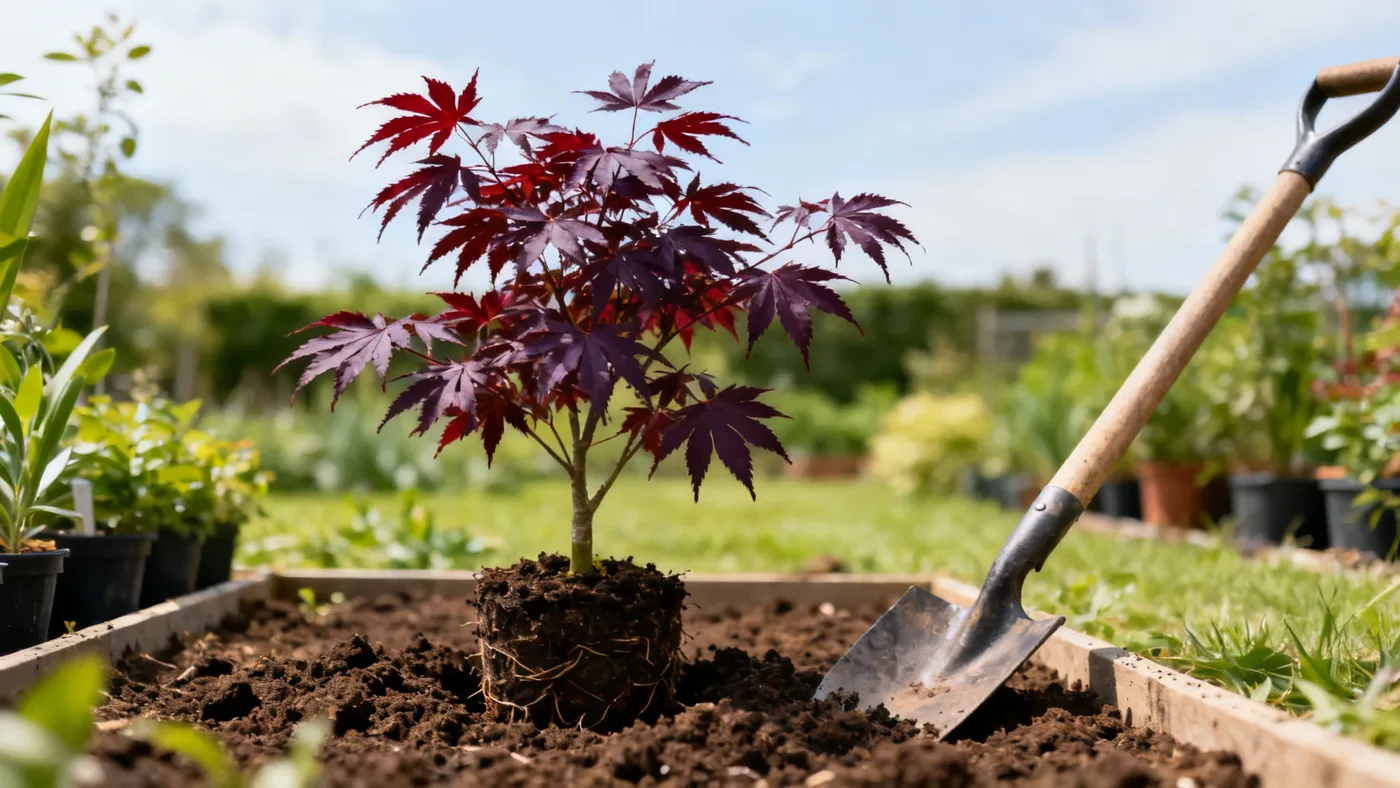
How to Plant a Bloodgood Japanese Maple the Right Way
Plant Bloodgood Japanese Maple correctly with our step-by-step guide. Learn timing, soil prep, spacing, and how to avoid common mistakes.
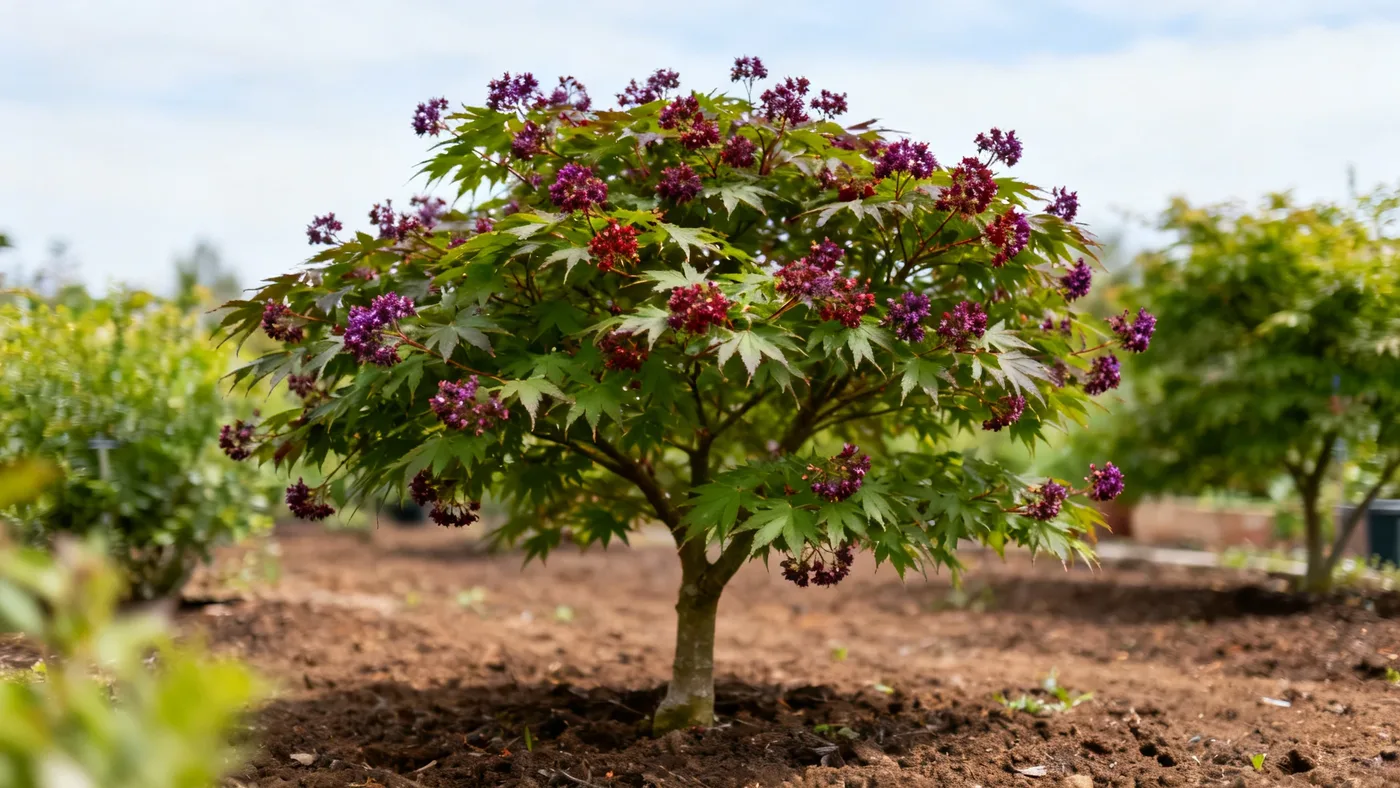 Plant specific
Bloodgood Japanese Maple Fall Color: What to Expect Each Year
Learn when Bloodgood Japanese Maple changes to crimson-red in fall, peak viewing times by zone, and what affects color intensity each year.
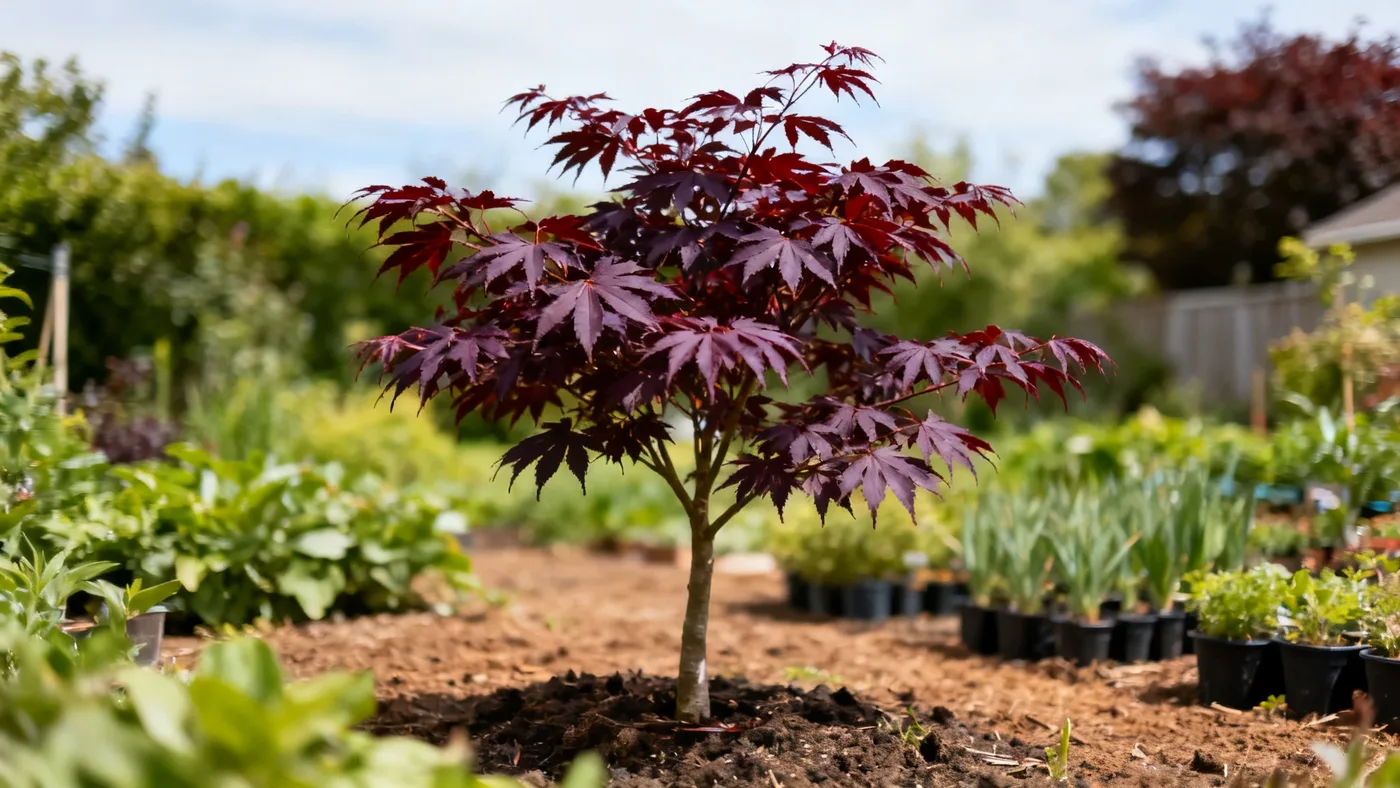 Core guide
What Hardiness Zones Does Bloodgood Japanese Maple Grow In?
Bloodgood Japanese Maple grows in USDA zones 5-8, with zone 9 possible with afternoon shade. Learn cold hardiness, heat tolerance, and zone-
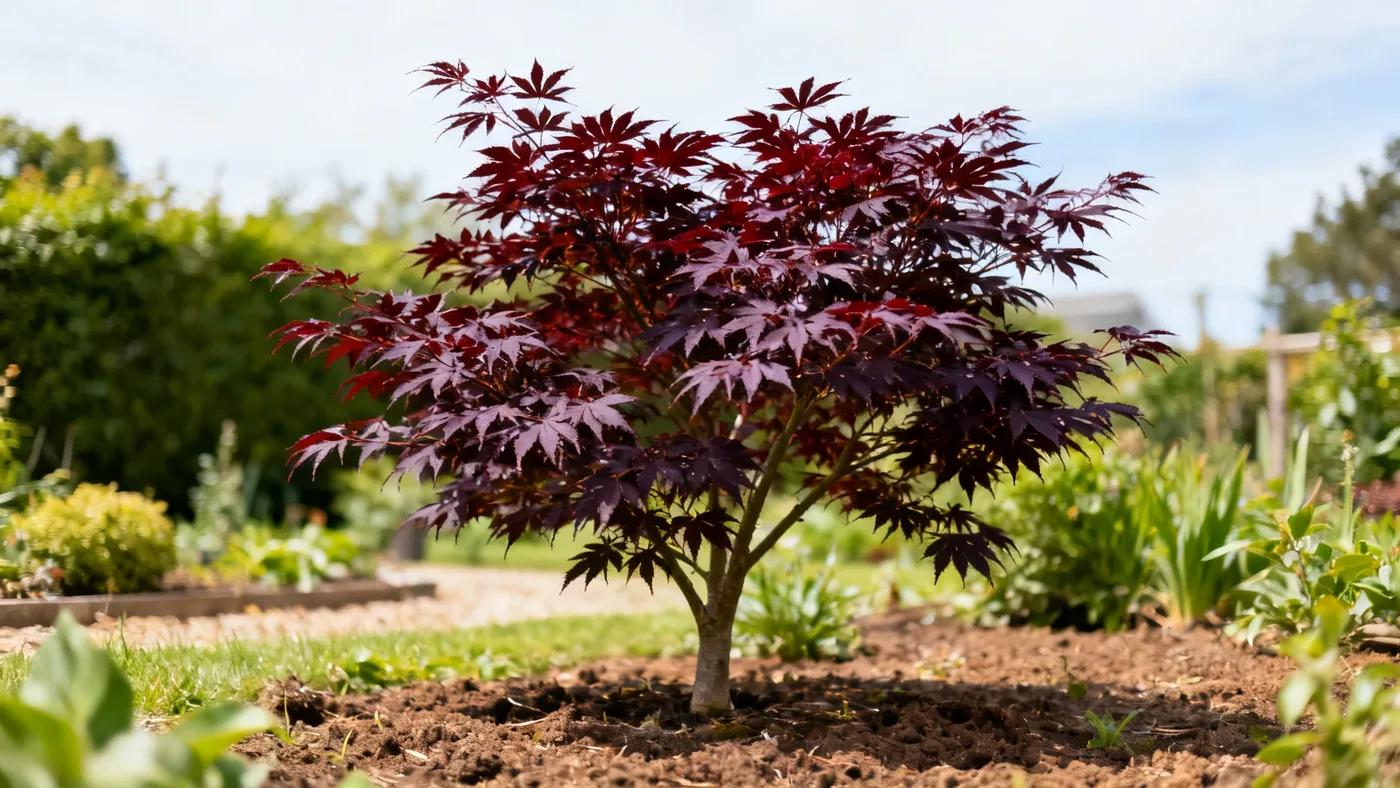 Core guide
How Big Does a Bloodgood Japanese Maple Tree Get?
FAQ: How big does Bloodgood Japanese Maple get? Learn mature size, growth rate, spacing, and timeline for this ornamental tree.
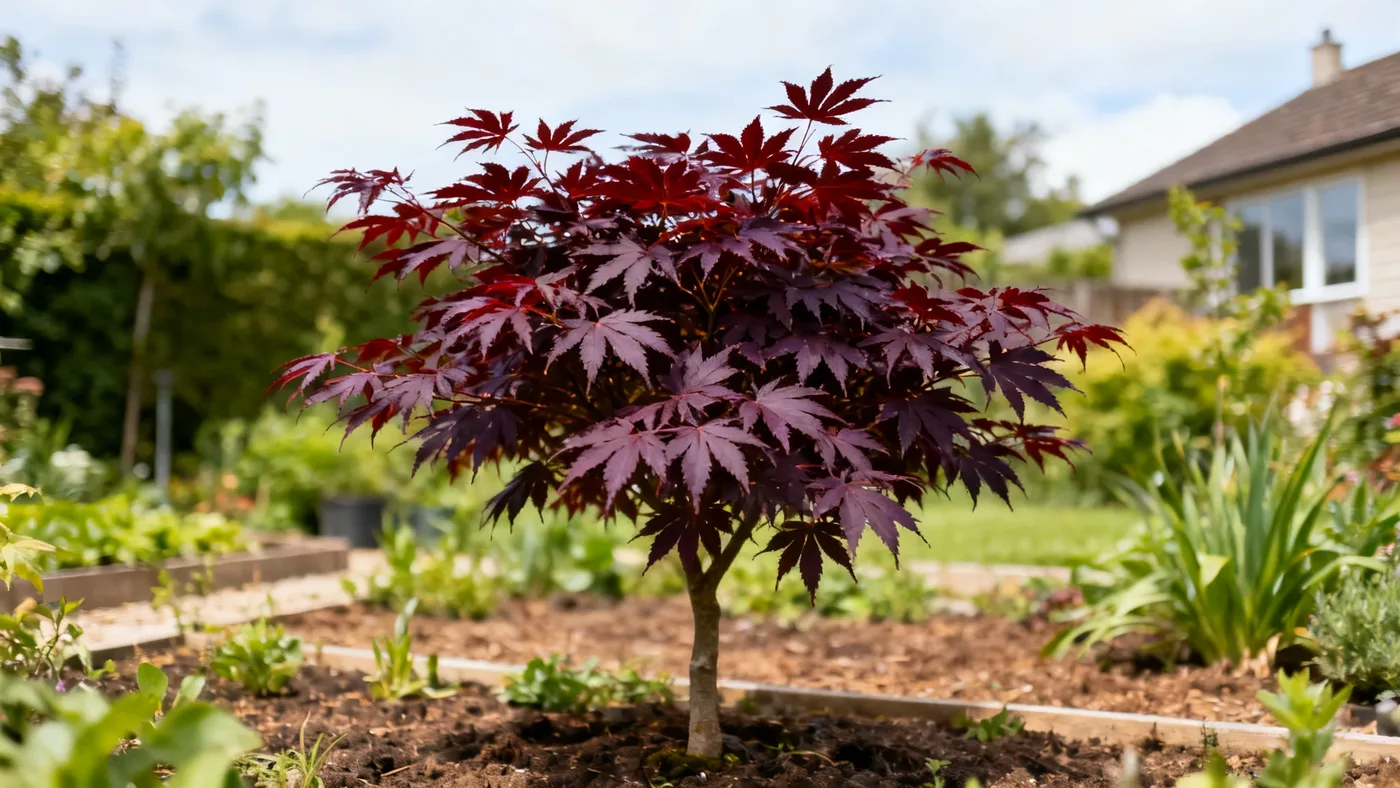 Core guide
Sun or Shade? Bloodgood Japanese Maple Light Requirements
How much sun does Bloodgood Japanese Maple need? Get specific guidance on full sun vs. shade, leaf scorch prevention, and light conditions b
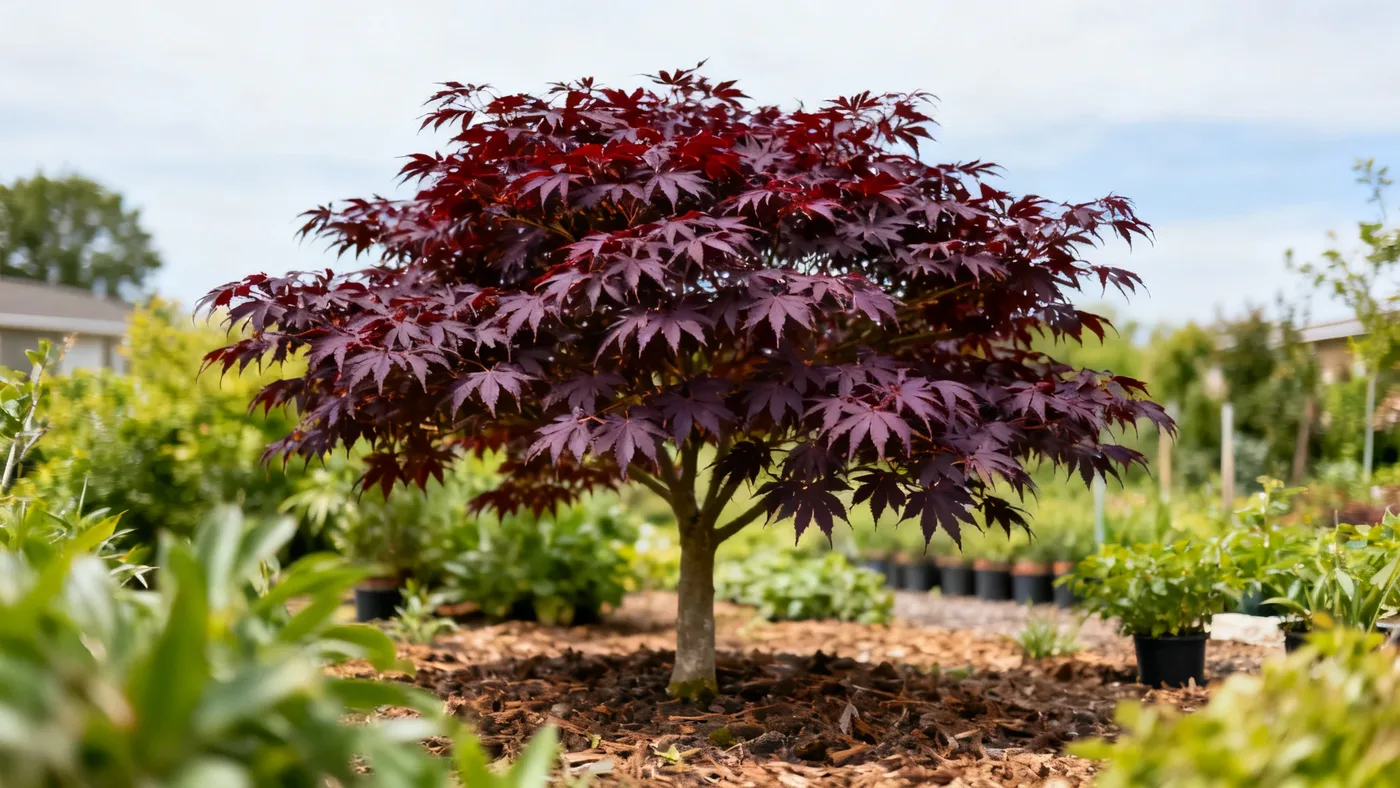 Core guide
Watering Bloodgood Japanese Maple: A Complete How-To Guide
Learn how to water Bloodgood Japanese Maple properly. Step-by-step watering guide with schedules, signs of problems, and seasonal tips.
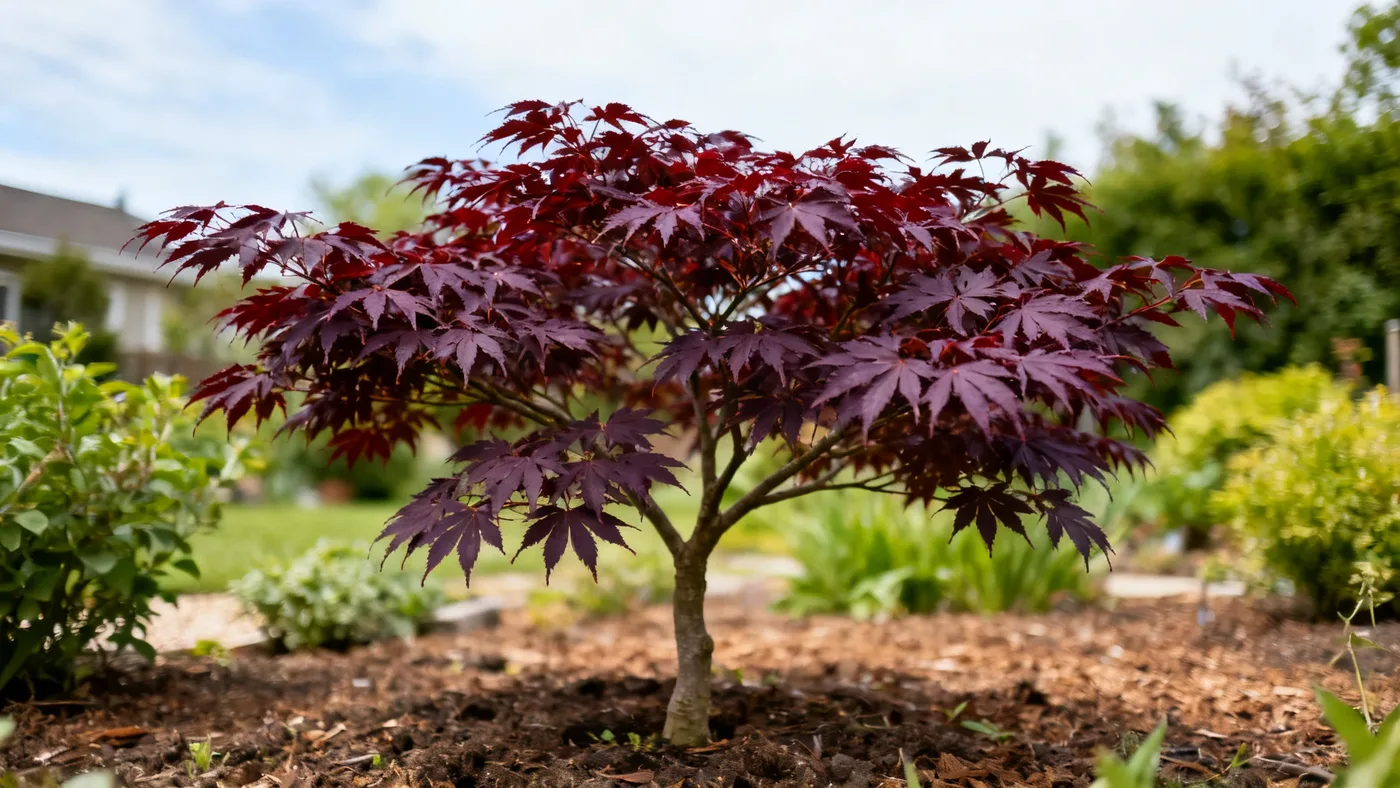 Core guide
Best Soil for Bloodgood Japanese Maple: pH and Drainage Tips
Grow a thriving Bloodgood Japanese Maple: master soil pH (5.5-6.5), drainage, and amendment strategies for healthy roots and strong foliage.
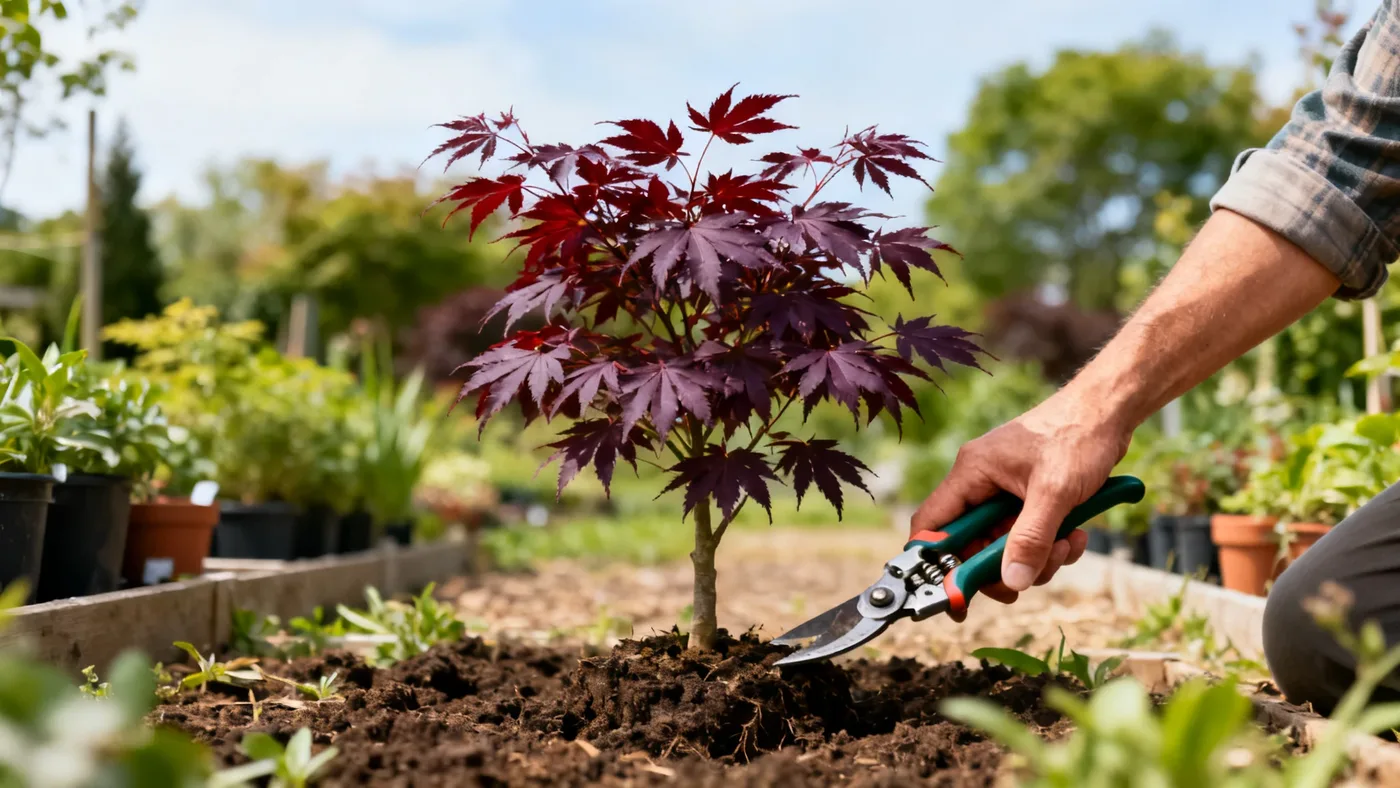 Core guide
When and How to Prune a Bloodgood Japanese Maple Tree
Step-by-step guide to pruning Bloodgood Japanese Maple: timing, tools, techniques, and common mistakes to avoid for healthy growth.
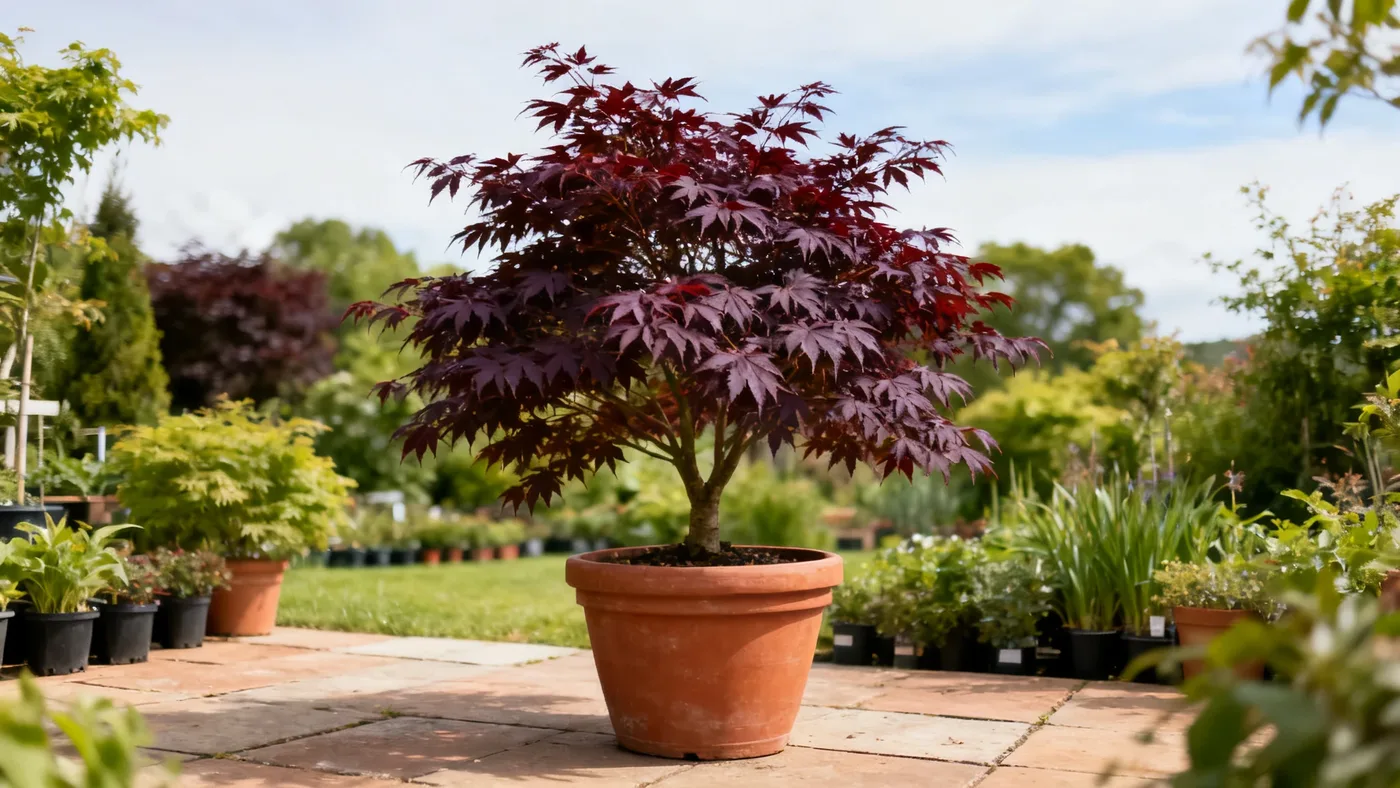 Core guide
Buying a Bloodgood Japanese Maple: Container Sizes Explained
Learn what size Bloodgood Japanese Maple to buy. Compare 3-gallon vs 7-gallon containers, find quality indicators, and pick the best startin
 Core guide
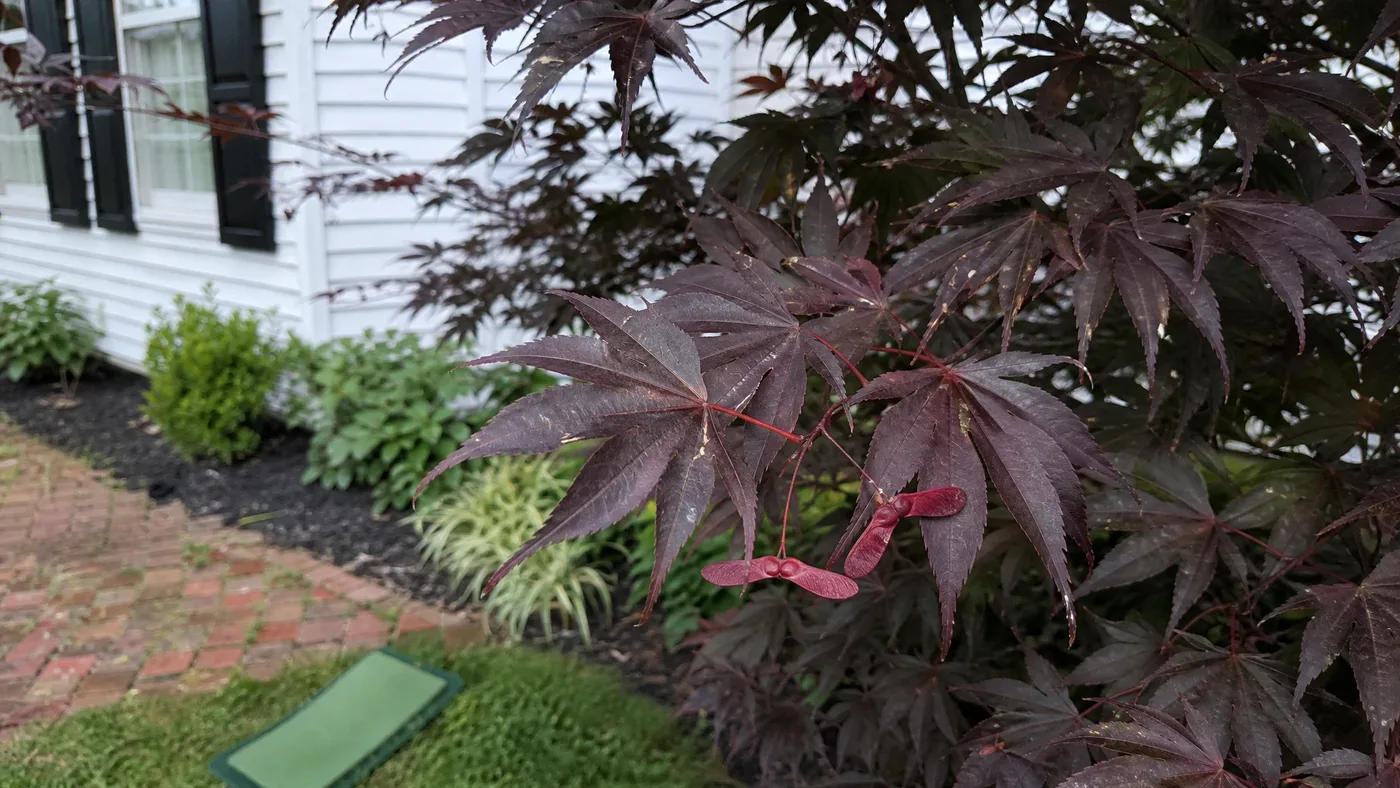
8 Common Bloodgood Japanese Maple Problems and How to Fix Them
Bloodgood Japanese Maple problems: leaf scorch, pests, root rot, and diseases. Diagnose and fix 8 common issues with practical solutions.
 Plant specific
Bloodgood vs Crimson Queen Japanese Maple: Which One to Plant?
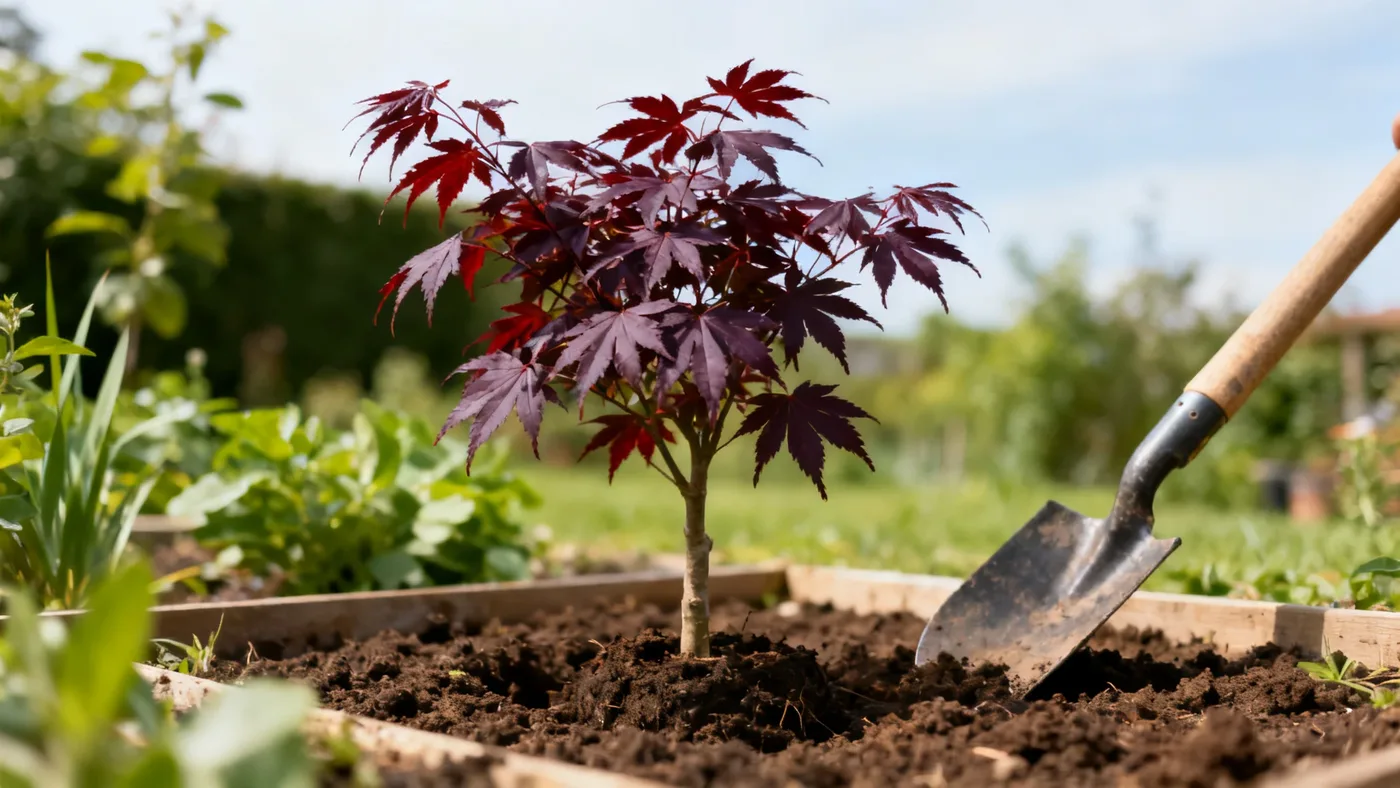
Bloodgood vs Crimson Queen Japanese Maple: compare upright vs weeping forms, foliage, size, and growing needs to choose the right cultivar.
Bloodgood Japanese Maple questions
Does Bloodgood Japanese Maple need full sun?
It tolerates full sun in cooler climates but benefits from afternoon shade in hot summer regions to prevent leaf scorch.
How big does a Bloodgood Japanese Maple get?
At maturity it typically reaches 15-20 feet tall and equally wide, though it grows slowly and may take 15-20+ years to reach full size.
Does Bloodgood keep its red color all summer?
Yes, it's prized for holding its deep reddish-purple color better than many other red Japanese maple cultivars, though intense heat or deep shade can cause some fading toward green.
Is Bloodgood Japanese Maple toxic to pets?
No, it is not known to be toxic to dogs, cats, or people.
Can I grow Bloodgood Japanese Maple in a container?
Yes, especially while young; in colder zones the roots need extra winter protection since containers offer less insulation than ground soil.