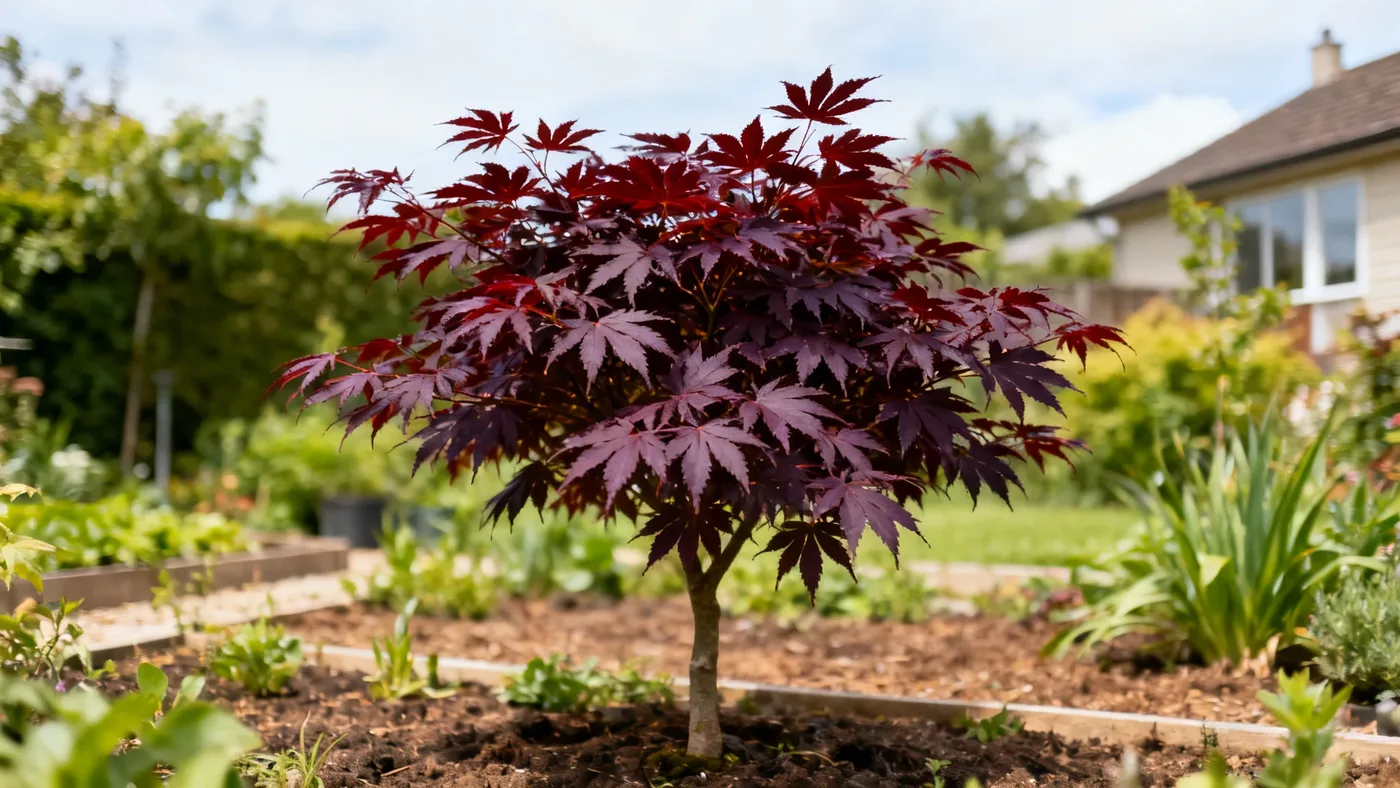
Sun or Shade? Bloodgood Japanese Maple Light Requirements
Bloodgood Japanese Maple thrives in full sun to part shade, but the details matter. In zone 5-6 climates, this cultivar holds its deep red color best with plenty of light. In zones 7-9, afternoon shade becomes important to prevent the leaves from scorching and fading. Get the light wrong, and your tree either loses its signature color or shows burned leaf edges by midsummer. Get it right, and you'll have a specimen tree that maintains its rich burgundy foliage from spring through fall.
What Bloodgood Japanese Maple Really Needs: Full Sun to Part Shade
Bloodgood Japanese Maple performs best with full sun to part shade. That translates to 4 to 6 hours of direct sunlight per day, ideally morning sun and afternoon protection in hot climates. The afternoon shade is a safeguard, not a requirement everywhere.
In the warmer end of its range (zones 7-9), afternoon shade is recommended to prevent leaf scorch. Leaf scorch appears as brown or papery leaf edges and happens when the tree loses water faster than it can replace it, typically from intense afternoon heat combined with wind and intense sun. In zone 5-6, full sun encourages the deepest color, and afternoon shade is not necessary unless summer heat regularly exceeds 85 degrees Fahrenheit.
Deep shade (less than 3 hours of sun daily) causes the foliage to fade from burgundy to dull green, losing the whole point of planting this cultivar. If your only option is deep shade, Bloodgood is not the right plant.
Step 1: Map Your Yard's Sun Exposure Through the Seasons
Sun exposure changes from spring to late summer. A spot that gets 5 hours of sun in May might get 7 hours in July because the sun climbs higher in the sky. Spend a week observing your intended planting site if you can, or start with these guidelines.
- Note the direction. Walk around your yard and identify where north, south, east, and west are. Southern exposures receive the hottest afternoon sun. Eastern exposures catch morning sun, which is gentler. Western exposures face intense late-day heat.
- Check for shade sources. Identify trees, structures, and fences that cast shadows. Morning shadows move west, afternoon shadows move east. Measure or estimate how far the shadow reaches from the object casting it.
- Count hours in spring and summer. On a clear day, note what time direct sun reaches your intended spot and what time it leaves. The difference is your direct sun hours. Do this in May and again in July to see the change.
- Note summer heat patterns. If you live in zone 7 or warmer, pay attention to temperatures. Does your yard stay in the 80s during afternoon hours, or does it climb above 90? Hotter zones benefit more from afternoon shade.
Step 2: Choose Your Location Based on Your USDA Zone
Bloodgood Japanese Maple is hardy in zones 5-8, with some success in zone 9 when given afternoon shade. Where you live determines how much sun is ideal.
Zones 5-6 (cooler climates): Plant in full sun, 6 hours minimum. Morning sun and afternoon sun both work well. Deep burgundy color is easier to achieve and maintain. If summers stay below 80 degrees, no afternoon shade is necessary.
Zones 7-8 (moderate climates): Plant in full sun to part shade. If your site receives 4 to 5 hours of direct sun plus dappled afternoon light from deciduous trees, this works. Afternoon shade from a building or tree canopy becomes valuable when summer highs regularly exceed 85 degrees.
Zone 9 (warmest range): Afternoon shade is recommended. Aim for morning sun and afternoon dappled shade. A spot on the east or north side of a building often works well. Late-afternoon sun exposure should last no more than 2 to 3 hours.
Use your observations from Step 1 to match your site to these guidelines. If you are unsure of your exact USDA zone, check your local extension service's map.
Step 3: Prepare Your Site and Plant in the Right Season
Once you have identified a location with appropriate light, prepare the soil and plant at the right time of year.
- Choose early spring or fall for planting. Early spring (March to April in most zones) and fall (September to October) are the ideal windows. Avoid planting during extreme summer heat, which stresses young trees and makes them more susceptible to leaf scorch.
- Prepare well-drained soil. Bloodgood Japanese Maple prefers well-drained, rich loam with a pH between 5.5 and 6.5 (slightly acidic to neutral). Poor drainage leads to root rot, which is just as damaging as too much sun. Test your soil if possible, or amend with organic matter to improve drainage and structure.
- Plant at the right depth. Set the tree so the top of the root ball is level with the ground. Do not plant deep. Girdling roots develop if the tree is buried too far, and this strangles the tree over years.
- Water immediately after planting. Water deeply to eliminate air pockets, but do not leave the soil waterlogged. Bloodgood needs consistent moisture, not constant wetness.
Once established, a mature tree can handle brief dry spells, but it is not drought-tolerant without regular watering during extended dry periods.
Step 4: Monitor Growth and Watch for Light-Related Problems
During the first growing season and beyond, observe how your tree is responding to its light environment.
- Check foliage color by early summer. By June or July, you should see deep reddish-purple or burgundy color on new growth. If the leaves are fading to green, the tree is not receiving enough light. Consider removing nearby branches or pruning nearby shrubs to open up the canopy.
- Watch for leaf scorch. Brown or crispy leaf edges in mid to late summer signal too much sun, wind, or heat for your tree's current location. This is most common in zones 7-9 when afternoon shade is absent. If scorch appears, plan to add afternoon shade the following year by planting a shade tree (to the west) or installing a shade cloth.
- Verify consistent moisture. Leaf scorch worsens when soil dries out. Even a tree in full sun can handle it if the soil stays consistently moist. Check soil moisture at 2 to 3 inches deep. If it feels dry, water deeply.
- Adjust over time. A young tree (2 to 5 feet tall) may need more attention to light and water than an established tree. As roots deepen and the canopy matures, the tree becomes more resilient. This process takes several years.
Common Light-Related Problems and What to Do
Leaf scorch: Brown, papery leaf edges are a sign of environmental stress, often linked to too much sun, wind, or heat combined with inconsistent watering. In zones 7-9, afternoon shade helps. Make sure soil moisture is consistent, and avoid fertilizing during heat stress, which can make scorch worse.
Fading to green: If your tree was a deep burgundy in the nursery and is now green, it is not getting enough light. Move it (if young) or prune nearby trees to open the canopy. A mature tree is difficult to move, so this is why starting in the right location matters.
Sparse growth in deep shade: If your tree receives less than 3 hours of direct sun daily, it will grow more slowly and produce fewer leaves. The foliage that does emerge will be thin and faded. Deep shade is not suitable for Bloodgood.
Sunburn on trunk: Young trees with thin bark can sunburn on the southwest side in zones 7-9. If the tree is less than 3 years old and shows blackened bark on that side, wrap the trunk loosely with white shade cloth or burlap during the hottest months.
Linking Light Conditions to Overall Care
Light requirements do not exist in isolation. For a complete picture of how to care for your Bloodgood, read the complete Bloodgood Japanese Maple care guide, which covers watering, fertilizing, and seasonal maintenance alongside light needs.
You can also learn how big your Bloodgood will get and plan your site accordingly. A mature Bloodgood reaches 15 to 20 feet tall and wide, so a small shade tree planted to the west for afternoon shade should be positioned at least 12 to 20 feet away to avoid competing root systems.
Quick Reference Checklist
| Condition | Zones 5-6 | Zones 7-8 | Zone 9 |
|---|---|---|---|
| Ideal Sun Hours | 6 hours, full sun | 4-5 hours direct, afternoon dappled light | 4 hours morning sun + afternoon shade |
| Afternoon Shade Needed? | No (unless summer >85°F) | Yes, if summer >85°F | Yes, recommended |
| Foliage Color Expected | Deep burgundy spring through fall | Deep burgundy in spring/fall, may lighten in peak summer | Burgundy with dappled shade; green if too hot/sunny |
| Leaf Scorch Risk | Low | Moderate to high in peak summer | High without afternoon shade |
| Best Planting Time | Early spring or fall | Early spring or fall | Early spring or fall (avoid summer heat) |
| Minimum Sun to Maintain Color | 5 hours | 4 hours | 3 hours (mostly dappled) |