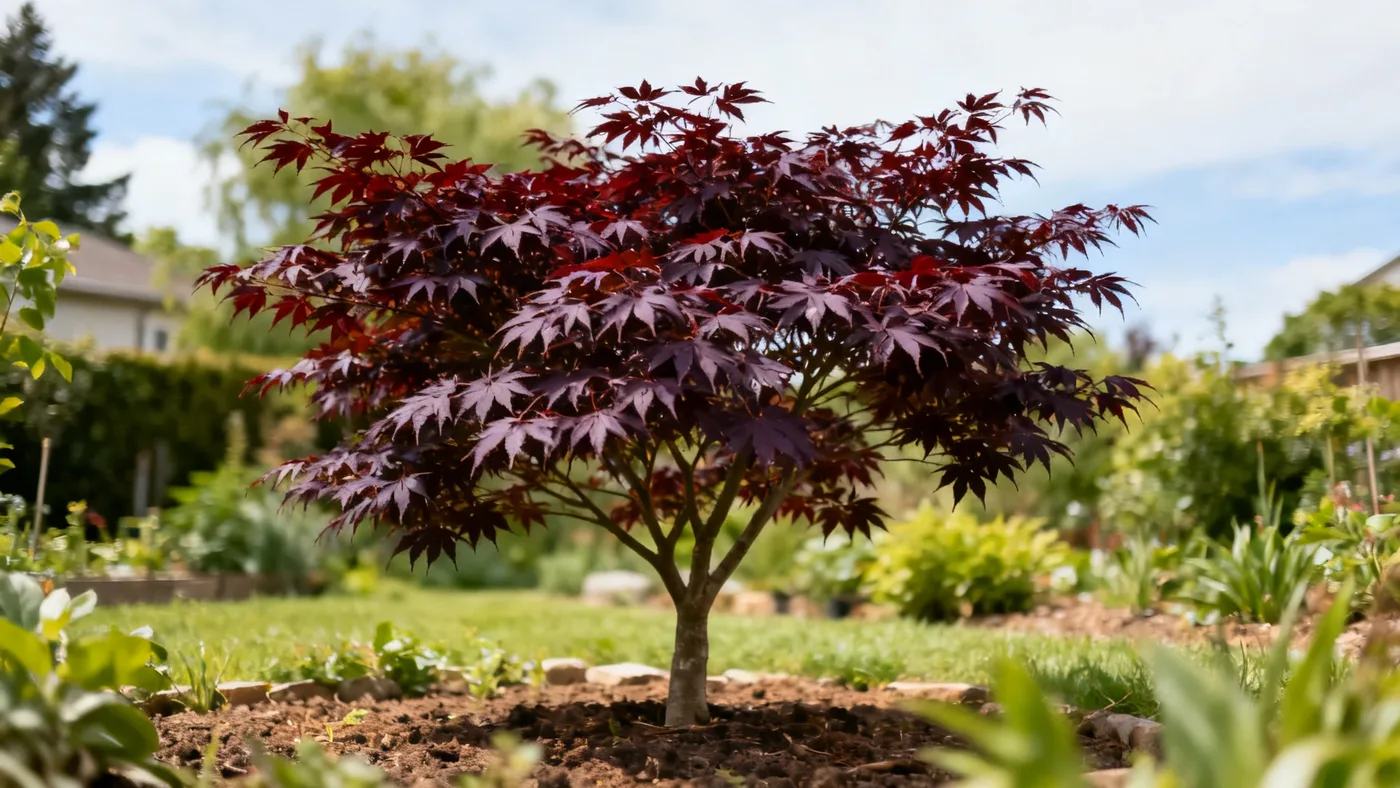
Is Bloodgood Japanese Maple Drought and Heat Tolerant?
Bloodgood Japanese Maple has a reputation as a tougher red maple, but its drought and heat tolerance are often overstated. If you live in a hot, dry region or face water restrictions, you need to know exactly what this cultivar can handle. The short answer: it can survive moderate heat with the right setup, but it's not a drought plant and it needs consistent water to thrive.
Understanding Bloodgood's Actual Tolerance Limits
Bloodgood Japanese Maple has low to moderate drought tolerance once established. This means it will tolerate brief dry spells (a week or two without rain during mild weather), but it will not handle prolonged drought or extreme heat without suffering visible damage. In USDA zones 5 to 8, the plant thrives with moderate, consistent moisture. Some sources extend the range to zone 9, but only with afternoon shade.
The biggest threat in hot climates is leaf scorch. This is environmental damage (not a disease) that shows up as brown or papery leaf edges when the tree loses water faster than its roots can replace it. High temperatures, strong afternoon sun, dry soil, and wind all work together to cause it. Once scorch develops, the damage is permanent that season.
Heat stress also causes color fading. Bloodgood's signature deep burgundy foliage will fade toward green if the tree gets too much intense sun or extreme heat, especially in zones 8 and 9. This isn't fatal, but it defeats the main reason to plant a Bloodgood in the first place.
Step 1: Assess Your Climate and Sun Exposure
Before planting, determine whether your location can support Bloodgood with manageable care. You need three pieces of information: your USDA zone, your summer heat pattern, and your average afternoon sun intensity.
If you're in zones 5 to 7, you have the green light for full sun to part shade. If you're in zone 8, you must provide afternoon shade (roughly 2 to 4 pm shade from trees or structures). If you're in zone 9 or a region with regular temperatures above 85 to 90 degrees Fahrenheit for extended periods, Bloodgood is not the best choice, even with shade.
Assess your site in person. Walk it at 2 pm on a hot day to see where shade falls. Strong afternoon sun coming from the west is the worst scenario. Eastern morning sun is ideal. Southern exposure requires afternoon shade from trees, shade cloth, or a structure like a pergola or fence.
Step 2: Prepare Well-Draining, Rich Soil
Bloodgood is sensitive to poorly drained or compacted soil. Waterlogged roots fail in a different way than dry soil, and poor drainage actually increases heat stress because the tree can't establish deep roots to find moisture. Before planting, amend the soil to create ideal growing conditions.
Test your soil if possible, or check with your local extension service for guidance specific to your region. Bloodgood prefers slightly acidic to neutral soil, around 5.5 to 6.5 pH. The soil should be rich loam with good organic matter content.
Mix in 2 to 3 inches of compost or aged bark into the planting area to improve both structure and water retention. This is especially important in sandy soils, which drain too quickly and leave the tree vulnerable to drought stress. In clay soils, amending improves drainage and reduces compaction. Even in decent native soil, this step pays off during the establishment period.
Step 3: Choose Planting Location and Timing
Location is your most important tool for managing heat and drought stress. Full sun works in cooler zones (5 and 6). In zone 7, part shade is safer. In zone 8, afternoon shade is essential. Position the tree so it gets morning and midday sun but is shaded from 2 to 4 pm onward, ideally by mature trees or a south-facing structure.
Avoid planting in the hottest part of your yard, such as against a west-facing wall or in a sun-baked courtyard where reflected heat compounds the problem. A spot on the east side of a building, or under the dappled shade of larger trees, is much safer.
Timing also matters. Plant in early spring or fall, never during extreme summer heat. A newly planted tree is far more vulnerable to heat and drought stress than an established one. Spring planting gives the tree time to develop roots before the hottest months; fall planting lets it root during cool weather before dormancy. Avoid planting after mid-summer if your region experiences intense heat through September.
Step 4: Establish Consistent Watering and Mulch
For the first two years after planting, consistent water is not optional. Water deeply and slowly once or twice a week, depending on rainfall and heat. Aim for 1 to 2 inches of water per week total (rain plus supplemental). Check soil moisture 3 to 4 inches deep; it should feel like a wrung-out sponge, not soggy or bone-dry.
Apply 2 to 3 inches of wood chip mulch around the base, keeping it 3 to 4 inches away from the trunk. Mulch insulates soil, reduces evaporation, keeps roots cooler, and prevents temperature swings. In hot climates, this is one of your best defenses against drought stress.
During the establishment phase (years 1 and 2), don't skip watering even during cooler spells. The tree is still building its root system and doesn't yet have the depth to pull moisture if the top soil dries out. Once established (after year 3), Bloodgood can handle brief dry periods in mild weather, but it still needs regular water during hot spells.
Step 5: Monitor for Heat and Drought Stress Signs
Watch for visual cues that stress is beginning. Leaf scorch typically appears in mid to late summer as brown or crispy edges on the leaves. Sometimes the entire leaf wilts and drops prematurely. In extreme cases, whole branches may die back.
Color fading is another sign. If your Bloodgood's deep red foliage is turning greenish or pale, heat stress is the likely culprit. The tree isn't dying, but it's not expressing its full ornamental value.
Wilting, especially in the afternoon even when soil is moist, suggests the tree can't transpire water fast enough in the heat. This is common during the peak of summer in zone 8 without afternoon shade.
If any of these signs appear, increase watering frequency, apply shade cloth temporarily, or prune lower branches slightly to improve air circulation. Do not fertilize a stressed tree; fertilizer can worsen scorch.
Step 6: Adjust Care as the Tree Matures
An established Bloodgood Japanese Maple (3+ years old) is more resilient than a young tree, but it still isn't a drought plant. In normal years with decent rainfall, you may not need to water during fall and winter. But during dry summers, don't assume rain will do the job. Check soil moisture during hot spells and water if the top 3 inches feel dry.
Fertilize lightly in early spring with a balanced, slow-release fertilizer formulated for acid-loving or woody ornamentals. Skip fertilizer if the tree is already healthy and thriving. Over-fertilizing causes weak, leggy growth and increases scorch vulnerability.
Prune only in late fall to mid-winter while the tree is dormant. Never prune in spring when sap is running, as excessive bleeding can stress the tree. Remove dead or crossing branches, but avoid heavy pruning. In hot climates, resist the urge to thin the canopy excessively; foliage provides natural shade to lower branches and the trunk.
Tips for Hot and Dry Climates
- Install drip irrigation on a timer if you're in a hot zone or face water restrictions. Slow, deep watering is more effective and efficient than frequent shallow spraying.
- Pair your Bloodgood with shade trees or structures. Do not rely on afternoon shade cloth as a permanent solution; it's temporary emergency help.
- Choose a spot with natural air movement to reduce heat buildup, but avoid open, windy areas that increase evaporative stress.
- Group the tree with shade-loving companions like hostas, ferns, and azaleas. A layered planting reduces soil temperature and keeps the microclimate cooler.
- Mulch heavily but correctly. Wood chip mulch stays cooler and lasts longer than fine bark. Keep mulch off the trunk to prevent rot.
- In zones 8 and 9, consider adding a light layer of reflective tree wrap or shade cloth during extreme heat waves (90+ degrees Fahrenheit for weeks on end). Remove it once cooler weather returns.
Common Mistakes to Avoid
- Planting in full, all-day western sun in zone 8 or hotter. This is the single most common cause of failure in hot climates.
- Assuming mature trees don't need supplemental water during drought. Established trees are more resilient, not immune.
- Over-watering or keeping soil soggy, especially in heavy clay. This kills roots and makes the tree even more vulnerable to heat stress.
- Fertilizing a stressed tree. Nitrogen pushes soft growth that burns easily in heat.
- Planting too deep or leaving the tree in the nursery pot too long. Girdling roots are an invisible problem that worsens heat sensitivity.
- Thinning the canopy to "help air flow." The tree needs its foliage to shade itself. Excessive pruning removes this natural protection.
Is Bloodgood Right for Your Garden?
If you're in zones 5 to 7 with average summer temperatures and reasonable rainfall, Bloodgood Japanese Maple is an excellent choice and lives up to its reputation. If you're in zone 8 and can provide afternoon shade and consistent water, it can work, but it requires more active management.
If you're in zone 9, regularly experience temperatures above 95 degrees Fahrenheit, or have frequent drought conditions, consider a different cultivar or species that's bred for heat. Your local nursery can suggest alternatives suited to your climate.
For more details on planting and general care, see our guides on how to plant a Bloodgood Japanese Maple the right way and the complete Bloodgood Japanese Maple care guide.
Quick Reference: Heat and Drought Tolerance Checklist
| Zone / Condition | Shade Needed | Water Frequency | Overall Suitability |
|---|---|---|---|
| Zone 5-6, avg summer temps | Full sun to part shade OK | Moderate, consistent; weekly during growth | Good |
| Zone 7, avg to hot summers | Part shade recommended | Moderate to frequent; twice weekly in heat | Good with shade |
| Zone 8, hot summers | Afternoon shade essential | Frequent; 2-3 times weekly during peak heat | Manageable, high care |
| Zone 9 or extreme heat (95+F) | Afternoon shade not enough | Constant risk of scorch | Not recommended |
| Drought-prone region | Afternoon shade, mulch | Supplemental water needed even when established | Not drought-tolerant; requires irrigation |