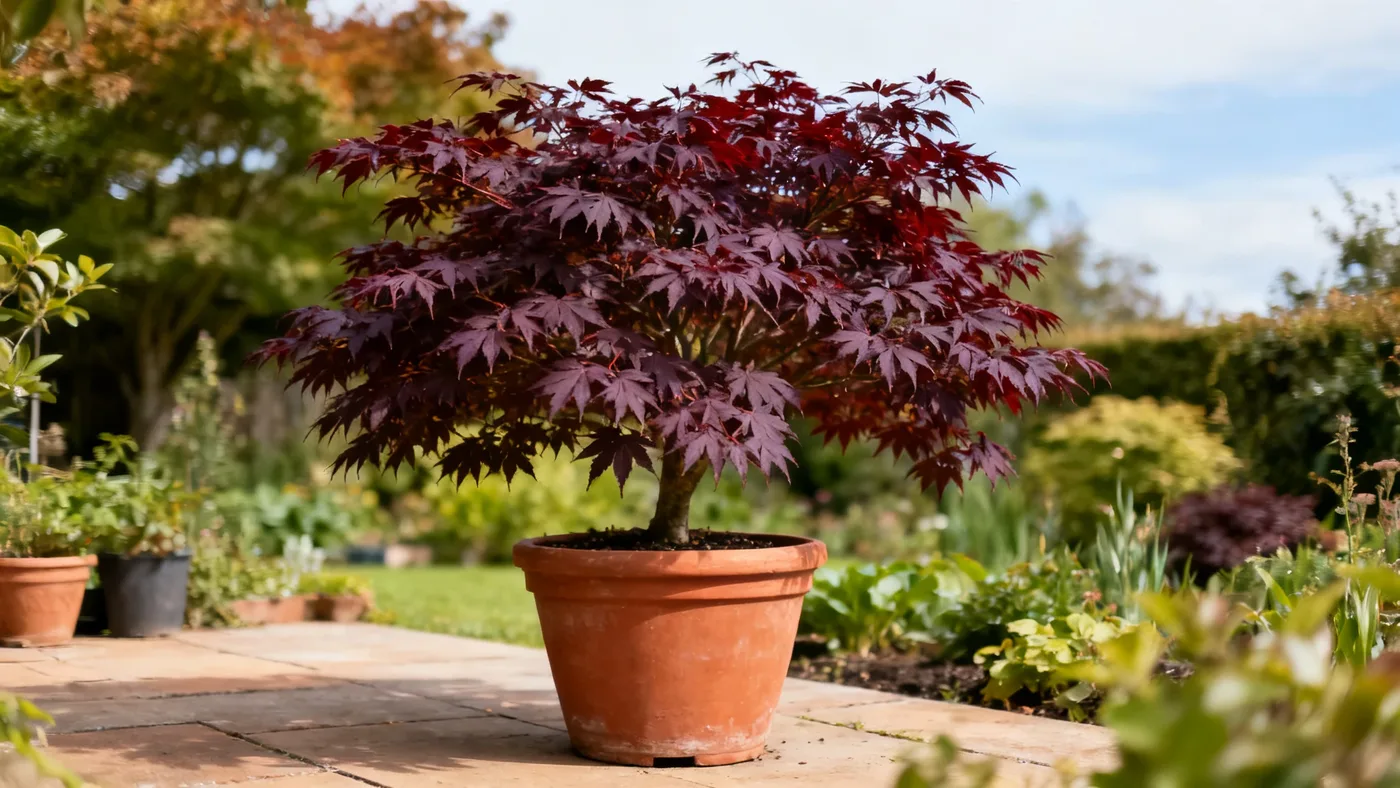
Growing Bloodgood Japanese Maple in a Container or Pot
Bloodgood Japanese Maple makes an exceptional patio tree, and growing it in a container or pot brings that signature deep reddish-purple foliage right to your deck, balcony, or courtyard. Container growing is practical for smaller yards, rental properties, and gardeners in northern zones who want extra winter protection. A well-established potted Japanese maple holds its color longer than many red cultivars and creates a focal point in any space.
Why Container Growing Works for Bloodgood Japanese Maple
The Bloodgood cultivar is well-suited to pot cultivation, especially when young. Potted Japanese maples thrive when you provide larger containers and winter root protection in colder zones as they mature. A growing Bloodgood will reach a landscape-usable size (6-8 ft) in about 5-7 years, making it an ideal specimen for medium to large containers during that period.
Materials and Supplies You'll Need
- Container with drainage holes, 12 to 20 gallons (roughly a #3 nursery pot)
- Premium potting soil or amended loam
- Perlite or pumice for drainage amendment
- Slow-release balanced fertilizer for acid-loving ornamentals
- Bark mulch or compost
- Watering can or hose with fine spray nozzle
- Pruning shears for light maintenance
- Burlap or frost cloth for zone 5 winter protection
Choosing the Right Container Size
The first decision is pot size. Start with a container that is 12 to 20 gallons, roughly 2 to 3 gallons larger than the root ball of a nursery-grown plant. A standard #3 nursery container works well as a baseline. The pot must have drainage holes on the bottom, not just slits. Terracotta, fabric, or plastic all work, though terracotta breathes better in humid climates and plastic retains moisture longer in dry ones.
As your Bloodgood grows, you will need to upsize the container every 2 to 3 years. A mature specimen can eventually occupy a 40 to 50 gallon container, but you should not jump there immediately. Oversized pots create standing water around roots and invite root rot. Move up gradually, and in colder zones, plan on larger containers that allow for winter insulation materials around the root ball.
Preparing Your Soil Mix
Bloodgood Japanese Maple is sensitive to poorly drained or compacted soil. Prepare a custom mix rather than using standard garden soil. Combine equal parts premium potting soil, perlite or pumice, and composted bark. This ensures the well-drained, rich loam the plant needs.
Soil pH is important. Bloodgood grows best in slightly acidic to neutral conditions, roughly 5.5-6.5 pH. If you are uncertain of your potting soil's pH, test it or select a mix labeled for acid-loving plants (often formulated for azaleas or rhododendrons). A pH that is too high can cause yellowing foliage and weak growth.
Step-by-Step Planting Instructions
- Choose the right planting season. Early spring or fall is preferred. Avoid planting in extreme summer heat, as young roots in containers are vulnerable to heat stress.
- Prepare the container. Ensure your pot has drainage holes. Line the bottom with 2 to 3 inches of the perlite-amended soil mix. This creates an air pocket and prevents waterlogging.
- Remove the plant from the nursery pot. Gently slide the Bloodgood Japanese Maple from its current container. If roots are circling (girdling), lightly rake them outward with your fingers. Do not aggressively disturb the root ball, but loosening the outer surface encourages outward growth into the new soil.
- Position the tree in its new pot. The top of the root ball should sit about 1 to 2 inches below the rim of the container. This gives you space for watering without overflow. The tree should be centered and upright.
- Fill with soil mix. Add your prepared soil mix around the sides of the root ball, gently firming as you go. Avoid compacting. Use your fingers to settle the soil without crushing it.
- Water thoroughly. After planting, water until water drains from the bottom holes. This settles the soil and removes air pockets. The soil should be moist, not waterlogged.
- Add mulch layer. Spread 1 to 2 inches of bark mulch or compost around the base of the tree, keeping it a few inches away from the trunk. This moderates soil temperature and retains moisture.
Watering and Moisture Management
Watering is the biggest difference between container and in-ground growing. Potted plants dry out faster and cannot draw on deeper soil moisture. Bloodgood Japanese Maple needs moderate, consistent moisture. Check the top 1 to 2 inches of soil daily during the growing season. If it feels dry, water thoroughly until it drains from the bottom.
In hot summers, you may water every day or even twice daily if the pot sits in full sun on a patio. In spring and fall, every 2 to 3 days is often sufficient. Reduce watering in winter when the tree is dormant, but do not let the root ball dry out completely. In zone 5 and colder, winter watering happens less frequently but is still necessary on warm spells or if snow cover melts.
Overwatering is as harmful as underwatering. If the pot does not drain well or the soil stays soggy, root rot will follow. Always use a pot with drainage holes, and never let the tree sit in standing water.
Light and Placement
Bloodgood Japanese Maple thrives in full sun to part shade. On a patio or deck, place it where it gets at least 4 to 6 hours of direct sunlight daily for best color. Afternoon shade is recommended in hot southern climates to prevent leaf scorch, particularly in zones 8 and 9. In zones 5 to 7, full morning sun with afternoon protection is ideal during the hottest weeks of summer.
Container placement matters for winter in colder zones. In zone 5, move the pot to a sheltered spot against a south-facing wall or into a cold frame if possible. This reduces wind exposure and soil freeze-thaw cycles that crack containers and kill roots.
Fertilizing and Seasonal Care
Container trees deplete nutrients faster than in-ground plants because water drains through the soil. In early spring, apply a light feeding with a balanced, slow-release fertilizer formulated for acid-loving or woody ornamentals. Follow the label rate, and avoid over-fertilizing. Excess fertilizer causes weak, leggy growth and can scorch the foliage.
Minimal pruning is needed. In late fall to mid-winter while the tree is dormant, remove any dead or crossing branches. Avoid heavy pruning in spring, as it causes excessive sap bleed and weakens the tree. If the container specimen becomes leggy or unbalanced, light shaping in late winter is acceptable.
In containers, the growth rate remains slow to moderate, roughly 12-18 inches per year. Your Bloodgood will be landscape-usable at 6-8 ft within 5-7 years, providing you enjoy years of color and focal interest before considering an upgrade to larger ground-based planting.
Winter Protection in Cold Zones
Winter survival in containers depends on your zone. Zones 5-8 are listed as suitable for Bloodgood Japanese Maple. In zone 5, roots in containers are more vulnerable to freezing than in-ground roots. Prepare by moving the pot to a sheltered location before the first hard freeze. Wrap the container (not the tree) with burlap or frost cloth to insulate the root ball. Some gardeners place pots in an unheated garage or against a foundation wall.
In zones 6 and warmer, less protection is needed, but moving the pot out of harsh north winds is still wise. Never expose the container to repeated freeze-thaw cycles, as this cracks the pot and damages roots.
Tips and Common Mistakes to Avoid
- Wrong pot size: Starting too large causes waterlogging. Start at 12-20 gallons and upsize gradually.
- Poor drainage: A pot without drainage holes guarantees root rot. Always use a pot with multiple bottom holes.
- Compacted soil: Standard garden soil or clay-heavy mixes lead to root problems. Use a custom, amended potting mix.
- Inconsistent watering: Containers dry faster than garden beds. Check soil moisture regularly and water thoroughly when dry.
- Midday sun in extreme heat: In zones 8 and 9, afternoon shade prevents leaf scorch. Even in zone 7, shade during peak summer heat helps.
- Ignoring winter needs: In zone 5, providing winter protection to the pot (not the tree) significantly improves survival rates.
- Over-fertilizing: A little slow-release fertilizer in spring is sufficient. More does not mean better growth.
Expected Results and Timeline
A healthy potted Bloodgood Japanese Maple may reach 6-8 ft tall within 5-7 years. Full mature size (15-20 ft) takes 15-20+ years or longer, and most container-grown specimens remain smaller due to root constraints. You should expect deep reddish-purple summer foliage that holds its color better than many red cultivars, followed by crimson to bright red fall color.
For a complete care guide after planting, see the complete Bloodgood Japanese Maple care guide. To understand the mature size you may eventually achieve, review information on how big a Bloodgood Japanese Maple tree gets.
Quick Reference: Container Growing Checklist
| Task | Timing | Details |
|---|---|---|
| Planting | Early spring or fall | Use 12-20 gallon container with drainage holes |
| Soil mix | Before planting | Equal parts potting soil, perlite, compost; pH 5.5-6.5 |
| Watering | Daily to every 3 days (season-dependent) | Keep soil moist but not waterlogged; check top 1-2 inches |
| Sunlight | Year-round | Full sun to part shade; afternoon shade in hot climates |
| Fertilizing | Early spring | Light application of slow-release, acid-loving plant formula |
| Pruning | Late fall to mid-winter (dormant) | Remove dead or crossing branches; avoid spring pruning |
| Upsize container | Every 2-3 years | Move to a 2-3 gallon larger pot when roots fill current one |
| Winter protection | Before first hard freeze (zone 5) | Wrap pot in burlap; move to sheltered location |
| Expected size (5-7 years) | Growth period | Reaches landscape-usable 6-8 ft in containers |