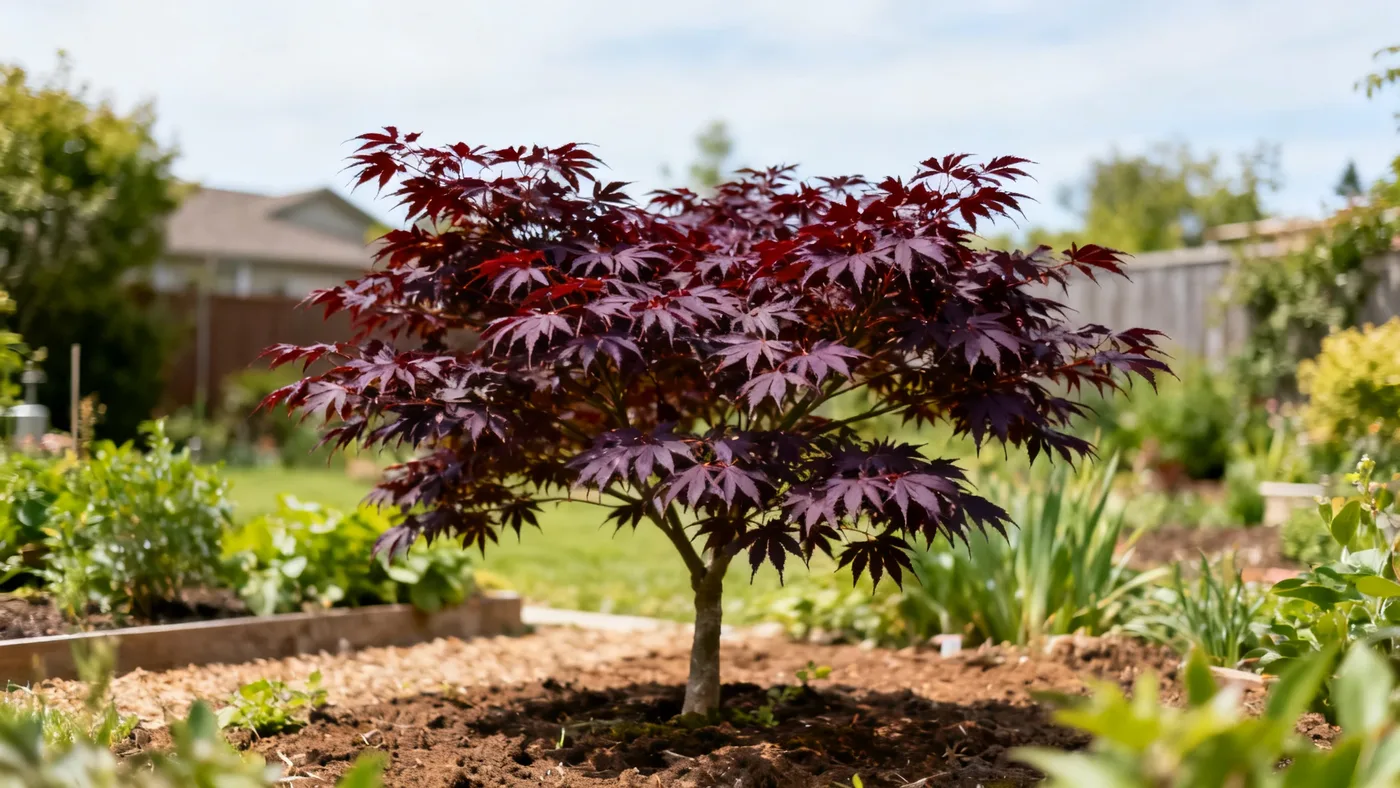
Is Bloodgood Japanese Maple Deer and Rabbit Resistant?
Bloodgood Japanese Maple sits in the middle ground when it comes to wildlife pressure. It offers moderate to good deer resistance, meaning deer will occasionally browse it, but it is not a preferred food source. This guide answers the most common questions homeowners and landscapers ask about protecting Bloodgood from deer and rabbit damage, and how to plant strategically in wildlife-pressure areas.
Deer Resistance: The Basics
Is Bloodgood Japanese Maple deer resistant?
Yes, Bloodgood shows moderate to good deer resistance. Deer will occasionally browse young foliage, especially in spring, but Bloodgood is not a preferred food source. In most landscapes, especially those with other available plants, Bloodgood is rarely a target. Severe winter browse suggests either extreme food scarcity or a smaller-than-typical deer population that lacks natural food choices.
Do deer eat Japanese maple trees?
Deer do eat some Japanese maple cultivars, but Bloodgood's deep reddish-purple foliage appears less palatable than lighter-colored selections. Newly planted trees under 5 feet tall receive more browse pressure than established specimens. In areas with very high deer density (more than 20 deer per square mile), even resistant varieties can show damage. Most landscape damage occurs in late winter when natural browse runs low.
Is Japanese maple more or less resistant than other ornamental trees?
Japanese maples, including Bloodgood, fall into the moderate-to-good category, similar to boxwood and many ornamental grasses. They are significantly more resistant than hostas, arborvitae, and apple seedlings, but less resistant than oak and hickory. If deer pressure is extreme, pair Bloodgood with even tougher choices like native shrubs that truly have no appeal to local herds.
What makes Bloodgood less attractive to deer than other maples?
The reddish-purple pigmentation and the cultivar's specific leaf texture appear less appetizing than lighter green foliage. Bloodgood also matures to 15-20 feet, putting most browsable growth out of reach once the tree is established. Younger trees or those with lower canopy spread remain more vulnerable, which is why protection during the first 3-5 years is most critical.
Rabbit and Small Animal Damage
Are Bloodgood Japanese Maples rabbit resistant?
Rabbits are primarily ground-level browsers and rarely damage Bloodgood once it is established. Young seedlings or transplants under 12 inches may experience nipped twigs, but Bloodgood's woody stems and lack of soft browse appeal make it unattractive compared to clover, grasses, and herbaceous plants. The dark foliage and bitter tannins offer natural protection from rabbit browsing.
Do squirrels and other small mammals damage Bloodgood?
Squirrels occasionally strip bark in winter if stressed by food scarcity, but Bloodgood is not a preferred target. Voles and mice may girdle roots in heavy mulch, though this is a cultural management issue, not a Bloodgood-specific weakness. Maintaining clear mulch rings (2-3 inches of mulch, not piled against the trunk) prevents most small-mammal damage.
Can I plant Bloodgood in a wildlife garden without fencing?
Yes, in most residential settings. If your landscape includes native understory shrubs, grasses, and herbaceous perennials, those will satisfy local wildlife before Bloodgood is targeted. However, in open lawns with few alternative plants or in areas with documented high deer populations, a simple fence (5-6 feet tall) or treeguard during the first 2-3 years provides reliable protection for young trees.
Damage Types and What to Look For
What does deer browse damage look like on Japanese maple?
Deer strip leaves, leaving ragged (not cleanly cut) branch tips and a browsed profile on the canopy. The lowest branches often bear the most damage. Unlike disease, browse damage is sudden and localized to the growing tips. Multiple trees may show identical damage patterns in the same season if a herd passes through.
How do I tell if deer damage will kill my tree?
Light to moderate browse on an established tree (6 feet or taller) rarely kills Bloodgood. The tree will push new growth the following season and recover within one year. Severe damage to young trees (under 4 years old) or repeated annual browse of 50% or more can weaken vigor and increase susceptibility to disease, though outright death is uncommon. Girdling of the trunk (stripping bark around the stem) is more serious and can kill the tree if the bark is removed entirely around the circumference.
Can antler rubs damage Bloodgood?
Yes. Male deer rub antlers on saplings 2-4 inches in diameter to mark territory, causing bark damage and potential girdling. Bloodgood's thin bark makes it moderately vulnerable. Wrapping young trunks with plastic tree guards (4-6 feet tall) during September through December (peak rut season) prevents this damage. Remove guards in spring to avoid trapping moisture and pests.
What is the difference between deer browse and disease damage?
Deer browse is messy and asymmetrical; disease spread is often uniform. Browse shows torn leaf edges; fungal or bacterial damage shows discoloration, spots, or systematic wilting. Browse damage appears suddenly during specific seasons; disease progresses gradually. When in doubt, consult your local extension service with a photo and sample branch for definitive diagnosis.
Protection and Prevention Strategies
What is the most effective way to protect Bloodgood from deer?
A 5-6 foot tall fence is most reliable, though it requires significant space and resources. Individual tree guards or 4-foot netting around young trees (3-5 feet tall) costs less and works well for specimen plants in small yards. Chemical repellents containing capsaicin or predator urine offer 60-75% protection but must be reapplied every 4-6 weeks and after rain.
Should I use repellents, fencing, or tree guards?
For young trees (under 5 feet), a rigid treeguard or plastic wrap is easiest and lasts 2-3 seasons. For established trees in an open setting with high deer pressure, fencing offers best long-term security. Repellents suit mid-sized installations (3-10 trees) where deer pressure is moderate but not extreme. Combine methods in very high-pressure areas: guard young trunks, apply repellent to foliage, and keep alternative food nearby (native shrubs and perennials).
Do deer fencing brands work equally well?
Rigid plastic or metal fencing 5-6 feet high stops most deer. Electric fencing (5 strands, 4-12-20-28-36 inches from ground) is more affordable and less visible. Mesh netting alone rarely works because deer can jump over or push through. Choose fencing rated for your region's deer population density. In very high-pressure areas, fencing 7-8 feet tall or angled outward at 45 degrees adds extra security.
When is the best time to protect a young Bloodgood?
Install protection immediately after planting or in late summer (August), before fall browse season begins. Early spring (March-April) is the second-priority window. Leave protection in place through the first 3-5 years while the tree establishes and grows taller. Once Bloodgood reaches 8-10 feet, most foliage is out of reach of standing deer, and protection can often be removed.
Planting in Deer-Heavy Areas
How should I plant Bloodgood if I live in a high-deer-pressure neighborhood?
Space it 12-20 feet from structures and other trees (per standard spacing recommendations), then surround it with truly tough plants: native shrubs like viburnum, oak saplings, or ornamental grasses that deer avoid. Bloodgood works best as the focal point in a protective "shrub buffer" rather than as an isolated specimen. This approach creates a beautiful landscape while reducing deer pressure naturally.
Are there companion plants that discourage deer better than Bloodgood?
Yes. Boxwood, ferns, and hellebores offer better deer resistance and pair beautifully with Bloodgood in shade-to-part-shade settings. Ornamental grasses and native understory shrubs add structure without competing for light. Plant these companions at the base and periphery to create layers that attract wildlife to less-valuable plants while protecting Bloodgood higher in the canopy.
Can I use Bloodgood in a formal Japanese garden with deer present?
Yes, with planning. Japanese gardens often incorporate fencing as a design feature, so a traditional bamboo or wooden fence serves both aesthetic and protective functions. Mass plantings of ferns and hostas in surrounding beds satisfy deer browsing before they reach Bloodgood. Keep the tree at least 15 feet from any direct path to prevent casual browse pressure.
Health and Safety Concerns
Is Bloodgood toxic to deer or other wildlife?
No. Acer palmatum, including the Bloodgood cultivar, is not known to be toxic to deer, rabbits, or other mammals. The species is even listed by the ASPCA as non-toxic to dogs and cats. This means wildlife browsing it is safe from a toxicity perspective; protection is about preventing unsightly damage, not preventing poisoning.
If my Bloodgood is heavily browsed, will it recover?
Established trees (8 feet or taller) recover well from a single season of heavy browse. The tree will push new growth the following spring and regain full form within 1-2 years. Young trees (under 5 feet) are more vulnerable; repeated annual browse can stunt growth and increase disease susceptibility. Once a young tree reaches 8 feet, it becomes nearly immune to significant damage from standing browse.
Does deer browse increase disease risk on Bloodgood?
Moderate browse alone does not directly increase disease. However, repeated severe browse over many seasons can weaken vigor and reduce the tree's ability to resist anthracnose, verticillium wilt, or root rot. Maintain consistent soil moisture, avoid compaction, and ensure good air circulation to support recovery after browse damage.
Special Situations
Can I grow Bloodgood in a container to avoid deer damage?
Yes. Container planting is suitable, especially when young (up to 3-5 years). Bring pots onto a deck or patio to place Bloodgood completely out of reach. This works well for smaller yards or renters. Note that containerized trees need winter root protection in zones colder than 7; buried pots or heavy mulch prevents root damage during freeze-thaw cycles.
What should I do if my neighbor's deer cross into my yard?
Document damage with photos and note dates. Contact your local wildlife agency to report persistent deer activity. In most jurisdictions, removing deer is a regulated activity. Personal fencing or repellents on your property are your responsibility; your neighbor is not liable for wildlife crossing property lines. Consider shared fencing solutions that benefit both yards.
Are there traps or removal options if deer browse becomes unbearable?
Trapping and relocation are handled only by licensed wildlife professionals and are heavily restricted in most areas. Lethal control requires special permits. Before pursuing removal, exhaust fencing, repellent, and planting strategy options. In most cases, these non-lethal methods resolve the problem at a fraction of the cost and ethical complexity.
Quick Reference: Bloodgood Japanese Maple and Deer Resistance
| Question | Answer |
|---|---|
| Deer resistance rating | Moderate to good (occasionally browsed, not preferred) |
| Rabbit resistance rating | Good (rarely damaged, woody stems unappealing) |
| Mature height (out of reach) | 15-20 feet |
| Years until most foliage out of reach | 3-5 years with consistent growth |
| Most vulnerable stage | Planting to 5 feet tall |
| Best protection method | Fencing (5-6 feet) or individual treeguards for young trees |
| Repellent reapplication frequency | Every 4-6 weeks and after rain |
| Peak browse season | Late winter and early spring |
| Antler rub risk window | September-December (peak rut) |
| Toxicity to wildlife | Non-toxic to deer, rabbits, dogs, cats |
| Recovery time from moderate browse | 1 year for established trees; 2-3 years for young trees |
| Best companion plants for deer protection | Ferns, boxwood, hellebores, native shrubs, ornamental grasses |
For more comprehensive care information on Bloodgood Japanese Maple, including soil, water, and seasonal maintenance, see the complete Bloodgood Japanese Maple care guide.