Is Bloodgood Japanese Maple Toxic to Dogs, Cats or Kids?
General Toxicity Overview
Is Bloodgood Japanese Maple toxic to dogs and cats?
No, Bloodgood Japanese Maple (Acer palmatum 'Bloodgood') is not known to be toxic to dogs or cats. The ASPCA lists Acer palmatum as non-toxic to both canines and felines, meaning the plant does not contain compounds that will poison your pets if they ingest leaves, branches, or bark. This applies to Bloodgood and other Japanese maple cultivars grown as landscape ornamentals.
Is Bloodgood Japanese Maple poisonous to people?
Bloodgood Japanese Maple is not known to be toxic to people. There are no documented health risks from handling, touching, or even accidentally ingesting small amounts of the leaves or bark. The tree is safe to plant in any residential garden, including those where children play or where you harvest food nearby.
Why do some people think Japanese maples are toxic?
The confusion likely stems from mixing up ornamental Japanese maples with other plants or from outdated plant lists that were overly cautious. Japanese maples have been grown in gardens for centuries and are considered safe by major plant safety organizations including the ASPCA and poison control networks. Reliable sources consistently confirm that Acer palmatum cultivars, including Bloodgood, pose no toxicity risk.
Where can I verify that Bloodgood Japanese Maple is safe?
The ASPCA Animal Poison Control Center maintains an official plant toxicity database that lists Acer palmatum as non-toxic to dogs and cats. The Humane Society and veterinary poison databases similarly confirm the safety of Japanese maples. If you have specific health concerns after a pet eats plant material, contact your local veterinarian or ASPCA Poison Control at (888) 426-4435.
Dogs and Bloodgood Japanese Maple
Can dogs safely eat Bloodgood Japanese Maple leaves?
Yes, dogs can safely eat Bloodgood Japanese Maple leaves without risk of poisoning. While it is not advisable to let your dog chew on ornamental plants (since any foreign plant material can cause mild digestive upset), the leaves themselves contain no toxic compounds. If your dog nibbles on a few leaves, there is no need to panic or contact a poison control center.
What happens if my dog chews Bloodgood branches?
Chewing on branches typically causes no harm beyond possible mild gastrointestinal upset from the foreign material itself, not from toxins. Some dogs may experience loose stools or vomiting from chewing any plant material, but this is a physical response, not poisoning. The branch tissue of Bloodgood is not toxic to dogs, so the risk is minimal compared to truly poisonous plants like sago palm or lilies.
Is Bloodgood Japanese Maple safe if my dog eats fallen leaves?
Fallen leaves are just as safe as leaves on the tree. Bloodgood Japanese Maple leaves do not become toxic as they dry, discolor in autumn, or decompose on the ground. You do not need to rake up all fallen leaves to protect your dog, though regular yard maintenance is good practice for other reasons.
Can I plant Bloodgood Japanese Maple in a dog-friendly garden?
Absolutely. Bloodgood Japanese Maple is an excellent choice for pet-friendly landscapes. The tree reaches a mature height of 15 to 20 feet with a similar width, making it suitable for many yard sizes without overwhelming space. Pair it with other dog-safe plants like hostas, ferns, and boxwood to create a lush, ornamental garden your pets can enjoy safely.
Cats and Bloodgood Japanese Maple
Is Bloodgood Japanese Maple toxic to cats?
No, Bloodgood Japanese Maple is not toxic to cats. The ASPCA lists Acer palmatum as safe for cats, meaning there are no compounds in the leaves, bark, or seeds that will poison your feline. Cats rarely eat tree leaves, but if yours happens to chew on or ingest Bloodgood foliage, there is no risk of poisoning.
Are Japanese maple seeds toxic to cats?
Japanese maple seeds (samaras or helicopters, the winged fruits) are not toxic to cats. While seeds are typically too hard for cats to crack and digest, they pose no chemical toxicity risk. If your cat plays with or accidentally eats a seed, there is no cause for concern related to poisoning.
What should I do if my cat eats Bloodgood leaves?
If your cat eats Bloodgood Japanese Maple leaves, no immediate action is required since the plant is non-toxic. Monitor your cat for any signs of mild digestive upset, such as decreased appetite or loose stools, which could occur from any foreign plant material but not from toxins. Contact your veterinarian only if your cat shows unusual symptoms or behavior lasting more than a few hours.
Can I safely grow Bloodgood Japanese Maple near a cat's outdoor enclosure?
Yes, Bloodgood Japanese Maple is completely safe to grow near or inside a cat enclosure or catio. You can plant it as a shade provider or focal point without worrying about toxicity. The tree grows at a slow to moderate rate (roughly 12 to 18 inches per year), developing gradually into a mature specimen over many seasons.
Children and Bloodgood Japanese Maple
Is Bloodgood Japanese Maple safe for children to touch or play around?
Yes, Bloodgood Japanese Maple is completely safe for children. There are no toxic compounds in the leaves, bark, branches, or any other part of the tree that poses a poisoning risk. Children can climb, play underneath, or even nibble on leaves without any toxicity concern, though you should still encourage good habits of not eating plants without permission.
What if a child eats Bloodgood Japanese Maple leaves?
Accidental ingestion of a few Bloodgood leaves poses no toxicity risk. The child may experience mild stomach discomfort from chewing on an unfamiliar plant material, but this is not poisoning. No medical intervention is needed unless the child shows unusual symptoms unrelated to simple plant material ingestion, in which case contact your pediatrician.
Is Bloodgood Japanese Maple safe for homes with toddlers?
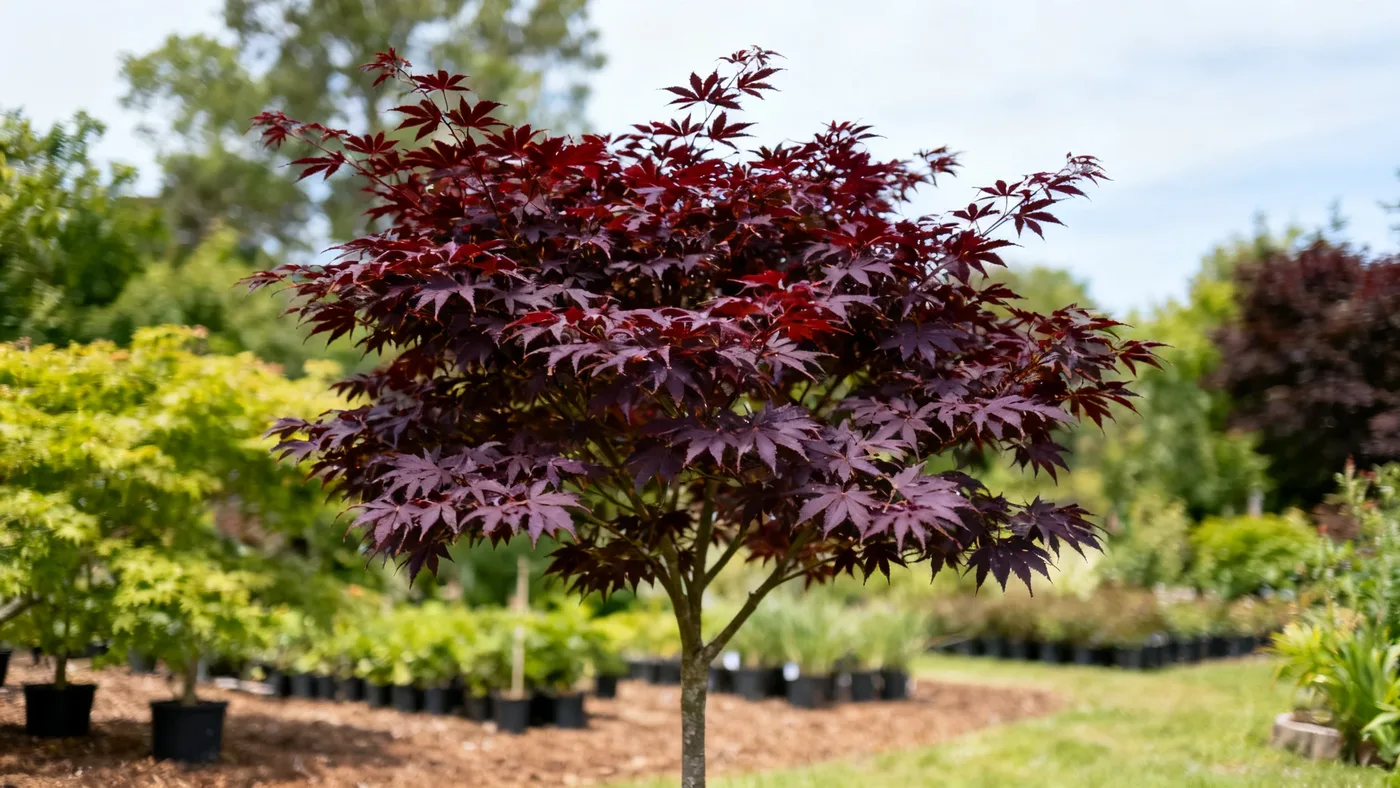
Bloodgood Japanese Maple is safe for toddler-friendly gardens since it is non-toxic. The tree's moderate mature size and attractive deep burgundy foliage make it a beautiful focal point without posing chemical hazards. Plant it in a location where toddlers can see and enjoy it while you maintain standard yard supervision practices.
Do I need to worry about thorns or sharp parts on Bloodgood?
Bloodgood Japanese Maple has no thorns, spines, or notably sharp plant parts. The leaves are soft with rounded palmate lobes, and the branches are not particularly hazardous compared to other ornamental trees. Typical tree safety applies, such as supervising young children around any tree to prevent falls, but there are no special sharpness concerns specific to Bloodgood.
Safety and Precautions
Are there any Japanese maple cultivars I should avoid for pet safety?
No Japanese maple cultivars are known to be toxic to pets, including Bloodgood, Crimson Queen, Fireglow, and Emperor I. All Acer palmatum varieties and selections are considered safe by the ASPCA. If you are concerned about a specific cultivar, consult your veterinarian or the ASPCA database, but toxicity is not a limiting factor in choosing Japanese maple varieties.
What is the safest way to use pesticides on Bloodgood if I have pets?
If you need to treat Bloodgood Japanese Maple for pests like aphids, scale insects, or Japanese beetles, use pet-safe formulations and follow all label instructions carefully. Avoid spraying during times when pets frequent the area, and allow the product to dry completely before pets return. Contact your veterinarian about the specific pesticide you plan to use to ensure it poses no risk to your animals.
Should I worry about fertilizers applied to Bloodgood?
Most balanced, slow-release fertilizers for woody ornamentals are safe when used as directed, though concentrated products can cause upset stomach if ingested directly. Apply fertilizer in early spring when you can keep pets away from the application area for a few hours. Once the product is watered in and dries, the risk to pets is minimal, especially compared to the toxicity risk from truly dangerous plants.
Can I use Bloodgood Japanese Maple as a living screen if I have dogs?
Yes, Bloodgood can be used as a background planting or screen without safety concerns for dogs. Its mature height of 15 to 20 feet and similar width make it suitable for medium-sized spaces and larger yards. Plant multiple trees 12 to 20 feet apart depending on your design, and they will fill in gradually as they grow at a slow to moderate rate.
Comparing Toxicity Risks
How does Bloodgood Japanese Maple compare to other common ornamental trees?
Bloodgood is considerably safer than many popular ornamental plants. While Bloodgood is non-toxic, plants like sago palm, lilies, yew, and oleander are highly toxic to pets and should be avoided in pet-friendly gardens. Japanese maples are among the safer choices for landscapes where dogs and cats roam freely.
What should I avoid planting if I have pets?
Avoid planting trees, shrubs, and flowering plants known to be toxic to pets, including yew, oleander, lilies, sago palm, autumn crocus, and foxglove. Your veterinarian or the ASPCA database can provide a complete list of plants to avoid. Bloodgood Japanese Maple and other non-toxic ornamentals are excellent alternatives that provide beauty without toxicity risk.
When to Contact a Veterinarian or Poison Control
What symptoms should prompt me to contact a vet after my pet contacts Bloodgood?
Because Bloodgood Japanese Maple is non-toxic, contact your veterinarian only if your pet shows unusual symptoms such as severe vomiting, persistent diarrhea, difficulty breathing, or lethargy lasting more than a few hours. These symptoms are unlikely to be caused by Bloodgood but may indicate another health issue requiring attention. Mild digestive upset from chewing any plant material is not cause for alarm.
Should I call poison control if my dog eats Bloodgood?
There is no need to call poison control for Bloodgood Japanese Maple ingestion since the plant is non-toxic. If you are concerned about symptoms unrelated to toxicity, contact your veterinarian. Reserve poison control calls for cases where a pet may have ingested a known toxic plant or substance.
Quick Reference: Bloodgood Safety Checklist
| Category | Safe? | Notes |
|---|---|---|
| Dogs (all parts) | Yes | ASPCA-verified non-toxic; safe if nibbled or ingested. |
| Cats (all parts) | Yes | ASPCA-verified non-toxic; unlikely to eat but safe if they do. |
| Children (contact, ingestion) | Yes | Non-toxic; no poisoning risk from leaves, bark, or seeds. |
| Leaves and branches | Yes | No toxic compounds; fallen leaves are as safe as live foliage. |
| Seeds (samaras) | Yes | Non-toxic; too hard for most pets to crack or digest. |
| Bark | Yes | Non-toxic; safe if chewed by pets or touched by children. |
| Standard fertilizers (applied safely) | Yes | Use pet-safe formulations and allow drying time before access. |
| Pet-safe pesticides (applied safely) | Yes | Apply per label; allow drying before pet access. |
Related Growing Resources
For detailed information on growing, planting, and caring for your Bloodgood Japanese Maple, see our complete care guide. That guide covers USDA hardiness zones 5 through 8, planting depth, spacing requirements of 12 to 20 feet from structures, sunlight needs, watering schedules, and seasonal pruning techniques. You will find practical advice for establishing a healthy tree that will thrive in your landscape for decades.