The Complete Bloodgood Japanese Maple Care Guide
Key Takeaways
- Bloodgood Japanese Maple thrives in USDA zones 5 through 8, with afternoon shade recommended in hotter climates
- Consistent moisture and well-drained soil are non-negotiable; this cultivar does not tolerate drought or poor drainage
- Full sun to part shade works, but afternoon shade prevents leaf scorch in hot summers
- Minimal pruning needed; prune only in late fall to mid-winter while fully dormant
- Reaches 6 to 8 feet tall in 5 to 7 years; expect full mature size (15 to 20 feet) in 15 to 20+ years
Table of Contents
- About Bloodgood Japanese Maple
- Choosing the Right Location
- Planting Your Bloodgood
- Watering and Soil Care
- Sunlight Requirements and Heat Management
- Pruning and Shaping
- Fertilizing and Feeding
- Common Problems and Solutions
- Quick Reference Guide
About Bloodgood Japanese Maple
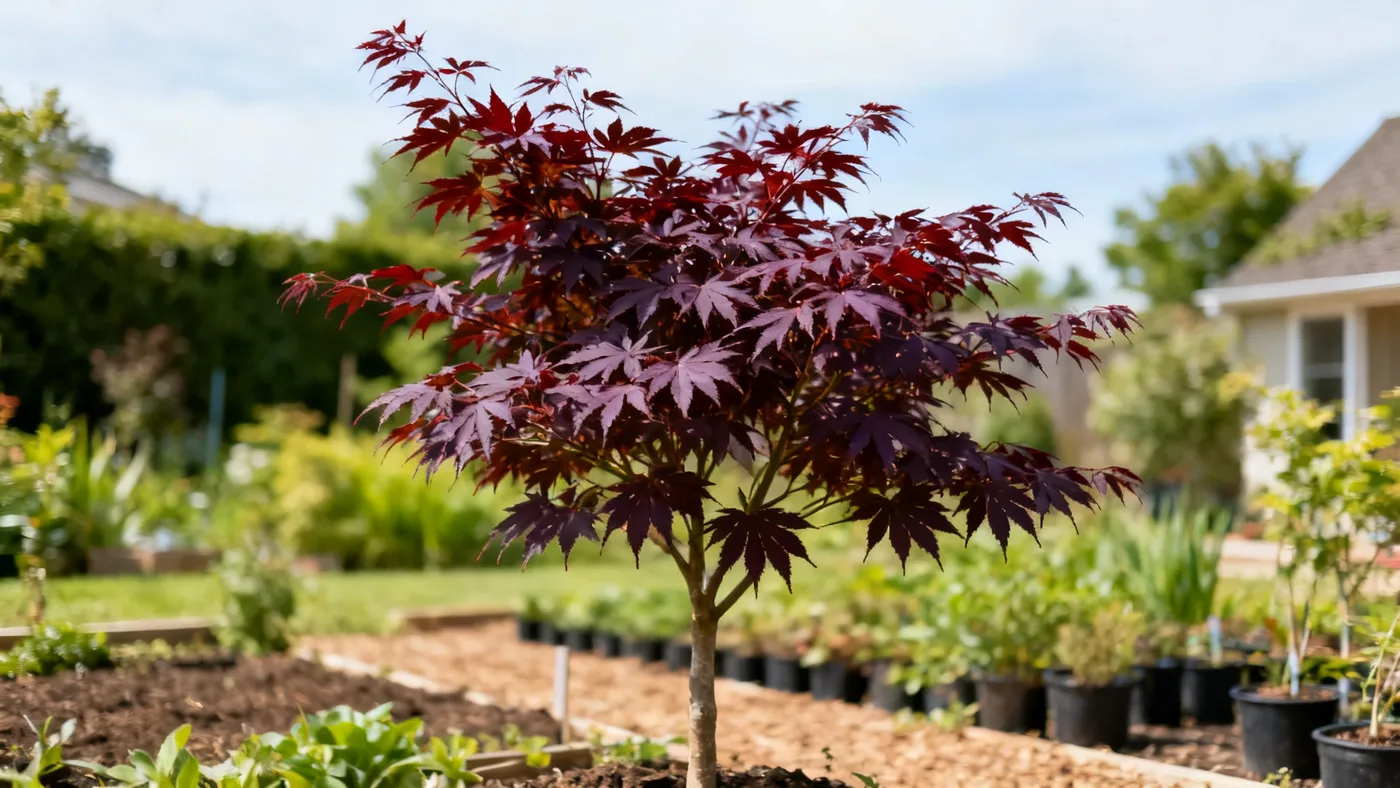
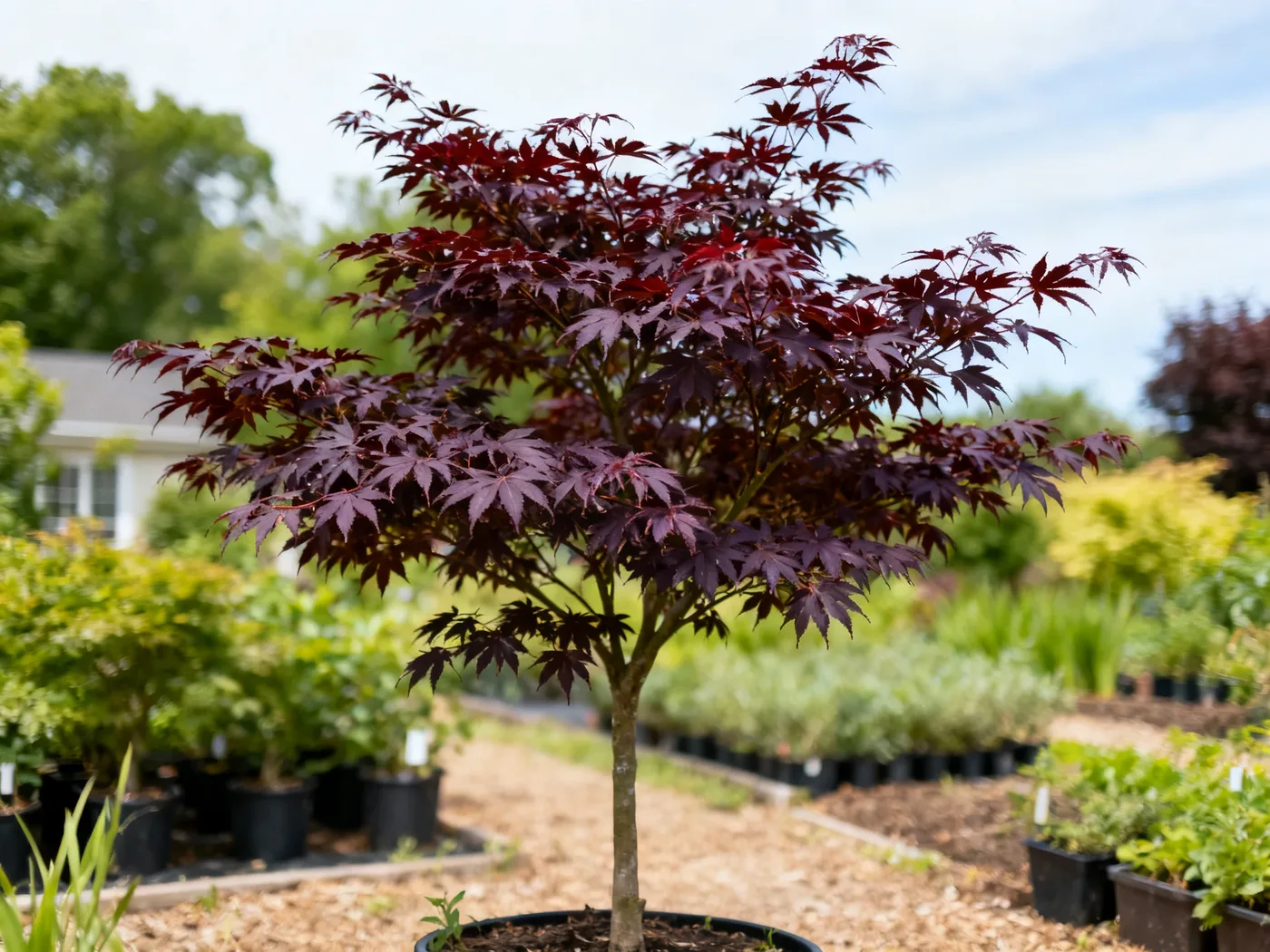
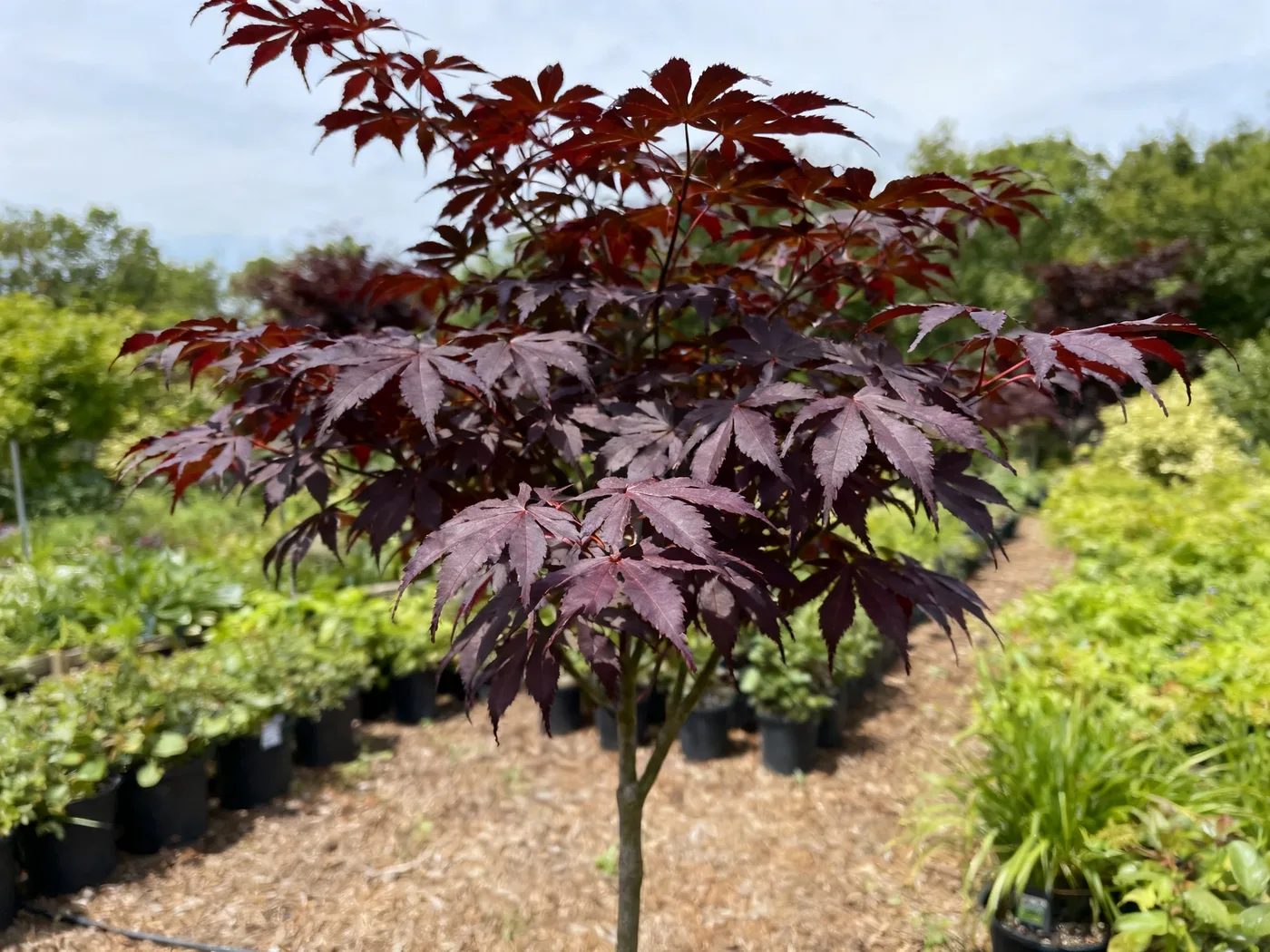
Bloodgood Japanese Maple (Acer palmatum 'Bloodgood') is a compact, deciduous ornamental tree that earns its place as a garden focal point through its year-round visual appeal. Unlike many red Japanese maple cultivars that fade to green in summer heat or deep shade, Bloodgood holds its deep reddish-purple to burgundy color through the growing season, making it a reliable choice for gardeners seeking persistent color.
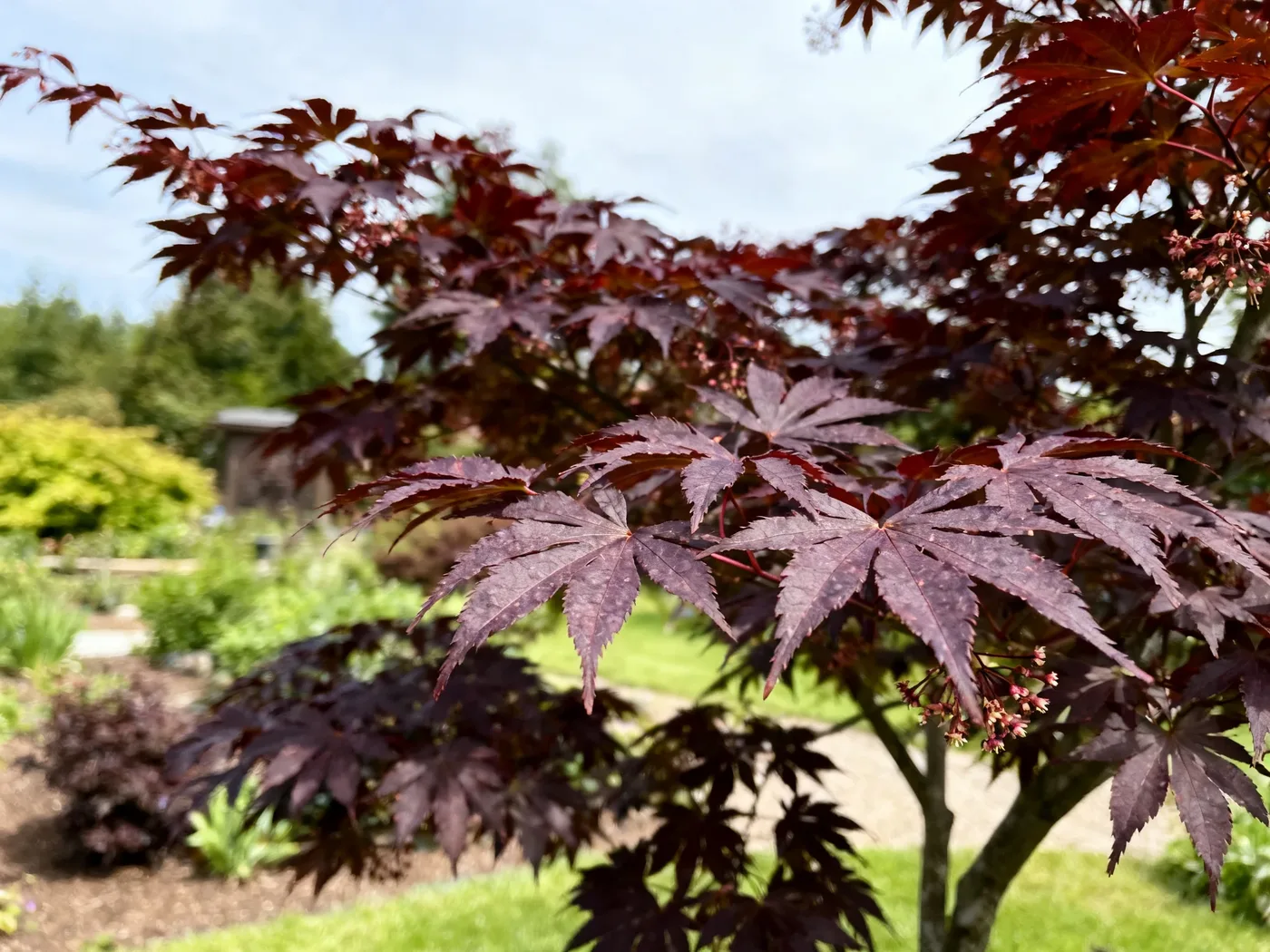
The tree's palmate leaves display 5 to 7 lobes with a finely textured appearance. Mid-spring blooms bring small, inconspicuous reddish-purple flowers, followed by modest winged seeds. Come fall, the foliage intensifies to crimson and bright red before dropping. Even in winter, the smoky-gray branching structure adds visual interest to the bare landscape.
A slow to moderate grower, Bloodgood gains roughly 12 to 18 inches per year under good conditions. This measured pace means the tree can remain graceful in smaller spaces without aggressive pruning, though it will eventually reach 15 to 20 feet in both height and spread over many decades. With proper care, a Bloodgood Japanese Maple often lives 80 to 100+ years.
Choosing the Right Location
Hardiness and Climate
Bloodgood Japanese Maple is cold hardy in USDA zones 5 through 8. Some sources extend the range to zone 9 with afternoon shade, though success in warmer zones depends heavily on heat and sun exposure management. If you live in zone 9 or at the southern edge of zone 8, afternoon shade becomes essential to prevent leaf scorch and color loss.
Late spring frosts can damage tender new growth, so avoid planting in frost pockets or areas where cold air settles at dawn. Choose a spot with good air drainage if possible, allowing warmer air to move freely around the canopy.
Spacing from Structures
Space your tree 12 to 20 feet away from houses, fences, other trees, and paved areas, depending on the eventual spread you expect. This distance allows the mature canopy to develop fully without crowding and permits air circulation underneath. If your space is tighter, choose a location at the closer end of that range and monitor growth; you can maintain a smaller silhouette through thoughtful, minimal pruning.
Avoid planting directly against south-facing walls, which radiate heat and can intensify leaf scorch. East or north facing foundations are safer bets.
Planting Your Bloodgood
Timing
Plant in early spring or fall, when the tree is dormant or just beginning to break dormancy. These seasons allow roots to establish before summer heat or winter cold stress the young plant. Avoid planting during extreme summer heat, which stresses newly planted trees and increases transplant shock.
Site Preparation
Bloodgood thrives in well-drained, rich loam. Before planting, amend heavy clay or sandy soil with compost or aged bark to improve structure and drainage. The soil should feel crumbly and hold moisture without becoming waterlogged.
Soil pH should be slightly acidic to neutral, ideally between 5.5 and 6.5. If your soil is alkaline, amend it with sulfur or peat moss over time, or choose a different location. This tree is sensitive to poorly drained or compacted soil, which leads to root rot and stress.
Planting Steps
- Dig a hole as deep as the root ball and two to three times as wide
- Loosen the sides and bottom of the hole to encourage root outgrowth
- Set the tree so the top of the root ball is level with the ground surface (not buried deeper)
- Backfill with amended soil, firming gently to eliminate air pockets
- Water thoroughly immediately after planting to settle the soil
- Apply 2 to 3 inches of mulch around the base, keeping it 4 to 6 inches away from the trunk to prevent rot
Planting too deep is a common mistake that leads to girdling roots and long-term decline. Keep the base of the trunk visible above the mulch layer.
Watering and Soil Care
Moisture Needs
Bloodgood requires moderate, consistent moisture. Young trees and those in their first two years after planting need regular watering; water deeply once or twice per week if rainfall is sparse, depending on soil type and summer heat. Soak the root zone rather than sprinkling the foliage.
Established trees (3+ years old) handle brief dry spells but are not drought tolerant without regular supplemental water during extended heat. Once established, these maples may need deep watering only during prolonged drought lasting more than two to three weeks without rain.
Avoiding Root Rot
Poor drainage is a leading cause of decline in Bloodgood. If water pools around the base after rain, the soil is too compacted or naturally poorly drained. Improve drainage by amending the soil with compost or creating a slight mound at the planting site. In extreme cases, consider a different planting location or building a raised bed.
Mulch Benefits
Maintain a 2 to 3 inch layer of mulch to conserve moisture, regulate soil temperature, and suppress competing weeds. Use bark chips or shredded leaves. Replenish mulch annually as it breaks down. Keep the mulch ring several inches away from the trunk to prevent bark rot and pest harborage.
Sunlight Requirements and Heat Management
Ideal Light Conditions
Bloodgood Japanese Maple performs well in full sun to part shade. However, "full sun" in a cool climate (zones 5 to 6) is different from full sun in a hot climate (zone 8 or 9). In cooler regions, 6 to 8 hours of direct sun daily deepens and maintains the burgundy color. In warmer zones, afternoon shade (from 2 or 3 PM onward) prevents leaf scorch and fading.
Leaf Scorch and Color Fading
Leaf scorch appears as brown, papery edges or patches on the leaves and is caused by hot sun, drying wind, or inconsistent watering. Trees exposed to harsh afternoon sun in zone 8 or warmer are especially vulnerable. Morning sun with afternoon shade is the best compromise for hot climates.
If your tree receives deep shade (less than 4 hours of direct sun), the summer foliage may fade toward green, losing the rich burgundy that makes Bloodgood distinctive. A site with dappled or morning sun and afternoon shade balances color retention and heat tolerance.
Wind Protection
Strong, drying winds increase transpiration stress and can cause leaf scorch even in adequately watered trees. If your site is exposed to constant wind, plant a windbreak (evergreen shrubs or fence) on the windward side, or select a more sheltered location. Morning wind from the east is less damaging than afternoon wind from the west or south.
Pruning and Shaping
Minimal Pruning Approach
Bloodgood Japanese Maple naturally develops an attractive, balanced form and requires minimal pruning. Most trees benefit from removing only dead, diseased, or crossing branches. Avoid heavy pruning in spring, when sap flow is active and wounds bleed excessively (called "bleeding" or "weeping").
Timing and Technique
Prune in late fall to mid-winter while the tree is fully dormant. This timing minimizes sap loss and allows wounds to heal before growth resumes in spring. Make cuts just outside the branch collar (the slightly swollen area where the branch meets the trunk), and avoid leaving stubs or cutting too close.
Do not use wound dressing or pruning seals; research shows trees compartmentalize wounds more effectively when left open to air. Allow the tree's natural healing processes to work.
When to Prune
Remove dead branches anytime for safety and appearance. If you wish to shape the canopy or reduce size, make all cuts in dormant season. Small branches can be removed, but avoid cutting large limbs; this cultivar is best enjoyed in its natural form rather than heavily manipulated.
Fertilizing and Feeding
Light Feeding Schedule
Bloodgood does not require heavy fertilization. Over-fertilizing causes weak, leggy growth and can increase susceptibility to leaf scorch and pests. A light feeding in early spring (as new growth emerges) is sufficient for most trees.
Fertilizer Type
Use a balanced, slow-release fertilizer formulated for acid-loving or woody ornamental plants. Follow the package instructions for application rates based on tree age and size. A 10-10-10 or similar balanced analysis is appropriate; avoid high-nitrogen formulas, which promote excessive shoot growth at the expense of color intensity and structural strength.
Organic Alternatives
If you prefer organic methods, a light compost mulch worked into the soil surface in early spring provides slow, steady nutrient release. Avoid fresh manure or high-nitrogen compost mulches, which can burn roots and promote rank growth.
Common Problems and Solutions
Leaf Scorch
Leaf scorch presents as brown or bleached leaf margins and is caused by heat, sun exposure, wind, or inconsistent watering. Prevention is easier than cure: ensure afternoon shade in hot climates, maintain consistent soil moisture, protect from strong winds, and mulch to regulate soil temperature. Once scorch appears, improve watering and provide shade for the following season; existing damage will not recover.
Color Fading to Green
If your Bloodgood's summer foliage turns entirely or partially green, the tree is likely in too much shade or receiving excessive nitrogen. Reduce shade by removing competing plants or prune nearby trees to admit more light. Hold back on fertilizer and rely on lighter, spring-only feeding. Some fading occurs naturally in extreme heat, and afternoon shade may be the trade-off for summer survival in zone 8 and hotter.
Pest Issues
Common pests include aphids, scale insects, Japanese beetles, and borers in stressed trees. Regular watering and good cultural practices prevent most pest damage. Inspect the tree monthly during the growing season. If insects appear, a strong spray of water dislodges many aphids. For persistent infestations, consult your local extension service for treatment options suited to your region.
Diseases
Verticillium wilt, anthracnose, and root rot are the main fungal concerns. Verticillium and anthracnose thrive in wet spring conditions and typically cause partial dieback. Root rot is almost always a drainage or overwatering problem; fix the soil and irrigation and the tree often recovers. There is no cure for these diseases, only prevention through proper siting, drainage, and avoiding overhead watering.
Late Spring Frost Damage
New growth in late spring is tender and can be damaged by sudden frosts. If frost damage occurs, prune out the dead tips after growth fully emerges; the tree will produce new shoots. Avoid heavy pruning, which may remove too much of the year's growth. Choose a frost-protected site if frost is common in your area.
Girdling Roots
Planting too deep or leaving a tree in a nursery pot too long causes roots to circle the stem and eventually girdle it, strangling the tree. Prevention is critical: never plant deeper than the original root ball, and pot-bound nursery trees should be carefully loosened and spread before planting. If girdling is discovered early, carefully carving away or redirecting the offending roots may save the tree; consult an arborist if unsure.
Quick Reference Guide
| Care Aspect | Recommendation |
|---|---|
| Hardiness Zones | 5 to 8 (zone 9 with afternoon shade) |
| Mature Size | 15 to 20 feet tall and wide (25+ years) |
| Years to Landscape Size | 6 to 8 feet in 5 to 7 years |
| Sun Exposure | Full sun to part shade; afternoon shade in hot climates |
| Spacing from Structures | 12 to 20 feet |
| Soil Type | Well-drained, rich loam; pH 5.5 to 6.5 |
| Watering (New Trees) | Deep watering 1 to 2 times per week if rainfall is sparse |
| Watering (Established) | Deep watering during drought; handles brief dry spells |
| Mulch Depth | 2 to 3 inches, 4 to 6 inches away from trunk |
| Annual Growth Rate | 12 to 18 inches per year |
| Pruning Season | Late fall to mid-winter (dormant only) |
| Fertilizing | Light feeding in early spring with balanced, slow-release formula |
| Lifespan | 80 to 100+ years with good care |
Final Notes
Bloodgood Japanese Maple rewards thoughtful site selection and basic, consistent care with decades of ornamental beauty. The key to success is prioritizing proper drainage, consistent (but not excessive) moisture, light afternoon shade in hot climates, and minimal pruning. Avoid the common pitfalls of planting too deep, over-fertilizing, and hard spring pruning, and your tree will thrive. Whether you are planting a young sapling or caring for a mature specimen, these fundamentals apply across all growing regions within the hardiness range.