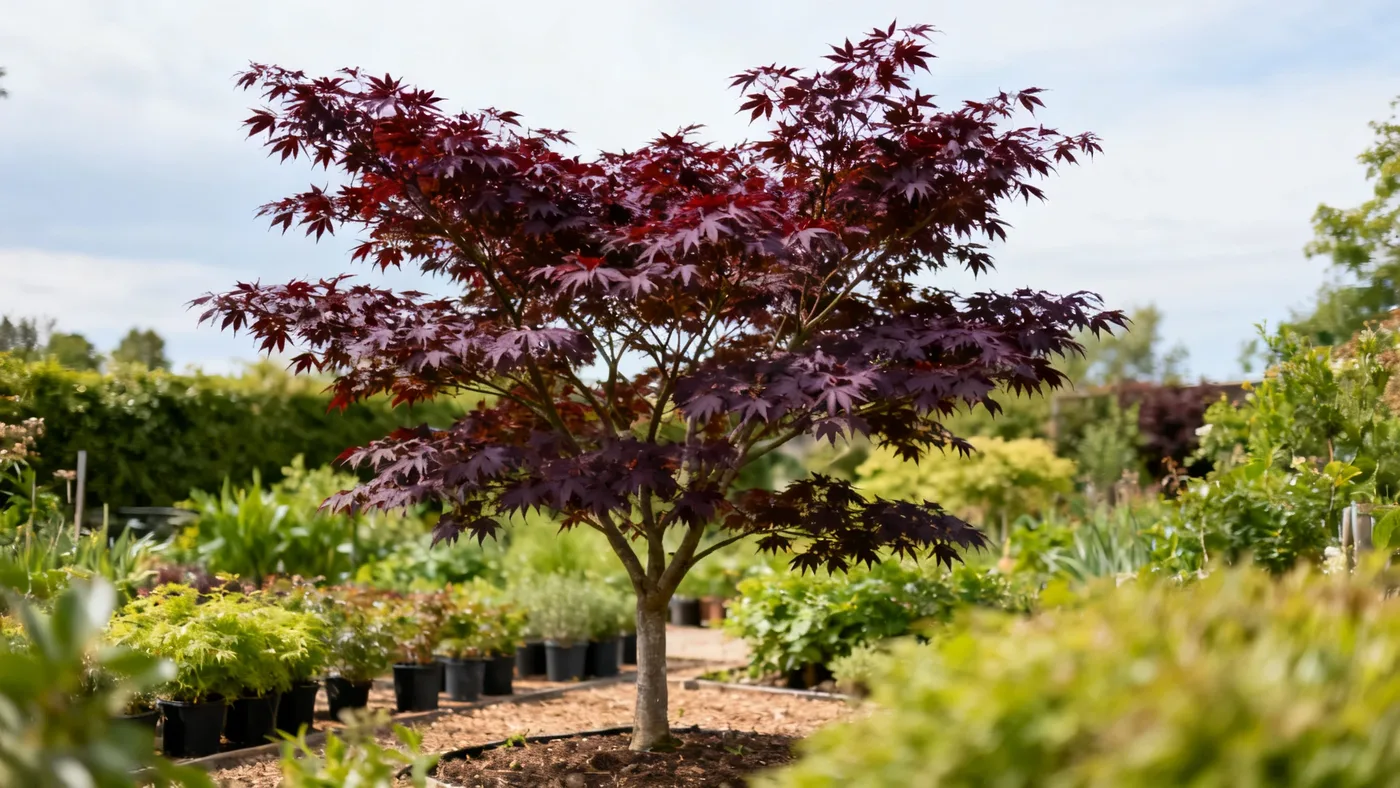
Winter Care for Bloodgood Japanese Maple in Cold Climates
Bloodgood Japanese Maple thrives in USDA zones 5 through 8, which means most of your winter management comes down to preparation and consistency rather than emergency rescue. A well-protected Bloodgood maple will survive cold winters intact, hold onto its striking burgundy foliage color, and emerge in spring ready for vigorous growth. The key is understanding what happens belowground during freezing temperatures and taking measured steps in fall to prevent root damage and winter desiccation.
Why Winter Care Matters for Bloodgood Japanese Maple
Bloodgood Japanese Maple is not a tropical tree that needs coddling in every cold snap. It evolved to handle winter dormancy. What it cannot handle well is the combination of temperature swings, dry winter winds, waterlogged soil, and sudden ground-level freezing after a thaw. In zones 5 and 6, winter temperatures regularly dip below 0F (minus 18C), which means the soil freezes solid. In zones 7 and 8, the freeze is less severe but still common enough to stress an unprepared tree.
The damage isn't always visible until spring. Roots exposed to repeated freeze-thaw cycles can break or heave out of the soil. Potted maples sit in containers where roots have no escape from cold, making them especially vulnerable. And late spring frosts, which arrive after new growth has emerged, can injure tender buds and young foliage before you realize the danger.
Proper winter care means you're preventing these problems now, not apologizing for them in April.
Understanding Bloodgood Hardiness and Your Zone
Bloodgood Japanese Maple is rated hardy in USDA zones 5 through 8. Some growers in zone 9 have had success with afternoon shade, which keeps the tree cooler in both winter and summer and reduces temperature shock.
If you're at the edge of your zone, winter protection becomes more important. A tree in zone 5 needs more aggressive mulching and root insulation than one in zone 7. And if you garden in zone 9 with Bloodgood, afternoon shade and consistent soil moisture are non-negotiable. Check your local USDA hardiness zone map if you're unsure where you live; many regions span multiple zones depending on elevation and proximity to water.
Materials and Supplies You'll Need
Gather these items in early fall before the first hard frost:
- Organic mulch (shredded bark, wood chips, or aged compost): 3 to 4 cubic yards per mature tree
- Work gloves and shovel or spade for mulch application
- Burlap or shade cloth if you have an exceptionally windy exposure
- Rope or plant ties (soft, non-abrasive)
- Watering can or hose for fall and winter hydration
- For potted trees: landscape fabric or burlap to wrap the container, plus additional mulch or straw for insulation
- Optional: a moisture meter to check soil conditions without guessing
Step-by-Step Winter Protection Guide
Step 1: Assess Your Tree's Location and Exposure
Before winter arrives, examine where your Bloodgood maple sits. Is it in a wind tunnel between two buildings? Does it get morning sun that causes rapid thawing after snow? Is it downslope from a roof line where snow and ice will avalanche onto it? These details matter because they tell you how aggressive your protection needs to be.
Windswept sites need shelter (burlap screens). Areas that heat and thaw repeatedly during the day benefit from light afternoon shade cloth in late winter to slow thaw cycles. Sheltered, level locations need only standard mulching.
Step 2: Stop Fertilizing and Pruning by Mid-Fall
Cease feeding your Bloodgood maple after early September. Any nitrogen fertilizer applied late in the growing season stimulates tender new growth that the cold will kill. Similarly, avoid pruning after late September. If you must remove a dead or crossing branch, wait until the tree is fully dormant and do it between late fall and mid-winter.
Step 3: Water Deeply Before the Ground Freezes
Dehydration in winter is as dangerous as frost. Well-hydrated trees tolerate cold better than thirsty ones because water in the cells acts as an antifreeze. Soak the soil around the base of your Bloodgood maple thoroughly in late October or early November, before the ground hardens.
Water deeply enough that the soil is moist 6 to 8 inches down. For a tree 5 to 10 years old, a slow trickle at the drip line for 30 to 45 minutes usually achieves this. You are not looking for a soggy swamp; you want consistent moisture, not waterlogging.
Step 4: Apply Winter Mulch Around the Base
Mulch insulates the root zone and moderates soil temperature swings. In zones 5 and 6, apply 3 to 4 inches of organic mulch (shredded bark, wood chips, or aged compost) in a ring around the base of the tree. Keep the mulch 2 to 3 inches away from the trunk to prevent rot and rodent damage.
Create a mulch ring that extends out to the drip line (the outer edge of the canopy), or at minimum 4 to 5 feet from the trunk for young trees. This wider coverage protects the finer, more frost-sensitive roots at the edges of the root zone.
In zones 7 and 8, 2 to 3 inches of mulch is usually sufficient unless the tree is newly planted or unusually small.
Step 5: Protect Potted Trees Aggressively
Roots in containers are far more exposed to freezing than in-ground roots. If your Bloodgood maple is in a pot and you live in zone 5 or 6, the container itself needs insulation.
Wrap the pot in burlap or landscape fabric (not plastic, which traps moisture and promotes rot). Then surround the wrapped container with straw, leaves, or additional mulch piled up around the sides, leaving the top of the soil slightly exposed. You can also sink the entire pot into a larger mulched bed to gain extra protection from the surrounding soil.
Move the pot to a sheltered spot if possible, such as against the south side of a house or fence. Avoid low-lying areas where cold air pools.
Step 6: Monitor Soil Moisture Through Winter
Winter dormancy is not a watering holiday. Frozen soil looks dry because water is locked up as ice, but the tree still needs available moisture when occasional thaws occur. On mild days (above 40F/4C) when the soil is not frozen, check the soil 2 to 3 inches down with your finger. If it feels bone-dry, water deeply at the base.
In most years, fall rainfall and winter precipitation (snow or rain) provide enough moisture. But in dry winters, you may need to water once or twice between December and February, especially for potted trees.
Protecting Your Bloodgood Maple from Winter Wind and Ice
Harsh winter winds increase the risk of winter desiccation (leaves and twigs drying out despite frozen soil). If your Bloodgood sits in an exposed, windy location, install a burlap screen on the windward side. This screen breaks wind velocity without sealing off all air circulation.
Heavy ice and snow loads rarely break Bloodgood maple branches because the wood is supple, but they can bend young trees out of shape. Gently brush heavy wet snow off the canopy after storms, working from the bottom up. Do not shake the tree or strike branches, as this can cause them to snap in sub-freezing temperatures.
Common Winter Damage and Prevention
Leaf Scorch and Desiccation
Foliage may turn brown or papery by late winter if the tree loses moisture faster than roots can replace it. This is most common in areas with consistent wind, low humidity, and frozen soil that prevents water uptake. Mulching, shelter from wind, and fall deep-watering reduce this risk significantly. If scorch appears, resist the urge to prune until spring growth emerges; the tree may recover once roots can access thawed soil.
Root Heave from Freeze-Thaw Cycles
Repeated freezing and thawing can literally lift young roots out of the soil, exposing them to air and killing them. Mulch protects against this by insulating the soil and reducing temperature swings. Avoid disturbing the soil around the tree in fall and winter to prevent accelerating this effect.
Damage from Late Spring Frosts
Bloodgood maple is sensitive to late spring frosts that damage new growth after the buds have already opened. This is not a winter problem per se, but it is a direct result of winter's end. If you live in an area where hard freezes occur in April or May after warm spells, shade cloth or burlap over the canopy during frost warnings can help. Remove the cloth during the day to allow sunlight and avoid trapping excess heat.
Preparing for Spring and Winter Cleanup
By late April or early May (depending on your zone), once the risk of hard frost has passed and new growth is clearly emerging, you can remove winter mulch screens, burlap wraps, and temporary insulation. Leave some mulch in place year-round (1 to 2 inches) to maintain soil structure and moisture, but rake back the heavier winter layer to allow soil to warm up in spring.
Inspect the tree for any dead twigs or branches damaged by winter weather. These can be pruned cleanly once the tree has leafed out and you can see clearly which growth is viable.
Year-Round Winter-Readiness Checklist
| Task | Timing | Zone 5-6 | Zone 7-8 |
|---|---|---|---|
| Last fertilization | Early September or earlier | Required | Recommended |
| Stop pruning (except damage) | Late September onward | Required | Required |
| Deep water before freeze | Late October to early November | Required | Recommended |
| Apply base mulch | November, before hard freeze | 3 to 4 inches | 2 to 3 inches |
| Insulate potted containers | November to December | Required | Recommended |
| Install wind protection (if needed) | December to January | As needed | As needed |
| Monitor soil moisture | December through February | Every 2-4 weeks | Every 3-4 weeks |
| Remove winter insulation | Late April to May (after frost risk) | Required | Required |
| Inspect for winter damage | May, when leafed out | Required | Required |
Winter care for Bloodgood Japanese Maple is manageable and rewarding. By understanding the specific challenges of your climate zone and taking these practical steps, you'll keep your tree healthy through the coldest months and see it flourish when growth resumes. For comprehensive year-round care guidance, refer to the complete Bloodgood Japanese Maple care guide.