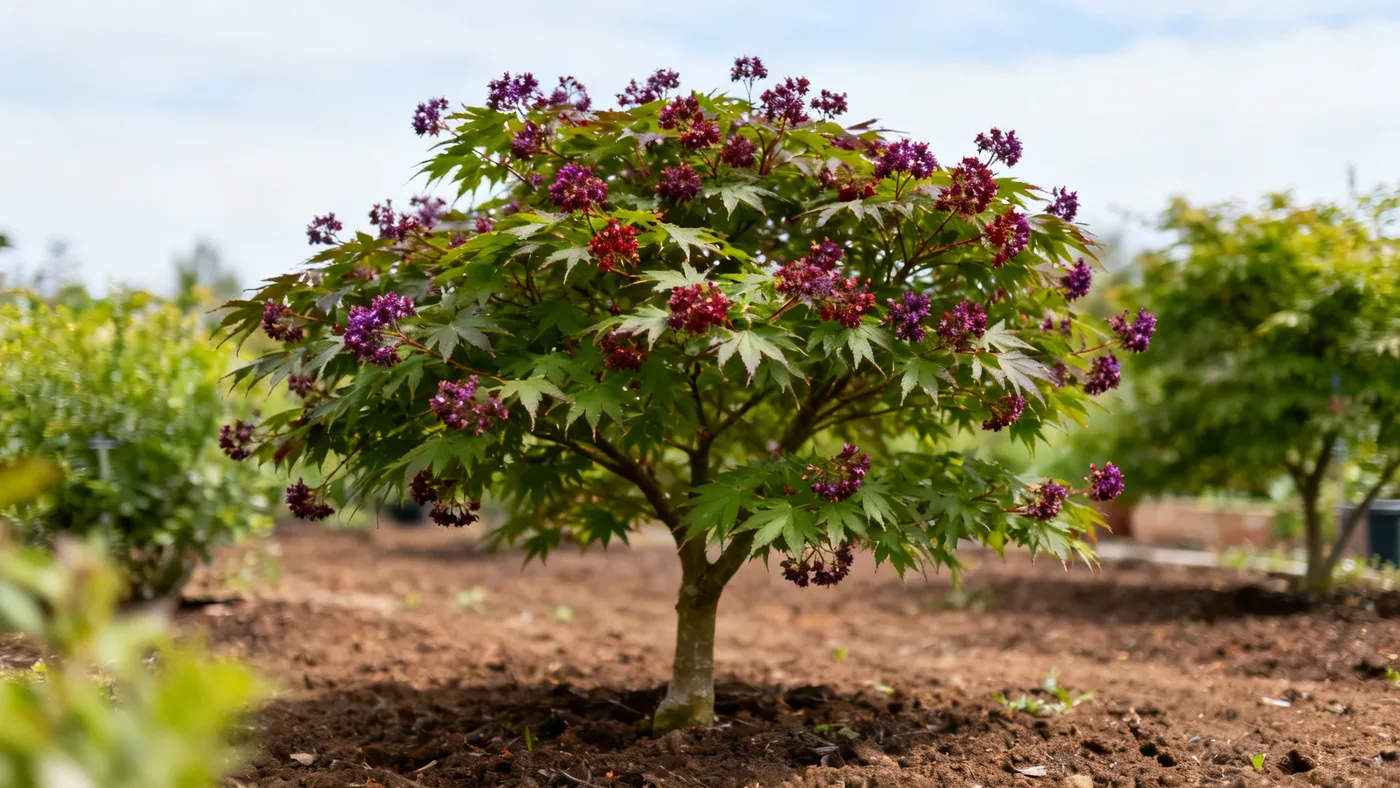
Bloodgood Japanese Maple Fall Color: What to Expect Each Year
Late September through October is when Bloodgood Japanese Maple earns its reputation. After months of holding a steady deep burgundy throughout summer, this cultivar shifts into one of the most reliable crimson-to-bright-red fall performances among ornamental maples. If you planted one expecting subtle autumn color, you're about to see why this tree deserves the spotlight each year.
Why Bloodgood Delivers Consistent Red Fall Color
Bloodgood Japanese Maple holds its deep reddish-purple foliage longer into fall than many other red Japanese maple cultivars, which means the summer color doesn't fade to muddy green before the autumn shift begins. That head start matters. Your tree arrives at September with pigmentation already established, so when temperatures drop and the physiology of leaf senescence kicks in, there's a strong red baseline to build from.
The result: crimson to bright red fall foliage that lasts 3 to 4 weeks in most zones. You're not getting the muted orange-red that aging red maples produce, and you're not watching the color collapse into brown in week two. Bloodgood stays vibrant.
When the Color Change Begins: Timing by Zone
Bloodgood Japanese Maple grows reliably in USDA zones 5 through 8, with some plantings in zone 9 where afternoon shade protects from summer heat stress. This range spans significant climate variation, so timing shifts accordingly.
- Zone 5 and early zone 6: Color begins shifting in late August to early September. Peak color arrives by mid-September. By late September, some leaf drop begins.
- Zone 6 and 7: Color transition starts in mid-September. Peak color window is typically late September through early October.
- Zone 8: Expect color change to start in late September or early October. Peak viewing often extends into mid-October.
- Zone 9 (with afternoon shade): Color shift delays further; peak viewing can stretch into late October or even early November.
These windows assume a typical year with normal autumn temperature progression. A warm fall (temperatures staying above 60°F well into October) will delay color change and mute intensity. An early frost sharpens the transition and can intensify red tones.
What Affects Fall Color Year to Year
Bloodgood doesn't deliver identical color performance every season. Understanding the variables helps you set realistic expectations and know when a less vibrant year reflects normal variation versus a tree health problem.
Temperature fluctuation
Cool nights (40s to 50s°F) combined with sunny days are ideal for fall color development in any maple. Warm nights slow the process and reduce intensity. If your area experiences an unusually mild autumn, the red tones may be less saturated. Conversely, an early frost can trigger rapid, dramatic color change and sometimes exceptionally bright reds.
Summer water stress
Bloodgood requires moderate, consistent moisture. A dry summer (especially in zones 8 and 9) can stress the tree, causing early leaf drop and muted fall color. Conversely, unusually wet springs sometimes delay color change by keeping nights cool but foliage hydration high. Aim for steady moisture without waterlogging.
Sunlight exposure
Full sun to part shade are both acceptable for Bloodgood, but trees in full sun typically develop more intense fall color. Trees in deeper shade (less than 3 to 4 hours of direct sun) may produce less vivid reds and shift to orange tones. In hot southern climates (zones 8 and 9), afternoon shade prevents summer scorch but doesn't diminish fall color development.
Nitrogen levels in soil
Over-fertilizing with nitrogen promotes lush green foliage through summer, which delays senescence and can produce duller fall colors. A balanced, slow-release fertilizer applied in early spring is appropriate; avoid a second feeding in summer or fall. Most established trees thrive on no supplemental fertilizer at all.
Comparing Year-to-Year Variation
If your Bloodgood showed brilliant red last October but delivered more orange-red this year, don't assume something is wrong. Maturity, weather, and soil conditions all shift. Here's what's normal:
- Young trees (under 5 to 7 years old) sometimes produce less consistent fall color than mature specimens. As the tree reaches landscape-usable size, fall displays typically strengthen.
- A year with unusually high spring rainfall can delay color change by 1 to 2 weeks.
- Extremely hot, dry summers followed by mild autumns often produce orange-red rather than true red.
- Trees that experience late spring frost damage (injury to new growth) may skip a year of strong fall color while recovery takes priority.
Dramatic color failure (early brown leaf drop, no red shift, or pale yellowing) suggests a problem: compacted soil, root restriction, herbicide damage, or drought stress. See the Bloodgood Japanese Maple care guide for diagnosis and correction steps.
Regional Color Patterns: What Your Zone Typically Sees
While individual year variation is real, geographic patterns hold. Here's what to anticipate:
Cold zones (5 and early 6)
Bloodgood achieves the most dramatic, pure reds in cold zones with distinct autumn temperature drops. The transition is often sharp and complete. Foliage persists for 3 weeks, sometimes 4 if an early frost holds it. The risk is early or harsh late-spring frosts damaging new growth, which can reduce that year's overall display.
Temperate zones (6 and 7)
This is the sweet spot for Bloodgood fall performance. Temperature swings are pronounced enough to trigger color development without the abrupt chill that can stress the tree. Expect rich crimson color and a reliable 3 to 4 week peak window.
Warm zones (8 and 9)
Bloodgood still performs well, but the transition is slower and more extended. You're more likely to see crimson fading into bright orange-red rather than pure red. The longer color window can actually extend viewing season into early November. Afternoon shade helps prevent summer leaf scorch, which would damage fall performance.
Peak Viewing Window: How Long the Color Lasts
Once peak red arrives, how long can you enjoy it? Typically 3 to 4 weeks. The first week is usually the most intense. By week 3, leaves begin dropping, though color often remains until the tree is largely bare.
In an ideal fall (cool nights, sunny days, no hard frosts), the color window extends toward 4 weeks. In a warm year with mild nights, expect closer to 3 weeks or slightly less. An early hard frost can collapse the display in days, but rarely without providing a brief period of exceptional brilliance.
Leaf drop is gradual. Bloodgood rarely sheds all its foliage at once. You'll get several weeks of watching the canopy thin while remaining leaves stay crimson.
How to Maximize Fall Color Each Year
You can't control weather, but consistent care during the growing season sets the stage for strong fall performance.
Maintain steady moisture spring through early fall
Water during dry periods so soil stays consistently moist but not waterlogged. Bloodgood is not drought tolerant once established without regular water. A stressed tree will skip strong fall color to conserve energy.
Prune only in late fall to mid-winter when dormant
Pruning during the growing season diverts energy from foliage development and can suppress fall color. If shaping is needed, wait until the tree is fully dormant. Remove dead or crossing branches only; avoid heavy pruning. Excessive pruning causes sap bleed in spring and stress.
Avoid over-fertilizing
A light feeding with balanced, slow-release fertilizer in early spring is sufficient. Skip the summer feed. Excess nitrogen pushes green foliage and delays the senescence that triggers color change. Most established specimens need no supplemental fertilizer at all.
Ensure good air circulation
Trees crowded by nearby shrubs or in still air pockets sometimes develop fungal issues in late summer, which can trigger early leaf drop and weak fall color. Site the tree where air moves freely.
Protect from extreme afternoon heat in zones 8 and 9
Afternoon shade in hot climates prevents summer leaf scorch, which damages foliage structure and can mute fall color. Morning sun is valuable; afternoon shade is protective.
Bloodgood's Summer Foliage Sets the Stage
One reason Bloodgood delivers stronger fall reds than some other cultivars is its deep reddish-purple summer foliage. The palmate leaves (5 to 7 lobes each) start the season in a dark burgundy and hold that color reliably without fading to green. That means your tree arrives at autumn already pigmented, giving the anthocyanins (red pigments) a head start during senescence.
By late summer, when temperatures drop and days shorten, the tree's physiology shifts from growth to preparation for dormancy. The deep pigment already present intensifies and shifts toward true red. It's a cumulative effect: color doesn't appear from nowhere in October; it's been building all season.
Companion Plantings to Extend Your Fall Display
Bloodgood alone is spectacular, but nearby plantings amplify the impact. Pair it with shrubs and perennials that peak at the same time or slightly before.
- Boxwood: Stays deep green, making red foliage pop. Provides structural evergreen contrast.
- Ferns: Bronze and russet tones in fall complement the red maple. Textural contrast is striking.
- Ornamental grasses: Many turn golden or tan in fall. The warm tones harmonize with crimson without competing.
- Azaleas: Some cultivars hold foliage into late fall with burgundy tones that echo the maple's color.
- Hellebores: Evergreen structure and subtle fall color shifts provide continuity after the maple has dropped leaves.
Signs of a Problem Versus Normal Variation
Not every shift in color intensity means the tree is struggling. But certain patterns warrant attention:
| Observation | Normal? | Action |
|---|---|---|
| Less vivid red than last year; more orange tones | Yes, usually | Check summer water consistency and fertilizer use; no action needed if tree looks healthy |
| Color change delayed 1 to 2 weeks | Yes, normal variation | None; this is weather-driven |
| Early leaf drop (August or early September) | No | Assess soil moisture, look for pests/disease; may indicate drought stress or fungal issue |
| Pale or yellowing leaves instead of red shift | No | Check for chlorosis (iron deficiency), root problems, or herbicide damage |
| Leaves drop before color develops | No | Investigate root rot or severe drought; may need professional diagnosis |
| Weak display following late spring frost | Yes, temporary | No action; focus on recovery; next year should return to normal |
Quick Reference: Bloodgood Fall Color Checklist
| Factor | What to Expect |
|---|---|
| Peak color timing | Mid-September (zones 5-6) to mid-October (zone 8-9) |
| Color range | Crimson to bright red |
| Duration | 3-4 weeks at full intensity |
| USDA zones for best display | 5-8 (zone 9 with afternoon shade) |
| Ideal conditions | Cool nights (40s-50s°F), sunny days, consistent soil moisture |
| Summer foliage color | Deep reddish-purple to burgundy |
| Full sun effect | Most intense reds |
| Part shade effect | Still good; may trend toward orange-red |
| Mature size | 15-20 ft tall and wide |
| Growth to landscape-useful size | 5-7 years |
| Over-fertilizing impact | Delays color, mutes intensity |