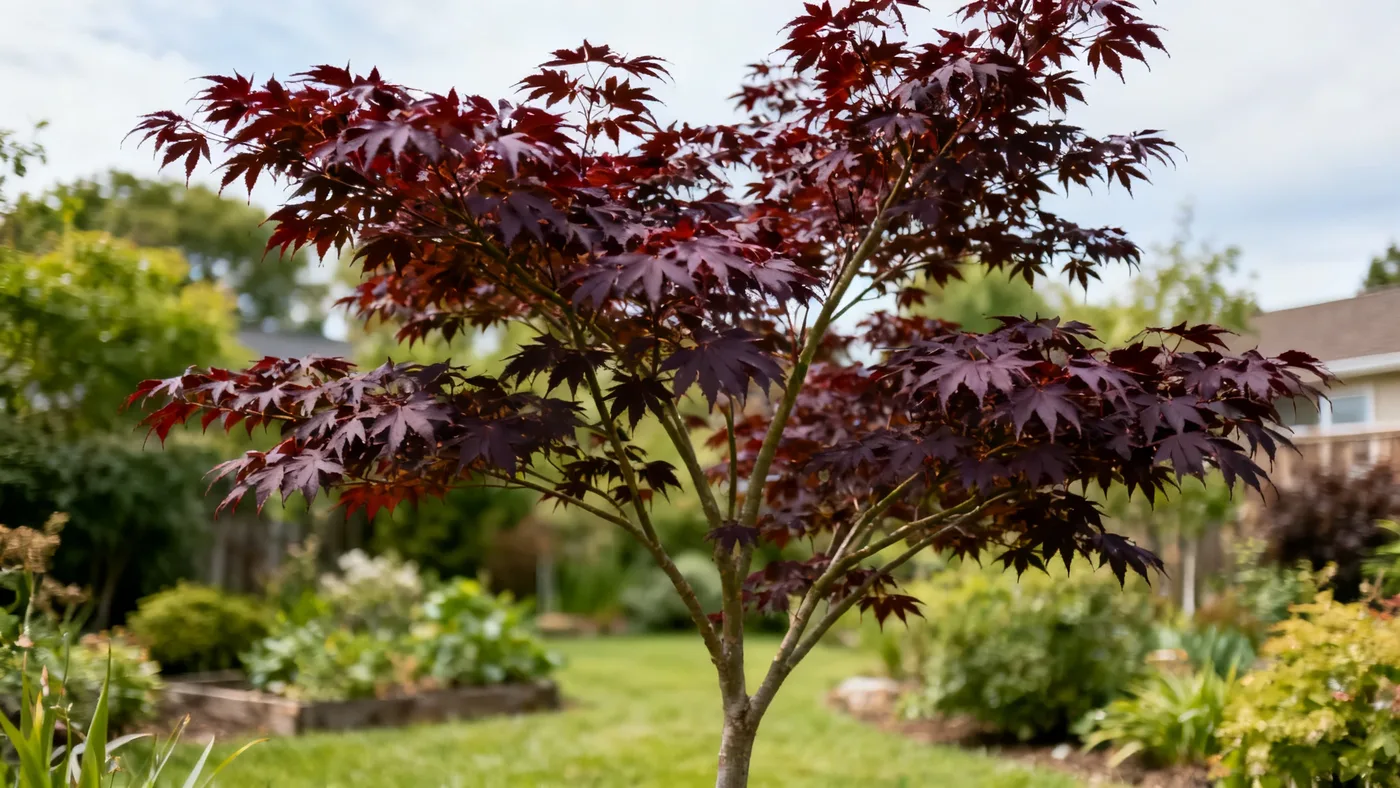
Do You Need to Fertilize Bloodgood Japanese Maple? A Guide
Bloodgood Japanese Maple does not require heavy fertilizing. In fact, over-feeding one of these beautiful trees often does more harm than good. The real question is not whether you must fertilize, but when, how, and with what. This guide walks you through a modest, sensible feeding schedule that keeps your tree healthy without pushing weak, spindly growth or leaf damage.
Does Bloodgood Japanese Maple Need Fertilizer?
A newly planted Bloodgood Japanese Maple in a well-prepared, rich loam soil usually does not need immediate feeding. The tree grows at a slow to moderate rate, roughly 12 to 18 inches per year. It reaches a landscape-usable size of 6 to 8 feet in about 5 to 7 years, then continues to full maturity over 15 to 20 years or longer.
If your soil already contains compost, aged leaves, or other organic matter, feeding is optional in the first year. Trees established for two or more years may benefit from light spring feeding to maintain vigor and deep color. Bloodgood Japanese Maple grows best in slightly acidic to neutral soil, roughly 5.5 to 6.5 pH. If your soil is naturally fertile and holds consistent moisture, you may never need to fertilize at all.
The key rule: avoid over-fertilizing. Heavy feeding causes weak, leggy growth, leaf scorch, and salt burn on foliage. Bloodgood's signature deep burgundy color is more likely to stay rich and true when the tree is not pushed into fast, succulent growth.
When to Fertilize Bloodgood Japanese Maple
Timing matters. Apply fertilizer only once per year, in early spring, as the tree begins to leaf out but before the growing season is fully underway. In most zones 5 to 8 climates, this means mid-March to early April, depending on your local weather and when buds first swell.
Never fertilize in summer or fall. Late-season feeding can stimulate new tender growth that winter frost will damage. It also can increase salt accumulation in the soil, which harms the shallow root system and leaves.
If you miss the spring window, skip the year. One missed feeding will not harm an established tree. Waiting until the following spring is always safer than a hurried midsummer application.
What Type of Fertilizer to Use
Use a balanced, slow-release fertilizer formulated for acid-loving and woody ornamentals. Look for products labeled for shrubs, trees, or acid-lovers on the package.
Suitable products typically have an NPK ratio near 10-10-10, 12-4-8, or similar balanced formulas. Slow-release means the nutrients dissolve gradually over weeks or months, reducing the risk of salt burn. Granular or pellet forms are easier to apply than liquid concentrates, and they break down steadily as soil moisture activates them.
Avoid high-nitrogen fertilizers or lawn feeds. These push leaf growth at the expense of root development and tree structure. Bloodgood Japanese Maple does not respond well to fast-acting synthetic fertilizers. Organic options such as fish meal, bone meal, or composted bark are milder alternatives if you prefer a gentler approach.
Do not use fertilizers formulated for flowering plants, roses, or hydrangeas. Bloodgood's flowers are inconspicuous, and a plant food designed to boost blooms will have the wrong nutrient balance for this tree.
How to Fertilize Bloodgood Japanese Maple: Step-by-Step
Materials You Will Need
- Balanced slow-release fertilizer (acid-loving or woody ornamental formula)
- Hand gloves
- Watering can or hose
- Measuring cup or scale (if the fertilizer directs specific amounts per tree)
- Small rake or cultivator (optional, to work fertilizer into the surface)
Application Steps
- Check the soil moisture. Water your Bloodgood Japanese Maple lightly one or two days before fertilizing. The soil should be moist but not waterlogged. Applying fertilizer to completely dry soil can increase salt concentration and damage roots. Applying to waterlogged soil reduces how quickly the granules dissolve and can trap the fertilizer away from the root zone.
- Clear debris around the tree base. Remove fallen leaves, twigs, and mulch clumps from the root zone. You want the fertilizer to contact the soil, not sit on top of old mulch or organic debris.
- Measure the fertilizer amount. Follow the package label instructions based on the tree's size. Most products direct you to apply a certain amount per tree, or per 100 square feet of planting area. For a young or small Bloodgood (under 6 feet tall), apply less than you would for a large, established tree. When in doubt, use slightly less than the label suggests. Under-feeding is far safer than over-feeding.
- Distribute fertilizer evenly. Scatter the granules in a circle around the tree, staying 6 to 12 inches away from the trunk. The feeding zone should extend from close to the trunk out to slightly beyond the drip line, the outer edge of the canopy. Do not pile fertilizer directly against the bark. Concentrate the product where the most active roots are feeding.
- Lightly work it into the top inch of soil. Use a small hand rake or cultivator to gently mix the granules into the top soil layer. This speeds absorption and prevents the fertilizer from washing away if heavy rain follows. Do not dig deeply or disturb the shallow root system.
- Water thoroughly. Apply 1 to 2 inches of water using a soaker hose or sprinkler. This activates the slow-release granules and carries nutrients down into the root zone. Water until the soil feels moist 3 to 4 inches down. Consistent moisture helps the tree absorb nitrogen and other nutrients evenly.
- Return mulch to the area. After the soil has absorbed the water, you can reapply a 2 to 3 inch layer of coarse wood chips or bark mulch around the tree, staying 6 inches back from the trunk. Mulch conserves soil moisture and keeps roots cool but should never touch the bark.
Common Mistakes to Avoid
Over-fertilizing. The most common error. Heavy feeding produces weak, pale-colored growth and salt scorch on leaf tips. Bloodgood's color quality suffers. Stick to one light application per spring.
Fertilizing too late in the season. Feeding after mid-summer or in fall stimulates soft new growth that winter frost kills and opens wounds for disease. Late feeding also can lock up phosphorus and potassium in the soil, leaving the tree less cold-hardy.
Using the wrong fertilizer type. High-nitrogen lawn foods, rose boosters, or synthetic quick-release formulas cause more problems than they solve. The tree needs a balanced, slow-acting product formulated for woody ornamentals.
Applying fertilizer to dry soil. Dry soil concentrates fertilizer salts and can burn roots. Always water lightly before and always after applying fertilizer.
Piling fertilizer against the trunk. Direct contact with bark can cause girdling, rot, or burn. Keep all products at least 6 inches away from the base of the tree.
Signs Your Bloodgood Japanese Maple May Need Nutrients
Not every issue is a nutrient deficiency. However, a few signs suggest your tree could benefit from light feeding:
- Noticeably pale or washed-out leaf color compared to the healthy deep reddish-purple foliage you have seen before. The tree's signature burgundy color is less vivid.
- Weak or stunted growth. New shoots are shorter or thinner than in previous years. Growth falls below the 12 to 18 inch annual rate.
- Early leaf yellowing or browning around the margins, not caused by wind scorch, drought, or salt spray. This can indicate deficiency in nitrogen or micronutrients.
- Large sections of the canopy looking thin or sparse. Dead or declining branches suggest stress, possibly rooted in poor soil or unfavorable drainage.
Before assuming your tree needs fertilizer, rule out other causes. Check soil moisture and drainage. Verify the tree is in partial shade to full sun and not shaded too heavily by larger neighbors. Look for pest damage or disease. Then, if the tree still appears low-vigor and the soil is well-prepared, apply a light feeding in early spring and reassess after a few months.
Expected Results After Fertilizing
Light spring feeding should support steady, healthy growth. Expect the tree to maintain or slightly increase its annual 12 to 18 inch growth rate. Foliage color should stay rich and deep throughout the summer. New leaves will unfold at a normal pace in spring without explosive, weak, or pale shoots.
Do not expect dramatic changes after one feeding. Bloodgood Japanese Maple grows slowly by design. The goal is to sustain the tree's vigor and rich color, not to force fast growth. If you fertilize correctly, changes unfold quietly over one growing season and beyond.
You may notice slightly tighter leaf spacing or a fuller canopy by mid-summer compared to an unfed year. Fall color in crimson to bright red should arrive on schedule and hold through cool weather.
Bloodgood Japanese Maple Fertilizer Quick Reference
| Task | When | What to Do |
|---|---|---|
| Check soil moisture | 1-2 days before application | Water lightly so soil is moist, not dry or waterlogged |
| Choose fertilizer | Before buying | Balanced, slow-release, formulated for acid-loving or woody ornamentals; avoid high-nitrogen lawn feeds |
| Apply fertilizer | Early spring (mid-March to early April) | Scatter granules 6-12 inches away from trunk, extend to drip line; follow package label rates |
| Work in and water | Immediately after application | Gently rake into top inch of soil; water thoroughly until moist 3-4 inches down |
| Reapply next year | Following spring | Repeat the same process; one application per year is sufficient |
| Do not fertilize | Summer, fall, or winter | Late feeding risks new-growth frost damage and salt buildup; wait for next spring |
For more complete care guidance, including watering, pruning, and seasonal tasks, see the complete Bloodgood Japanese Maple care guide.