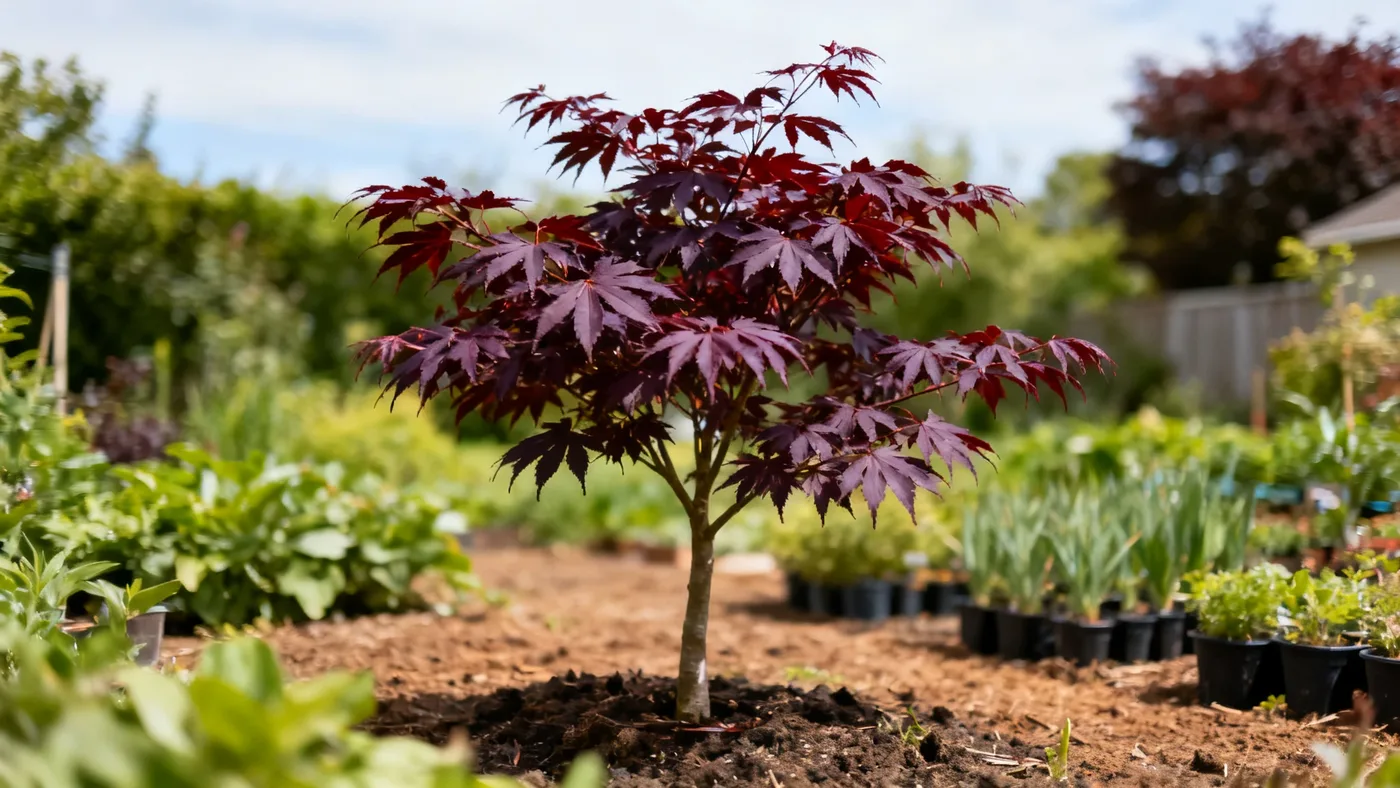
What Hardiness Zones Does Bloodgood Japanese Maple Grow In?
Bloodgood Japanese Maple grows in USDA hardiness zones 5 through 8, making it suitable for most of the continental United States. In zone 9, afternoon shade becomes essential to prevent heat damage rather than cold. Whether you're in the frozen north or the hot south, understanding how your climate affects this tree is the first step to growing it successfully. This guide answers the most common questions about zones, cold hardiness, heat tolerance, and region-specific care.
Basic Zone Information
What hardiness zones can Bloodgood Japanese Maple grow in?
Bloodgood Japanese Maple is hardy in USDA zones 5 through 8 as a standard recommendation. Some sources extend the upper range to zone 9 with proper afternoon shade in the hottest parts of the climate. Cold hardiness is rarely the limiting factor; heat and drying winds are more likely to stress the tree in warmer regions.
Is my zone too cold for Bloodgood Japanese Maple?
Zone 5 is the cold limit for reliable survival, so if you're in zone 4 or colder, Bloodgood is not winter-hardy outdoors. Gardeners in zone 5 will have success, though late spring frosts can damage emerging leaves. If you're at the edge of zone 5, choose a sheltered planting spot away from north-facing exposures.
Can Bloodgood Japanese Maple grow in Zone 4?
No, Bloodgood Japanese Maple cannot survive zone 4 winters outdoors reliably. If you're a zone 4 gardener and want this cultivar, grow it in a large container and move it to an unheated garage or cold frame for winter. Some gardeners attempt this in zone 4b with heavy mulch and windbreaks, but you should expect winter die-back or loss.
Is Zone 8 at the safe end of the range?
Zone 8 is well within the safe range for cold hardiness, but it sits at the boundary where summer heat becomes a concern. In zone 8 areas with hot, dry summers, your Bloodgood will need afternoon shade and consistent moisture to prevent leaf scorch. The tree will survive the winter easily; summer management is the real work.
Can Bloodgood grow in Zone 9?
Zone 9 is possible but challenging. Afternoon shade is mandatory to keep leaf temperatures down and prevent color fade. If you're in the warmest parts of zone 9, you may see the deep burgundy foliage turn greenish in peak summer or develop brown scorched edges. Winter won't harm the tree, but consistent summer heat will stress it.
Cold Hardiness and Northern Zones
What is the coldest temperature Bloodgood Japanese Maple can survive?
Bloodgood tolerates temperatures down to approximately 15 degrees Fahrenheit (zone 5 winter lows) without permanent damage to established wood. Young trees or newly planted specimens are more vulnerable, so protection or site selection matters in zone 5. Once the root system is established after 2 to 3 years, cold tolerance improves.
Are late spring frosts a problem in Zone 5?
Late spring frosts can damage new growth emerging in April or May when the tree flushes. If a frost hits while leaves are unfurling, you may see blackened or curled new foliage that doesn't recover. The tree usually pushes out a second flush, so the damage is cosmetic rather than fatal, but it's worth monitoring frost dates in your area.
Should I mulch or wrap my Bloodgood in winter?
In zone 5, a 2 to 3-inch layer of mulch around the root zone helps protect the soil and fine rootlets from extreme cold. Do not mound mulch directly against the trunk, as this invites rodent damage and bark rot. Wrapping is not necessary for this cultivar, even in zone 5.
How deep should I plant Bloodgood to protect the roots?
Plant the tree at the same depth as its nursery pot, with the top of the root ball level with or slightly above grade. Deep planting increases rot risk and doesn't meaningfully improve cold hardiness. Proper mulching at the surface provides all the root protection this tree needs.
Does Bloodgood need winter dormancy to stay healthy?
Yes, Bloodgood requires a cold dormancy period to thrive, especially if grown in a container. Regions with very mild winters and little to no frost may not provide enough chill hours, and the tree can become weak or disease-prone. If you're in zone 9 without winter cold, providing 3 to 4 weeks of unheated shade still helps the tree rest.
Heat Tolerance and Southern Zones
Why does Bloodgood's color fade to green in hot climates?
Intense heat and bright midday sun stress the tree and reduce the deep burgundy pigmentation, causing leaves to fade toward green. This is not a disease, but a heat response. Once temperatures cool in fall, the red color returns. Afternoon shade from 1 to 5 p.m. is the simplest fix.
What causes leaf scorch on Bloodgood Japanese Maple?
Leaf scorch appears as brown, papery edges on leaves and happens when the tree loses water faster than roots can replace it during hot, dry, or windy weather. High heat, low humidity, and strong winds are the common triggers. Poorly drained or compacted soil also makes the tree more vulnerable to scorch.
When is afternoon shade required?
Afternoon shade becomes essential in zones 7 and 8 during peak summer, and absolutely mandatory in zone 9. If summer temps regularly exceed 90 degrees Fahrenheit in your area, shade from 1 to 5 p.m. protects both foliage color and leaf health. Morning sun (6 a.m. to 11 a.m.) is fine and helps maintain good color.
Can I use reflective heat from nearby structures?
No, avoid planting Bloodgood where it reflects heat off south-facing walls, driveways, or metal roofs. This intensifies heat stress and dramatically increases scorch risk. Plant at least 8 to 10 feet away from heat-reflecting surfaces, or choose a spot with natural shade canopy overhead.
Does high humidity help or hurt Bloodgood in hot zones?
Moderate humidity is beneficial, but very high humidity without air movement can promote fungal diseases like anthracnose. Air circulation matters as much as shade in hot, humid climates. Avoid planting in low-lying areas where damp air settles or where overhead irrigation creates constant wetness.
Microclimates and Zone Adjustments
Can microclimates shift my zone by a half-zone?
Yes, microclimates can effectively shift your zone by up to half a zone in either direction. A sheltered south-facing slope, proximity to a heat-retaining wall, or overhead tree canopy can make zone 5 feel like zone 6. Conversely, a windy, north-facing slope or frost pocket can make zone 6 feel like zone 5.
What's the best microclimate for Bloodgood in Zone 5?
Choose an east-facing spot with morning sun and afternoon wind protection from a fence or structure. Avoid deep shade, which reduces color intensity, and avoid windy open areas, which dry leaves. Planting on a slightly elevated area ensures cold air drains away, reducing frost pocket risk.
What's the best microclimate for Bloodgood in Zone 8?
In zone 8, prioritize afternoon shade from 1 to 5 p.m., ideally from tall deciduous trees that filter sun without blocking all light. Ensure good air movement to prevent fungal issues, and position the tree where it gets consistent soil moisture without standing water. A north-facing slope with morning sun is ideal.
Can I grow Bloodgood under tree shade in my zone?
Yes, dappled shade under a high deciduous canopy works well in zones 7 and 8, reducing heat stress while still providing enough light for good foliage color. In zone 5, avoid deep shade, as the tree needs full sun to mature and hold its color. Verify the canopy stays high and won't compete for water.
Planting and Timing by Zone
When should I plant Bloodgood in Zone 5?
Early spring (April to May) is the safest planting window in zone 5, giving the tree the entire growing season to establish roots before winter. Fall planting is possible in September to October, but avoid planting after mid-October to allow time for root development before hard freezes. Avoid planting in summer heat.
When should I plant Bloodgood in Zone 8?
Early spring (March to April) or fall (October to November) both work well in zone 8. Fall may be preferable because cooler air and winter moisture help the tree establish before summer heat arrives. Avoid planting in June through August, when heat stress on young trees is high.
How long until my Bloodgood reaches a mature size?
Bloodgood grows at a slow to moderate rate, roughly 12 to 18 inches per year. A landscape-usable size of 6 to 8 feet takes about 5 to 7 years to reach. Full mature size of 15 to 20 feet can take 15 to 20 years or longer, so be patient and plan for a long-term specimen.
Does year-round care change by zone?
Yes, zone 5 gardeners focus on winter protection and late-frost vigilance, while zone 8 gardeners prioritize summer moisture and heat management. Learn your local frost dates, summer temperature patterns, and rainfall before choosing your planting spot. Local nurseries and your county extension service can provide zone-specific guidance.
Water and Soil Management by Zone
Does Bloodgood need more water in hot zones?
Yes, Bloodgood needs consistent moisture and is not drought-tolerant once established without regular water. In zone 8 and 9, water deeply once a week during summer if rainfall is below 1 inch. Consistent soil moisture is especially important in hot climates, as dry soil compounds heat stress and scorch risk.
Is well-drained soil important in all zones?
Yes, well-drained soil is critical in every zone. Bloodgood is sensitive to poorly drained or compacted soil and will develop root rot if wet feet persist. If your soil is clay-heavy, amend with 3 to 4 inches of compost before planting to improve drainage. Mulch the surface but leave 2 inches of space around the trunk clear.
Should I add lime to soil in Zone 5?
No, avoid lime in any zone. Bloodgood prefers slightly acidic soil with a pH between 5.5 and 6.5. Zone 5 soils are often naturally closer to neutral, so test your soil before amending. If needed, use sulfur to lower pH rather than adjusting toward alkaline.
Quick Reference Table
| Zone | Winter Hardiness | Summer Challenge | Planting Window | Key Care Priority |
|---|---|---|---|---|
| 5 | Reliable (15°F minimum) | None | April-May or Sept-Oct | Windbreak, avoid frost pockets |
| 6 | Excellent | Occasional heat stress | March-May or Sept-Nov | Consistent moisture |
| 7 | Excellent | Heat stress common | March-April or Oct-Nov | Afternoon shade, deep watering |
| 8 | Excellent | Significant heat stress | March-April or Oct-Nov | Afternoon shade, mulch, consistent water |
| 9 | Excellent | Extreme heat and color fade | Oct-March | Heavy afternoon shade mandatory |
Learn More About Year-Round Care
Hardiness zones are just the starting point. For detailed guidance on soil preparation, pruning, fertilizing, pest management, and seasonal care specific to your zone, read the complete Bloodgood Japanese Maple care guide.