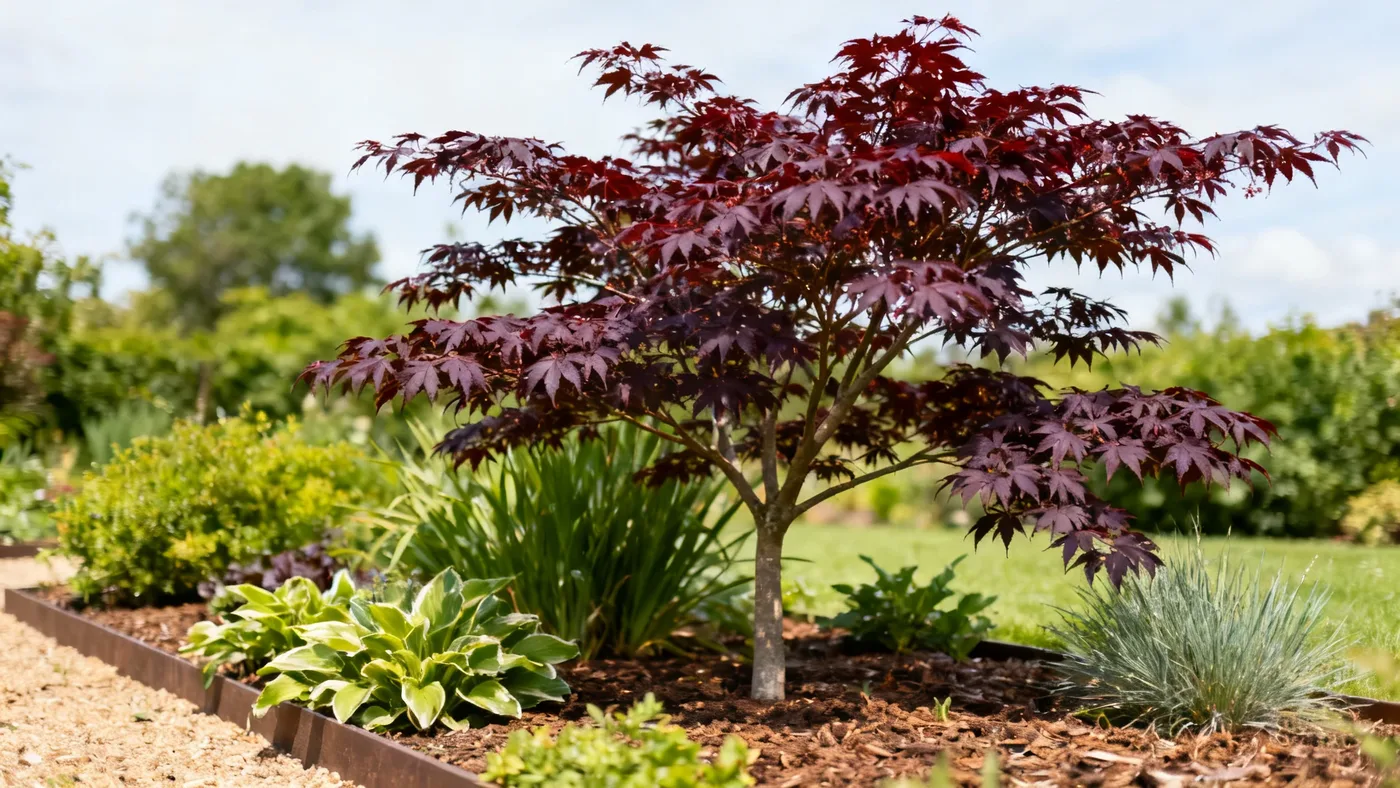
12 Landscape Design Ideas for Bloodgood Japanese Maple
Bloodgood Japanese Maple (Acer palmatum 'Bloodgood') transforms any landscape into a garden of intention. Its deep reddish-purple summer foliage, moderate 12-18 inch annual growth, and eventual 15-20 foot mature size make it one of the most versatile small ornamental trees for home gardeners in zones 5-8. The real power of bloodgood japanese maple landscape ideas lies in understanding how to position this slow-growing tree as both an immediate focal point and a long-term design anchor.
Whether you're designing a postage-stamp urban garden or working with several acres, Bloodgood fits naturally into thoughtful compositions. This cultivar's foliage holds deep burgundy color better than many red Japanese maples, and the intricate branch structure remains ornamental year-round. Space the tree 12-20 feet from structures and other plants to allow its full mature width to develop without crowding.
1. Specimen Tree for Small Yards
A single Bloodgood Japanese Maple anchors small residential properties without overwhelming them. Its moderate mature size of 15-20 feet tall and equally wide delivers architectural presence while fitting naturally into yards where larger shade trees would dominate. The palmate leaf form and graceful branching create visual interest in every season, particularly winter when the smoky-gray branch structure takes center stage.
Position your specimen where it's visible from primary viewing areas: a bedroom window, back patio, or front entry. Bloodgood thrives in full sun to part shade, though afternoon shade prevents leaf scorch in hot southern climates. The slow growth means minimal pruning or management. Avoid planting near driveways where spring flower drop might be noticeable.
Practical takeaway: Plant in an open location where the tree develops its natural form without crowding from other structures or plants.
2. Patio Container Feature
Young Bloodgood maples excel in large containers (at least 5-gallon size) on patios and decks. This approach to bloodgood maple front yard design gives you a movable focal point that softens hardscape while allowing seasonal repositioning. Container planting also protects the roots in northern portions of zone 9 or whenever winter root exposure is a concern. Use well-drained, rich loam-based potting mix with drainage holes.
Water container plantings consistently, as pots dry faster than in-ground soil. Move the potted tree to a sheltered, unheated location in winter for additional cold hardiness. After several years, check whether roots circle the pot; if so, either transplant to a larger container or move the tree in-ground. Container specimens often reach landscape-usable size within 5-7 years.
Practical takeaway: Choose a container with dimensions at least 18-24 inches deep to accommodate several years of growth.
3. Foundation Planting
Small homes often lack vertical interest near foundations. A Bloodgood Japanese Maple solves this by providing sculptural form, seasonal color, and year-round structure without aggressive root systems that threaten foundations. Position the tree 12-20 feet from your home's exterior depending on light exposure and available space. The moderate size means no pruning battles or overgrowth scenarios typical of fast-growing shade trees.
Pair the maple with shade-tolerant companions like hostas, ferns, hellebores, and azaleas. These understory plants appreciate the well-drained, rich loam conditions that Bloodgood requires, making them natural partners in bloodgood maple garden design. Avoid planting in low-lying areas where foundation drainage creates soggy conditions; Bloodgood prefers consistent moisture, not wet soil.
Practical takeaway: Keep the tree positioned away from gutters and downspouts to prevent waterlogged root zones.
4. Japanese or Zen Garden Centerpiece
In Japanese and Zen gardens, Bloodgood is a natural focal point. The palmate leaf form, balanced branching, and sophisticated color transitions align perfectly with garden design principles emphasizing natural asymmetry and seasonal change. Deep burgundy summer foliage provides striking contrast against moss, gravel, and stone. Fall's crimson-to-bright-red transformation makes the tree a seasonal anchor.
Underplant with shade-tolerant groundcovers like moss or Japanese forest grass. Add stone lanterns, a simple seating area, or a water feature at a distance. Prune only in late fall to mid-winter while dormant to preserve the tree's natural form and minimize sap bleed. The slow growth ensures your composed design remains balanced for decades.
Practical takeaway: Spend time getting the initial placement right. You'll live with this tree for 15-20+ years before it reaches full maturity.
5. Mixed Shade Border with Companions
Bloodgood Japanese Maple creates dappled shade perfect for ferns, hostas, hellebores, and other shade-loving perennials. This approach to landscaping with japanese maples maximizes garden productivity and visual richness. The tree's airy branching allows sufficient light for diverse understory plants while providing the protective canopy they prefer. The combination of Bloodgood's reddish-purple foliage with silvery hosta cultivars creates sophisticated color play.
Create layered depth: the maple provides the canopy, hostas and astilbe fill the middle tier, and low-growing hellebores and coral bells anchor the front. Space companions according to their mature width (hostas range from 18 inches to 4 feet wide depending on cultivar). All these companions thrive in the same slightly acidic, well-drained loam that Bloodgood requires, making them ideal partners with minimal soil amendment conflicts.
Practical takeaway: Amend planting areas with organic matter before installation. Target soil pH of 5.5-6.5 suits both the maple and shade-loving perennials.
6. Entryway Focal Point
A Bloodgood Japanese Maple at your property entry announces intention and care. Unlike deciduous shade trees that disappear in winter, this cultivar maintains an ornamental branching structure year-round. The deep reddish-purple summer foliage and crimson fall color create sophisticated seasonal drama. A 15-20 foot mature tree frames a two-story entry without overwhelming cottage or ranch-style homes.
Plant slightly off-center to create visual interest and balance. In hot climates (zone 8-9), choose afternoon shade to prevent leaf scorch and keep foliage rich and vibrant. Pair with lower-growing ornamental grasses or compact evergreens to build a composed entrance garden. Budget for 5-7 years before the tree reaches substantial landscape presence; slow growth rewards patience with a naturally developed form.
Practical takeaway: Consider sightlines from the street and primary approaching path. The tree should be visible and prominent from how visitors first encounter your home.
7. Layered Understory with Azaleas and Boxwood
Bloodgood creates a perfect canopy for a three-tier landscape structure. Compact azaleas and dwarf boxwood fill the middle layer, while ferns and hellebores occupy the ground plane. This tiered approach maximizes visual depth and seasonal color transitions without clutter. The contrast between the maple's delicate palmate leaves and fine boxwood texture creates richness through restraint.
Select azalea cultivars and boxwood sizes based on available space beneath the 15-20 foot mature canopy. Azaleas prefer the same slightly acidic, well-drained soil as Bloodgood, eliminating soil amendment conflicts. Boxwood provides evergreen structure in winter when deciduous plants have dropped foliage. Water consistently during establishment; Bloodgood is not drought-tolerant, especially during the first few growing seasons.
Practical takeaway: Avoid overly dense planting beneath the maple. Leave room for air circulation around the trunk and lower branches to reduce disease risk.
8. Screening Edge with Multiple Specimens
Two or three Bloodgood maples spaced 15-20 feet apart create subtle screening while maintaining a naturalistic appearance. This approach to bloodgood maple landscape ideas provides visual interest and sightline disruption without fortress-like density. The trees' fine branching allows some light through while softening views from neighbors or street. Select trees of similar age so they develop uniformly.
Underplant with shade-tolerant shrubs like inkberry or compact holly to increase screening effect at lower heights. The combination of maple seasonal color changes and evergreen shrub structure provides year-round visual interest. Plant in a gentle curve rather than a rigid line to enhance the naturalistic feel and increase perceived depth.
Practical takeaway: Plan for mature size early. Spacing 15-20 feet apart looks sparse at planting but fills in naturally over 15-20 years.
9. Streamside or Woodland Edge Planting
Bloodgood thrives in conditions that mimic its native woodland and stream-valley habitats. Planting near water features leverages this preference for consistent moisture and dappled light. The tree's sculptural form softens hard edges around constructed ponds or rain gardens while remaining healthy in naturally moist sites. Its moderate final size fits naturally into established woodland edges without disrupting forest structure.
Layer ferns, shade-tolerant groundcovers, and woodland wildflowers beneath the canopy. However, ensure adequate drainage despite wet appearance; soggy, compacted soil still causes root rot. Bloodgood prefers rich loam over clay-heavy or persistently waterlogged conditions. Monitor soil moisture carefully; "moist" is ideal while "boggy" signals danger.
Practical takeaway: Avoid planting in low-lying sites that collect water after heavy rain. Amend heavy soils with compost and gravel to improve drainage.
10. Container Grouping for Deck Design
Multiple young Bloodgood maples in individual large containers (5-gallon minimum) create a dramatic patio or deck display. This modular approach lets you experiment with composition seasonally or for specific events before committing to in-ground planting. Combine container maples with shade-tolerant perennials like hellebores or Japanese anemones in smaller pots to build a cohesive patio garden. Arrange at varying heights using tiered shelving or plant stands.
Three trees of varying heights create more visual interest than a single specimen. Group containers closely enough for visual impact but with space between for air circulation and watering access. Water consistently, as container plants dry quickly in grouped arrangements. After several years, trees may outgrow pots and require either in-ground planting or upgrade to larger containers.
Practical takeaway: Combine container-grown Bloodgood with other shade-tolerant specimen plants to create a complete micro-garden rather than focusing on maples alone.
11. Courtyard or Atrium Tree
Courtyards and atrium spaces offer protected microclimates ideal for Bloodgood in zones where frost risk or extreme heat might otherwise be concerns. Enclosing walls buffer wind damage that causes leaf scorch, and controlled light prevents the heat stress that leads to color fading in deep green. A single specimen becomes the focal point visible from multiple rooms, creating a sense of connection to nature within enclosed architecture.
Choose a location with bright indirect light or morning sun with afternoon shade. Train the tree's lower branches high to create a canopy framing views and allowing movement beneath. The mature height of 15-20 feet typically fits courtyard proportions well. Use understory plantings sparingly in enclosed spaces to maintain the courtyard's openness and allow the tree to become the dominant visual element.
Practical takeaway: Amend courtyard soil generously with compost before planting. Enclosed spaces hold moisture problematically, so incorporate gravel or sand for drainage.
12. Perennial Garden Backdrop and Color Anchor
Bloodgood Japanese Maple makes an extraordinary backdrop for mixed perennial borders. Deep reddish-purple summer foliage and crimson fall color anchor lighter-colored perennials in front, creating visual depth through color layering. Burgundy foliage recedes visually while bright yellows, pinks, and whites appear to advance. This principle of color interplay creates sophistication without complexity in bloodgood maple front yard design.
Position the tree at the back or side of a border, allowing 12-20 feet clearance from other plants. Select perennials with complementary bloom times: spring bulbs, early summer alliums, mid-summer coneflowers, and late-season asters. The maple's year-round architectural form combined with deciduous perennial structure creates interest through all seasons. Resist the urge to fill gaps with additional plants that compete for space and moisture.
Practical takeaway: Give each plant, including the maple, room to develop fully. Overcrowding limits the mature composition's visual impact and increases disease risk.
Quick Reference: Bloodgood Japanese Maple Landscape Essentials
| Landscape Element | Key Specification |
|---|---|
| Mature Height & Width | 15-20 feet tall and equally wide |
| Growth Rate | Slow to moderate, roughly 12-18 inches per year |
| Hardiness Zones | 5-8 (zone 9 with afternoon shade) |
| Spacing from Buildings | 12-20 feet minimum |
| Light Requirements | Full sun to part shade; afternoon shade in hot climates |
| Soil Preference | Well-drained, rich loam |
| Soil pH Range | 5.5-6.5 (slightly acidic to neutral) |
| Water Needs | Moderate, consistent; not drought-tolerant once established |
| Companion Plants | Hostas, ferns, azaleas, boxwood, hellebores, ornamental grasses |
| Summer Foliage | Deep reddish-purple to burgundy |
| Fall Color | Crimson to bright red |
| Deer Resistance | Moderate to good (occasionally browsed) |
| Winter Interest | Attractive smoky-gray branch structure |
Bloodgood Japanese Maple adapts to nearly any garden style and size. Start by reviewing the specifications above, then select which design ideas align with your site conditions and goals. Thoughtful placement and compatible companion plantings transform this slow-growing cultivar into a landscape anchor that deepens in visual richness year after year.
For comprehensive guidance on establishment and ongoing care, consult the complete Bloodgood Japanese Maple care guide. Take time selecting the right location, amend soil properly, and let the tree's moderate growth work in your favor across seasons and years.