Bloodgood vs Fireglow and Tamukeyama: Which Red Maple to Pick
A maple goes in beside a fence, a few steps from a roof edge, where the sun lands hard after lunch. Three summers later it is either the best thing in the yard or a tree the owner keeps apologizing for. Catalog photos of Bloodgood, Fireglow and Tamukeyama look alike in May, and they rarely settle anything.
What settles it is usually one constraint: how much height the spot allows, how hot the afternoon gets, or whether you want branches that stand up or spill down. Pick against that limit and the tree looks right for decades. Ignore it and you spend years pruning, shading or replacing.
Read on for how the three behaved in our rows on height, heat, form, scorch and midsummer color, and for a short list of yard types matched to the tree that fit.
Height Notes From the Bloodgood Japanese Maple Rows
Height decides more of these choices than color does, so we start with what each tree reaches and what to do if your spot is smaller.
Bloodgood is the benchmark. Its ultimate height is 2.5–4 meters, or roughly 8–13 feet, while US university listings put a mature tree at 12–20 feet tall and 15–20 feet wide. Growth is slow to moderate, so the top of that range takes many years to arrive.
Fireglow is a large, bushy shrub reaching about 4 meters (13 feet). Tamukeyama is a mound-forming shrub or small tree, and our sources give no height figure for it, so check the tag or your local extension service. In our rows, Bloodgood and Fireglow stand close in height, and Tamukeyama sits well below both.
If the Space Is Lower Than That
A low roof edge, a window sill or a view you want to keep changes the answer.
Choose Tamukeyama if you want a mounded, cascading tree, but plan on pruning. It typically reaches about 5-8 ft tall (and wider) at maturity, so it will not stay under a window sill without cutting. Common advice says any Japanese maple can be held to a roofline with pruning. We disagree for Bloodgood, because repeated cuts to hold height strip out the layered, arching branch pattern that makes the tree worth growing. Our guide to Bloodgood size by age shows what you are signing up for.
If the Space Is Tighter Than That
Width is the number people forget, and a fence line makes it the one that matters.
Bloodgood can spread 15–20 feet in the US listings, and Fireglow's bushy habit fills out sideways as well. If the fence is close, plant well forward of it and measure from the trunk, not from the pot. A tree that touches the boards rubs and loses its shape on that side. Where you cannot give that clearance, Tamukeyama is the safer pick.
Fireglow Keeps Its Red Where Bloodgood Japanese Maple Bronzes
Heat is where the three separate most, and Fireglow is the one we would reach for in the hottest bed.
Fireglow is dark green heavily flushed with dark red in summer, opening pinky-red in spring and turning purple-red in autumn. That summer description matters. Fireglow is not holding a solid deep red-purple the way Bloodgood is, so there is less to lose when temperatures climb. In our hottest beds, its red flush looked settled in August while Bloodgood's deeper tone drifted toward bronze.
The Hot-Summer Rule
Here is how we would apply that observation to your yard.
If your July afternoons run hot and the bed gets reflected heat from pavement or a south-facing wall, choose Fireglow and give it afternoon shade. Its leaf color is best in partial shade, although full sun is tolerated. The species is rated for zones 5a to 8b, and the hot end of that range is where this rule earns its keep. Fireglow's own zone range is not in our sources, so confirm it locally.
What Fireglow Gives Up
Choosing Fireglow for heat costs you something, and you should know what before you buy.
You give up the solid, dark summer color Bloodgood is known for, and the fall display is quieter. NC State describes Bloodgood's foliage as turning bright crimson in fall, while Fireglow turns purple-red. If the dark, near-black-red look is the whole reason you want a red maple, Fireglow will disappoint you, and the hot bed should get shade cloth or a different spot instead.
Tamukeyama's Weeping Habit Changes the Planting Math
Tamukeyama is a different shape of plant, and that changes how far apart and how close to a path you can place it.
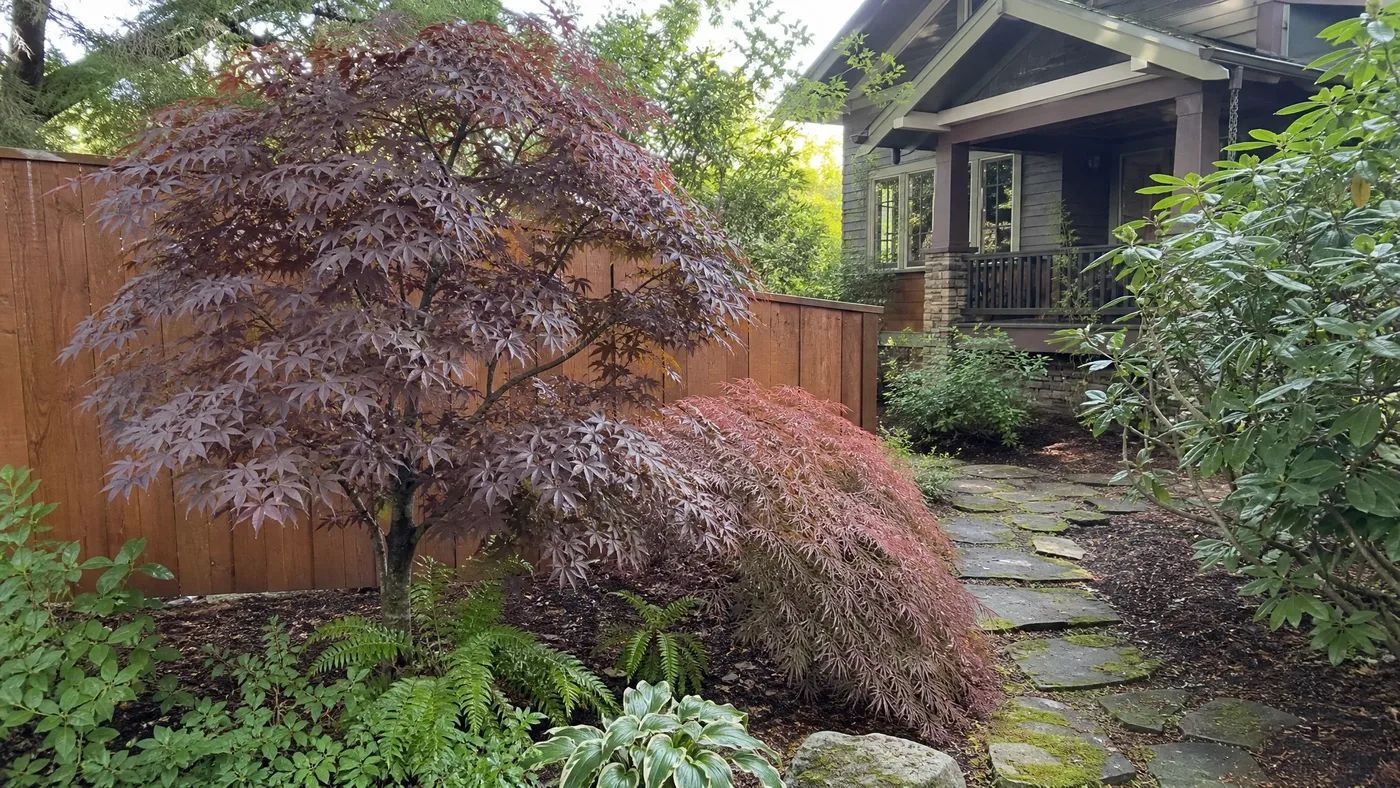
Tamukeyama is a mound-forming, deciduous shrub or small tree with cascading shoots that carry finely cut leaves. Bloodgood and Fireglow send branches up and out. Tamukeyama sends them out and down. One of the most common questions we get is whether it will grow up into a tree. It will not, and planning for an upright trunk is the mistake to avoid.
Sightlines and Spacing
A cascading form sits below eye level and fills the ground around it.
That makes it good at the top of a low wall, beside steps or at a bed corner where you want to soften a hard edge. It does not shade a patio or frame a window the way an upright maple does. Space it by its spread, not its height, and keep the drape clear of mower paths. The form difference is covered from another angle in our Bloodgood and Crimson Queen comparison.
When You Want the Upright Look
If you picture a tree with a trunk and a canopy, Tamukeyama will not deliver it.
Choose Bloodgood or Fireglow for a vase or rounded crown you can walk under after a few years of limb pruning. Choose Tamukeyama when the cascade is the point. Color is a poor tiebreaker here, since Tamukeyama opens purple to burgundy-red, turns greenish-purple in summer, then orange and brighter red in autumn. Pick on form and the color will follow.
If Afternoon Sun Hits Your Bloodgood Japanese Maple Spot
Afternoon sun is the question behind most of the scorch calls we hear, so here is how to read the leaves.
The three are more alike than people expect. Bloodgood takes full sun to partial shade, and Fireglow and Tamukeyama show their best color in partial shade while tolerating full sun. So light alone rarely decides it. Heat, wind and dry roots decide it, and the leaves tell you which one is at work. Our Bloodgood light guide goes deeper on exposure.
Use this table to match a symptom to a cause. The cultivar column is where we most often see it, not a rule.
| Symptom | Most often seen on | What it means for siting |
|---|---|---|
| Crisp brown edges on the sunniest side, July onward | Bloodgood | Too much afternoon heat or wind for that spot. Move shade onto the west side or relocate. |
| Tan or bleached patches between veins | Fireglow | Direct midday light on thin leaves. Add shade from a structure, not a young tree. |
| Brown tips on the finely cut lobes | Tamukeyama | Wind drying the fine foliage, or dry soil. Shelter it and check moisture first. |
| Scorch on one side only | Any | Reflected heat from a wall or pavement. Shade that side or pull the tree away. |
Our leaf scorch guide covers treatment once symptoms have appeared. For siting, the lesson is the same across all three: shade that arrives after midafternoon protects the leaves without costing much color.
One habit helps before you decide anything. Stand at the planting spot at four in the afternoon on a hot day and note what is shining on it, including the wall behind it. That single look tells you more than a zone number.
Color Holding in a Bloodgood Japanese Maple Row by Midsummer
By midsummer the rows show clearly which tree is holding red and which has moved on.
Judge each tree against what it is supposed to do. Bloodgood is meant to carry deep red-purple leaves through summer. Fireglow is meant to carry a red flush over green. Tamukeyama is meant to go greenish-purple. A tree that drifts from its own description has a problem, and the fix depends on which one it is.
When Bloodgood Turns Bronze or Green
Bronzing and greening are different symptoms with different causes.
Bronze usually means heat or dry roots, so deepen the mulch and water deeply before swapping anything. Moderate drought tolerance is the species rating from UF/IFAS, which tells you not to count on it. Green leaves usually mean too much shade, so open the canopy overhead. Our guide on a Bloodgood turning green walks through both.
Reading Fireglow and Tamukeyama Correctly
Most disappointment here comes from expecting the wrong summer color.
A Fireglow that looks mostly green with a red flush is behaving as described. If you wanted solid red all summer, that is a swap to Bloodgood, not a fix. Tamukeyama turning greenish-purple is also normal. Dull color on either one in deep shade is a siting problem, and a few hours of morning sun is the repair. Do not fertilize to chase color. It does not help and can push soft growth that scorches.
Which Row Your Yard Resembles
These are the yard types we see most often, each matched to the maple that fit.
- Roof edge or window sill close by. Plant Tamukeyama only if you will prune it, because it typically reaches about 5-8 ft tall and wider at maturity and will not stay under a window sill without pruning.
- Open lawn with room to spread. Plant Bloodgood, which has the strongest upright shape and the darkest summer leaf of the three.
- Hot bed beside pavement or a south wall. Plant Fireglow and keep afternoon shade on it, since its red flush held up best in our hottest beds.
- Top of a wall, steps or a slope. Plant Tamukeyama and let the shoots cascade over the edge.
- Fence line with 15 feet or more of width. Plant Bloodgood, set forward of the boards so it can arch without rubbing.
- Wind-exposed corner. Shelter first, then choose Bloodgood or Fireglow, because Tamukeyama's fine leaves dry fastest.
Let the Biggest Limit Pick Your Bloodgood Japanese Maple
If height is your biggest limit, plant Tamukeyama. If afternoon heat is, plant Fireglow and shade it. If neither is a problem and you want the dark, upright red, plant Bloodgood. Find the single biggest limit in your yard and let that choose the tree.
Bloodgood Japanese Maple
Nursery-grown Bloodgood Japanese Maple in sizes from QT Container, shipped to your door.
From $49.49
Shop Now →As a small grower, we care about getting this right because a maple in the wrong spot shows it for years, and as a small business with our own farms, we would rather you plant the right Bloodgood, Fireglow or Tamukeyama once than replace one later.