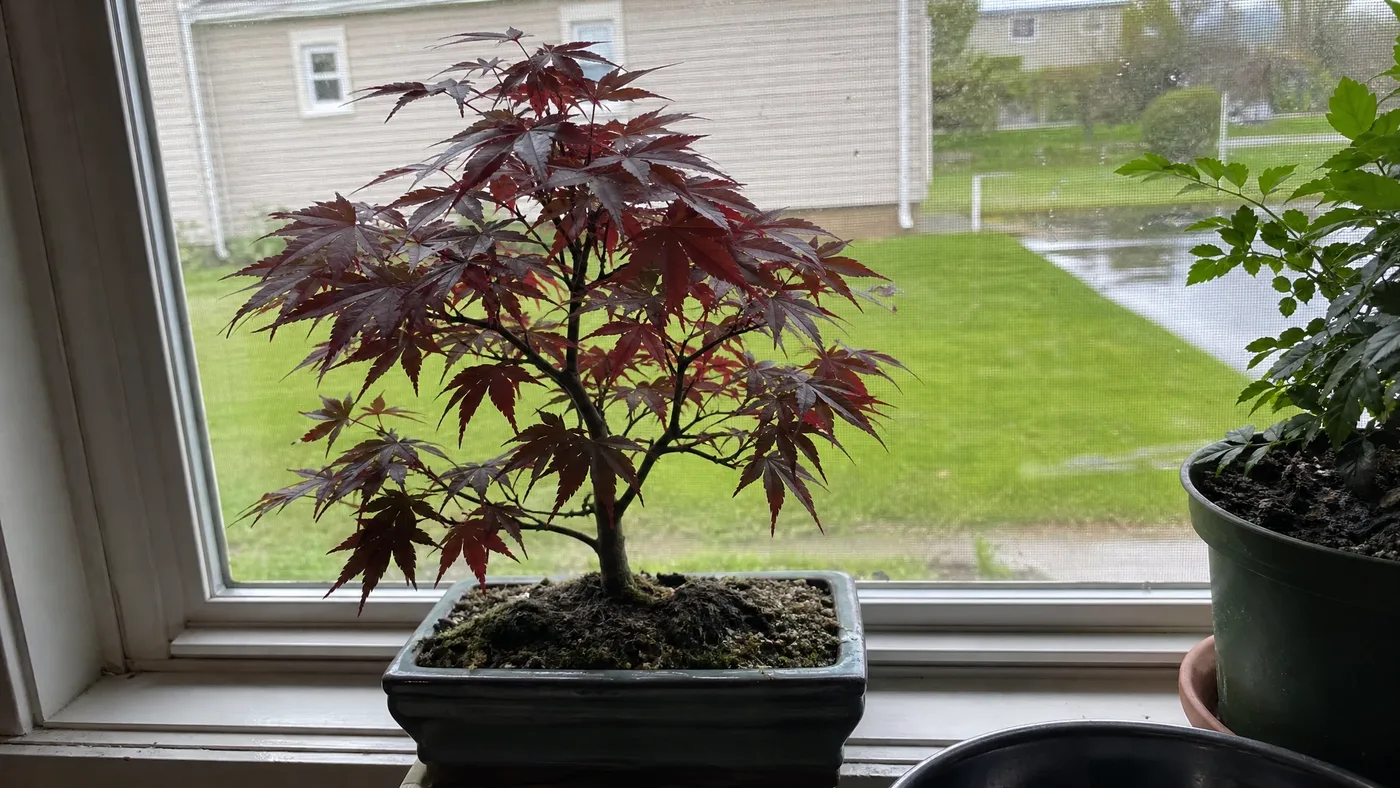
Bloodgood Japanese Maple as Bonsai: Is It a Good Choice?
Hold one Bloodgood leaf up to the light and it glows like burgundy stained glass. It is glossy, deeply veined and wider than your palm. So what does a leaf that size mean for a tree you want to keep tiny?
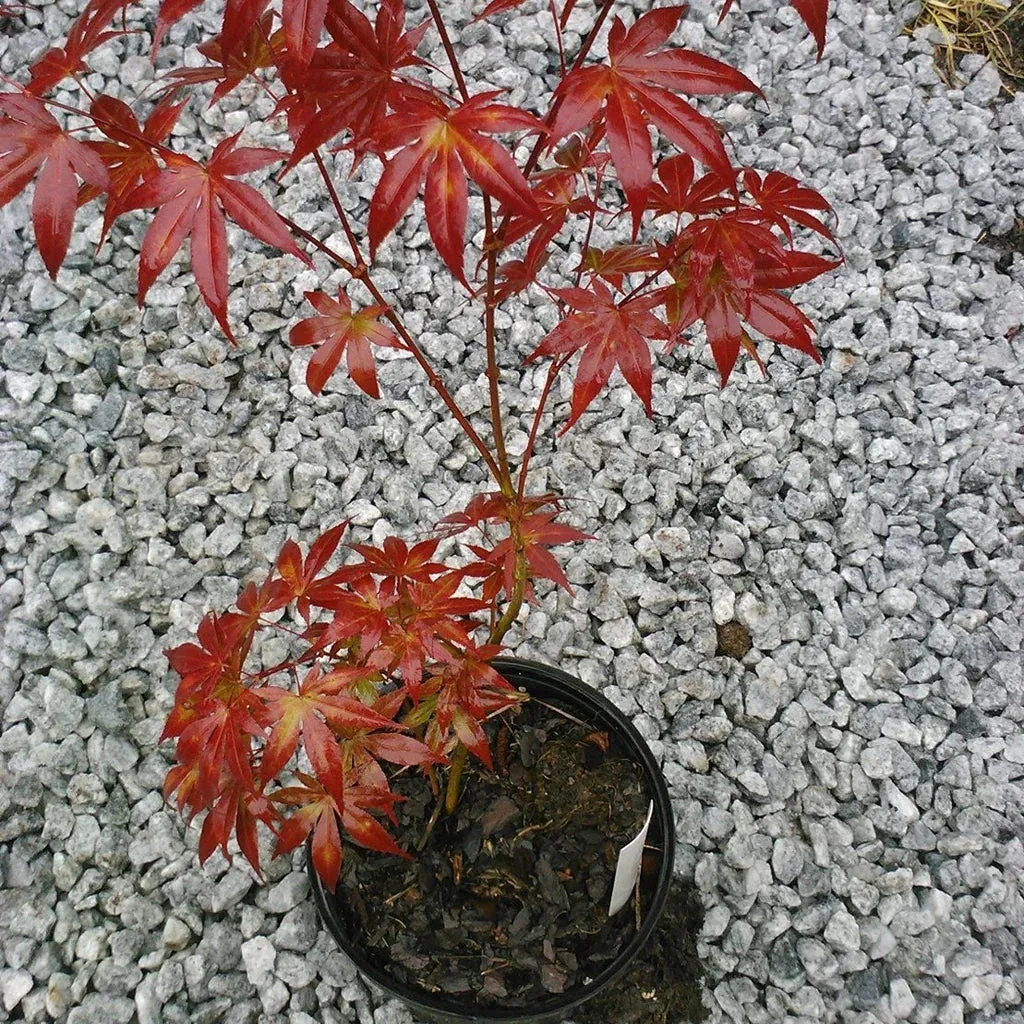
Bloodgood can be grown as bonsai, and people do it, but it is a harder route than most pages admit. The mature tree reaches a height of 2.5–4 meters (about 8–13 feet), and that size shows in every leaf and shoot. Done badly, you end up with a leggy tree wearing coarse, oversized foliage.
We'll walk you through how leaf size sets the scale, how to manage vigor, defoliation and root work, and how to set branches early, then compare Bloodgood with the smaller-leaf maples many bonsai growers choose instead, so you can decide before you start.
A Bloodgood Japanese Maple Leaf Sets the Scale
Proportion is what makes a bonsai read as a miniature old tree, and in Bloodgood proportion starts with the leaf.
Bloodgood belongs to the amoenum group of Japanese maples, which have large, palm-shaped leaves with finely toothed edges. Each leaf carries 5–7 slender-pointed lobes. A bonsai asks leaf, twig, branch and trunk to look like parts of one big tree seen from a distance. When a leaf spans your palm and the twig holding it is as thin as a pencil, the eye reads a sapling wearing someone else's foliage.
What a Small Pot Can Change
A pot, lean feeding and timed defoliation all help, so here is what to expect from them.
They reduce leaf size somewhat. They do not turn a large-leaved maple into a small-leaved one, because the cultivar's genetics set the ceiling. A well-managed Bloodgood bonsai carries leaves noticeably smaller than the same tree in a garden bed, yet they remain bold. Plan the whole composition around that boldness instead of fighting it.
Which Bonsai Sizes Suit It
Large leaves argue for a larger tree, and that shapes what you should aim for.
A thicker trunk and a fuller canopy can carry big leaves convincingly. A tiny tabletop tree cannot. One of the most common questions we get is whether a Bloodgood can be shrunk to a very small pot. It cannot, and trying leads to a stressed tree with leaves out of scale. Our guide to keeping a Bloodgood small and compact covers the garden version of the same problem.
Bloodgood Japanese Maple Vigor Is Managed, Not Fought
The aim is a tree that grows steadily inside a small pot, not one forced to stop growing.
The species is slow to moderate in growth, and a Bloodgood in a tight pot does honor that. Yet the cultivar is a large bushy shrub that takes 10–20 years to reach maturity. That tells you there is plenty of growth in the tree, and in bonsai you channel it year after year.
Trim Shoots on a Schedule
Regular trimming does more for fine branching than any single big pruning session.
A Bloodgood with big leaves tends to throw long shoots with wide gaps between leaf pairs. Let a shoot extend, then cut it back to one or two pairs of leaves so buds form close to the branch. Repeat through the growing season. Waiting until autumn and chopping everything back leaves long, bare, coarse wood that you cannot shorten later without leaving scars. Our pruning guide covers timing for cuts on larger wood.
Keep the Pot Tight and the Light Soft
A small pot restrains the tree, but it also changes how fast the soil dries and how the leaves cope.
Bloodgood wants moist but well-drained soil, and a shallow pot swings between wet and dry quickly, so check it daily in summer. Bloodgood leaves are large and thin-edged, and they scorch in hot, dry wind. It does best in dappled shade with protection from drying winds, so give a pot afternoon shade. Keep feeding light, because rich feeding produces bigger leaves. The same container logic runs through growing Bloodgood in a pot.
Defoliation Shrinks the Next Flush
Leaf reduction is the one technique that targets the leaf directly, and Bloodgood responds to it well enough to be worth trying.
Defoliation means cutting off the leaf blades in early summer, so the tree pushes a fresh set. Snip each blade and leave the short stalk, which dries and drops by itself. The new leaves come in smaller, and the twigs behind them grow finer, because the tree has less season and less stored energy to spend on them.
When a Tree Is Ready
Defoliation is a stress, so the tree must be strong enough to take it.
Wait until the first flush has fully opened and hardened. Only do it to a healthy, established tree that grew well this year. Skip it on a tree that was just root-pruned, newly bought or struggling, and never do it twice in one season. A weak Bloodgood can sulk for the rest of the year.
What the Second Flush Looks Like
The second set of leaves is the reward, and here Bloodgood gives you something extra.
The new leaves come in smaller and, in good light, in fresh burgundy-red. If your first flush had dulled to bronze by midsummer, defoliation brings the color back. The reduction on this cultivar is real but modest, so judge it by the finer twigs as much as by leaf size. Afterward, keep the tree out of afternoon sun, since tender new leaves scorch easily. Water a little less, because there are fewer leaves to draw moisture.
Prune Bloodgood Japanese Maple Roots in Spring
Root work keeps the tree small and healthy in its pot, and spring, just as buds swell, is the time for it.
Work before the leaves open, while the tree is still waking up. Japanese maples form fine, fibrous roots that tolerate trimming well. That is why root pruning works on this tree at all. A potted Bloodgood left alone fills its container with a tight mat, drinks poorly and loses vigor in a way that looks a lot like drought.
Lifting the Tree
Lift the tree gently and work quickly, because fine roots dry out in minutes in wind or sun.
Slide the root ball out and rake away the outer soil. Cut circling roots and any heavy, woody roots that fill the middle. Keep the roots damp with a spray bottle while you work, and do not leave them standing in sun. Replant in a free-draining mix. The cultivar prefers acid or neutral soil, so avoid anything strongly alkaline.
How Much to Take
Remove a modest portion of the root mass, never all of it, and leave the fine feeder roots intact.
We cannot give a safe percentage that fits every tree, and the right interval depends on how fast your tree fills its pot. Check with your local bonsai club or extension service for what works in your climate. Do not combine heavy root pruning and defoliation in the same year. In cold areas, remember that roots in a shallow pot freeze harder than roots in the ground. The species grows from zone 5a through 8b, so shelter the pot through winter.
Branches Come From Early Decisions
The framework of a bonsai is set in the first few years, while the wood is thin and forgiving.
Bloodgood grows its buds and branches in opposite pairs, as all maples do. That gives you plenty of choices early, and it means every shoot you leave becomes a thick limb later. Thick limbs resist bending, and large cuts on them heal slowly and leave scars that stay visible on a small tree.
Set the Trunk Low
Start with a young plant and decide where the trunk ends before it gets tall.
We often see people buy a tall nursery tree and try to bonsai the top, only to find the lower trunk is bare. A younger plant in a small container lets you cut back hard, let a new leader grow, and repeat for a trunk with taper and movement. Our guide to container sizes shows what you get at each stage.
Choose Pairs Before Limbs Thicken
Each pair of buds needs a decision while it is still a thin shoot.
Keep one shoot of a pair and remove the other, so branches alternate up the trunk instead of sticking out as matched bars. Wire in the growing season while shoots are flexible, and check wire often, because maple bark swells and marks quickly. Our guide to training a young Bloodgood goes further on early structure.
Small-Leaf Cultivars Often Suit Bonsai Better
Clemson Extension notes that Japanese maple is a good plant for bonsai, and bonsai growers tend to pick the cultivars that make the work easier.
Those are usually maples with smaller leaves, tighter growth and denser branching. 'Mikawa yatsubusa' is often used for bonsai. This table sets it beside Bloodgood, using the sources' own figures.
| Trait | Bloodgood | 'Mikawa yatsubusa' |
|---|---|---|
| Size at maturity | About 8–13 feet | 4–6 feet tall, 4 feet wide |
| Growth | Large bushy shrub, 10–20 years to mature | Slow-growing |
| Branching | Long shoots to manage | Multi-branched, dense |
| Leaves | Large, palm-shaped, deep red-purple | Very small and compact plant overall |
The traits that help are slow growth, dense branching and a compact habit. They mean less trimming, closer buds and finer twigs from the start, so the tree begins where a Bloodgood hopes to end up after years of work.
Our advice is plain. If you want a bonsai quickly and easily, start with a compact cultivar. If it is the burgundy of Bloodgood you want, accept the extra effort. Its color, glossy leaf and scarlet autumn are the reason to choose it.
A Bloodgood Japanese Maple Bonsai Suits the Patient
Bloodgood can be a real bonsai, but a grower has to accept some limits. The leaves stay large for the tree, the pot size stays on the generous side, and the work repeats every year: trimming, a little defoliation, root work in spring, and care over many seasons. It rewards patience far more than it rewards technique.
Bloodgood Japanese Maple
Nursery-grown Bloodgood Japanese Maple in sizes from QT Container, shipped to your door.
From $49.49
Shop Now →Picture the first autumn, when the little tree is finally yours to shape. One burgundy leaf on a thin branch turns red, then glows against the pot. That is a rewarding project and not an easy one. Our growers watch Bloodgood all year on our own farms, from the first burgundy flush to leaf edges browning in afternoon sun, and we grow and sell top-quality trees on what we learn.