Buying a Bloodgood Japanese Maple: Container Sizes Explained
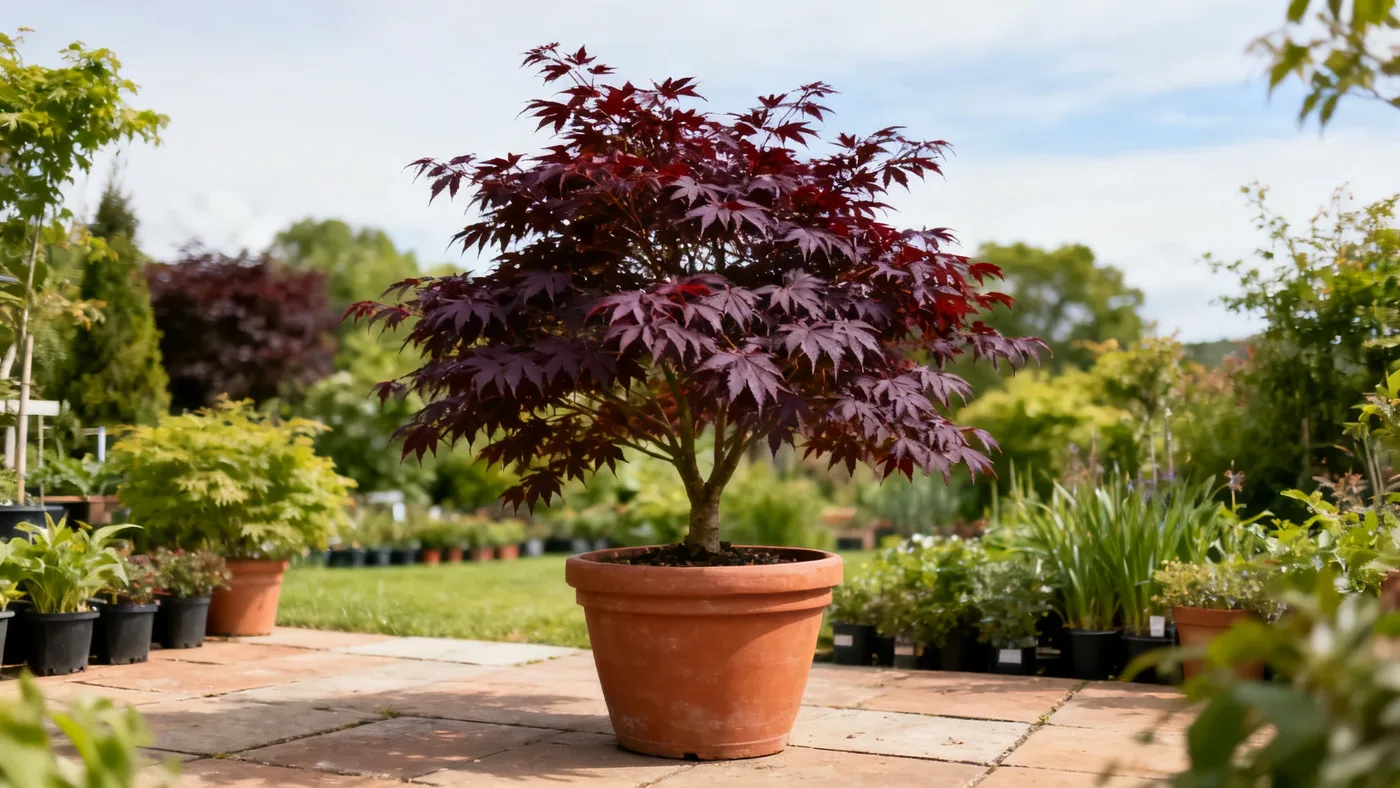
Buying a Bloodgood Japanese Maple is one of the best investments you can make for your landscape. These slow-growing ornamentals reward patience with decades of deep burgundy foliage and brilliant fall color. But the nursery row can feel overwhelming: Should you buy a young tree in a quart pot or a larger 7-gallon specimen? What size should you actually plant? This guide cuts through the confusion and shows you exactly what container size makes sense for your budget, timeline, and garden space.
Why Container Size Matters When Buying
Container size directly affects four things: price, establishment time, risk, and your ability to shape the tree. A quart-sized Bloodgood is often one-third the cost of a #3 container, but you're waiting years for landscape impact. A larger 7-gallon tree gives you a head start visually but commits more capital upfront. Understanding the tradeoff helps you choose the right size for your situation.
Bloodgood grows at a moderate pace, roughly 12 to 18 inches per year in good conditions. That means a young sapling takes real time to fill a space. Knowing the growth timeline helps you set realistic expectations.
What to Look For: Quality Indicators
Before worrying about container size, inspect the tree itself. A healthy Bloodgood is recognizable by its foliage color alone.
Foliage Color and Density
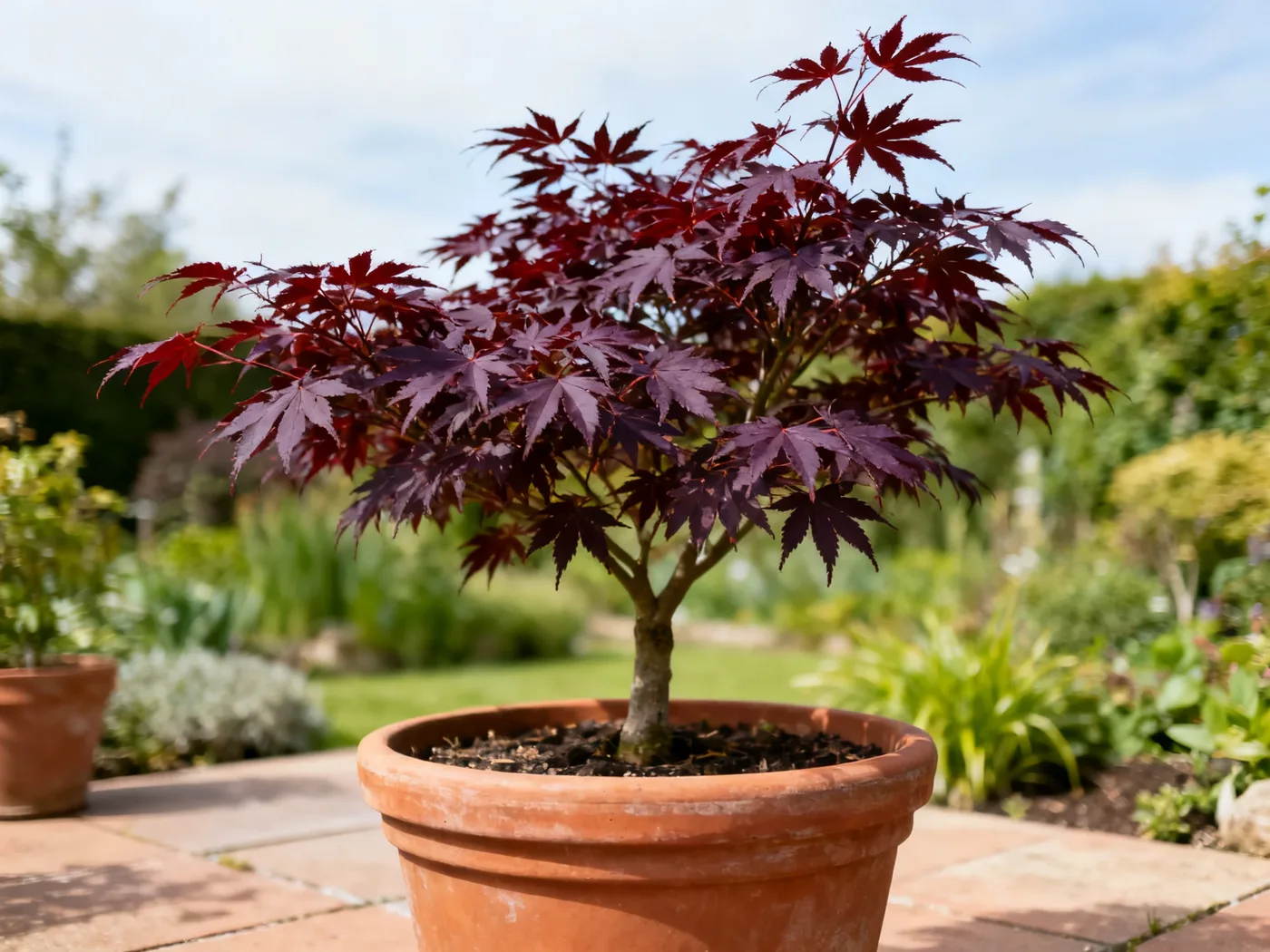
Look for deep reddish-purple to burgundy leaves throughout the canopy, not pale or faded green. Color fading to green is a common problem and signals stress from too little light or extreme heat. If you see trees labeled "Bloodgood" that look more green than red, they've likely been grown in deep shade or exposed to excessive heat without afternoon shade. Pass and find a darker specimen.
Leaves should be dense and close together on the branches. Sparse, leggy growth usually means the tree was crowded in the nursery or didn't receive enough light.
Leaf Shape and Texture
Bloodgood leaves are palmate (hand-shaped) with 5 to 7 lobes. Each leaf should look crisp and unblemished. Small spots, tears, or browning edges are minor during shipping but widespread damage is a red flag. Run your hand gently along a branch to feel the leaves. They should feel thin and papery, not leathery or waxy.
Branch Structure
A good nursery-grown Bloodgood should have multiple main branches radiating from the base or lower trunk, not a single stem with all growth at the top. The structure should look balanced, not lopsided. Check that branches are not crossing or rubbing each other, which causes scars and weak joints.
Root System
Gently tip the pot and look at the root collar where the roots meet the trunk. You should see roots emerging naturally, not a girdling mass circling the pot. If the root system is completely root-bound or circling heavily, the tree has been in its container too long and will struggle to establish. Some roots visible at the soil surface are normal; a thick ring of roots completely strangling the pot is not.
Smell the soil. It should smell earthy and clean. Sour or fermented odors mean waterlogging, which signals poor drainage or overwatering at the nursery.
Understanding Container Sizes at Sale
Nurseries sell Bloodgood Japanese Maple in a range of sizes. Here is what each means in practice.
Quart and #1 (One-Gallon)
Young whips and small branching trees, typically 1 to 2 feet tall. These are the cheapest entry point and ideal if you're willing to wait. Growth takes time: expect 12 to 18 inches per year, so a quart-pot tree will need 3 to 4 years before it reads as a landscape feature. They're excellent for container growing while young and for gardeners on a tight budget. Shipping is easy, and establishment success rates are high if you water consistently. The downside is immediate visual impact is minimal.
#3 (Three-Gallon)
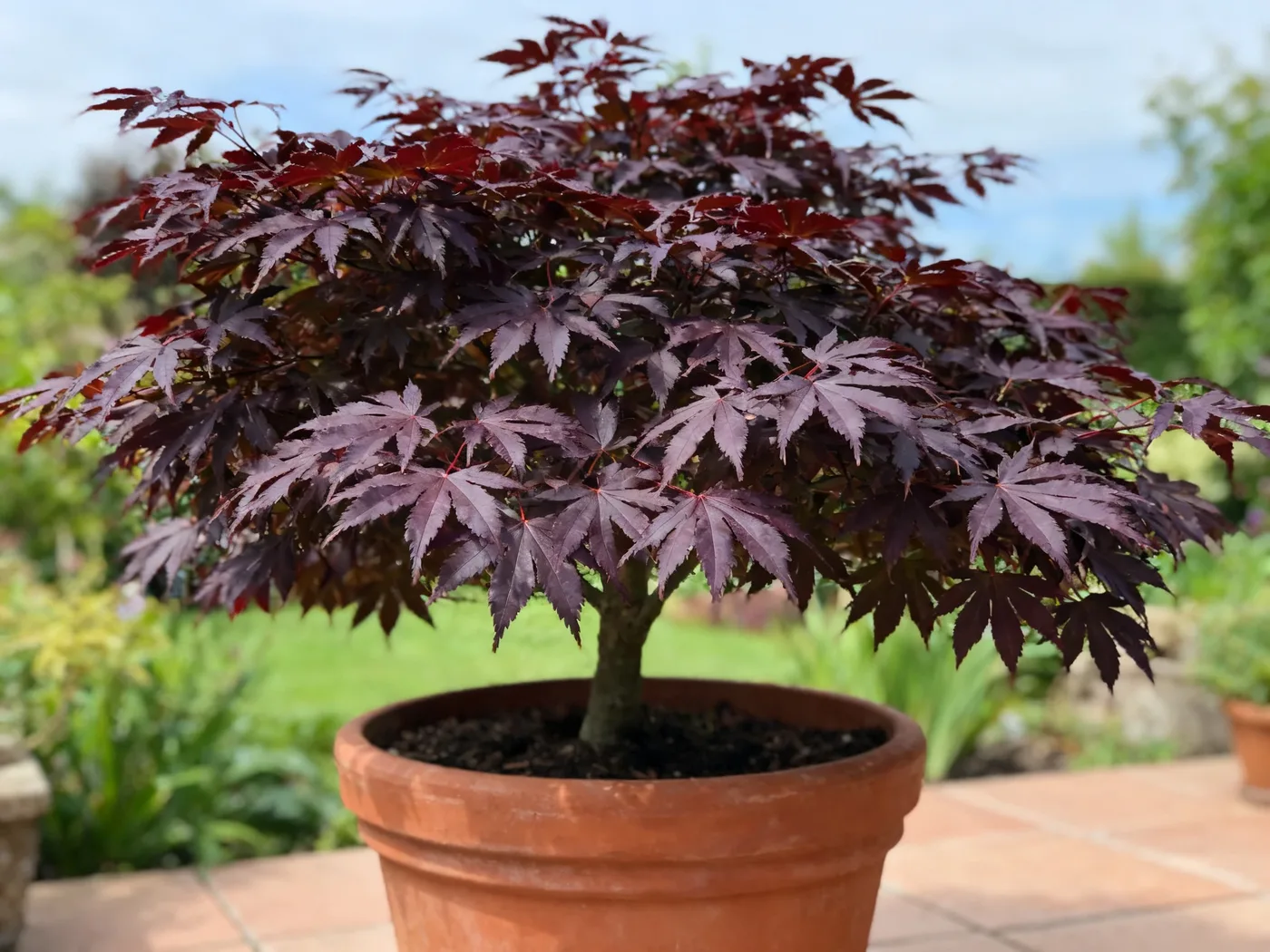
The middle ground and the most common retail size. A #3 tree is usually 3 to 5 feet tall with an established branching structure. It costs more than a quart pot but far less than a larger specimen. Plant a #3 Bloodgood and you'll see results in the same growing season. Recovery from transplant shock is quick. This is the size we recommend for most home gardeners balancing budget and impact.
7-Gallon and Larger
Trees 6 to 8 feet tall with thick trunks and full canopies. These are landscape-ready but expensive. If you're looking at a 7-gallon Bloodgood, you're paying premium prices, but the tree has essentially reached the size most trees achieve in 5 to 7 years of growth. Premium specimens in this range have been specially pruned and shaped for form. Delivery and installation require equipment. These trees are best for gardeners who want instant maturity or high-value renovation projects.
Bloodgood Maple 3-Gallon vs. 7-Gallon: Head-to-Head
| Consideration | #3 Container | 7-Gallon Container |
|---|---|---|
| Typical Height | 3 to 5 feet | 6 to 8 feet |
| Typical Cost | $30 to $60 | $80 to $150+ |
| Time to Landscape Impact | 1 to 2 seasons | Immediate |
| Establishment Risk | Low | Moderate (larger root system stress) |
| Watering Needs First Season | Frequent (small soil volume) | Less frequent (larger soil buffer) |
| Planting Labor | One person, no equipment | Two people or mechanical lift |
| Delivery Cost | Low or free | $30 to $100+ |
| Pruning Needed | Moderate shaping possible | Minimal (already mature form) |
Top Picks by Price Point
Budget Pick: Quart-Sized Bloodgood
Cost: $15 to $30. Best for: patient gardeners, container culture, large-scale planting. A quart Bloodgood is a gamble only if you're expecting instant results. But if you're willing to grow a tree alongside your garden, the investment is minimal and the reward is enormous. You'll shape the tree from youth, ensuring beautiful form. Perfect for container patios while young, then transplant to landscape when ready. Pair with consistent watering and you'll have a thriving tree in 3 to 4 years.
Best Value: #3 (Three-Gallon) Bloodgood
Cost: $35 to $75. Best for: most home gardeners, mixed borders, specimen trees. The #3 size hits the sweet spot. You get a tree with visible structure and color that makes an impact in year one, at a price that doesn't sting. Container handling is manageable for one person. Recovery is fast. Growth continues at the normal 12 to 18 inches per year, so within 5 to 7 years you'll have a 6 to 8-foot landscape staple. If you can buy only one size, this is it.
Premium Pick: 7-Gallon or Larger Specimen
Cost: $100 to $250+. Best for: high-end landscapes, instant focal points, replacements for mature trees. These are gallery trees, selected for exceptional form and color intensity. They've been growing at the nursery for years and are truly landscape-ready. Suited for featured positions where maturity matters now, not in 5 years. Also the right choice if you're replacing a specimen tree and want the landscape to look complete immediately.
Red Flags to Avoid
- Pale or faded green foliage. Bloodgood should be deep burgundy to reddish-purple. Fading to green signals light stress or heat damage. Don't assume it will recover in your garden.
- Wilted or dry-looking leaves. Even if the soil is moist, wilting indicates root stress or environmental shock. Choose a fresher specimen.
- Girdling roots circling the pot. A few surface roots are normal; a dense mat circling the entire root ball means the tree has been containerized too long and won't establish well.
- Broken or cracked branches. These are stress points where disease can enter. Minor damage is forgivable; major branch loss is reason to walk away.
- Weeds or moss thick in the container. Light weeds happen at nurseries, but heavy growth signals the tree hasn't been tended well and may have underlying problems.
- Sour-smelling soil. A fermented or swamp smell means waterlogging and root rot risk. The tree may fail to establish.
- Price deals that seem impossible. Bloodgood Japanese Maples are premium ornamentals with slow growth and high nursery costs. If a 7-gallon specimen is being clearanced at 50 percent off, ask why. Often it's because the tree is damaged, misshapen, or unhealthy.
Where to Buy Bloodgood Japanese Maple
Local Specialty Nurseries
Independent nurseries and arboretums often carry 2 to 4 sizes of Bloodgood and can advise on your specific hardiness zone and sun exposure. You get to inspect the tree in person and ask about the grower's pruning philosophy. Staff can also tell you whether the tree was grown locally or shipped in, which affects how it responds to your climate. Expect to find quart through #3 sizes most commonly; 7-gallon specimens are rarer and should be ordered in advance.
Large Garden Centers and Home Improvement Stores
Widely available in spring and early fall. Quality and variety vary widely. You'll find quart and #3 sizes in stock; larger specimens may be special-order. Staff knowledge varies. Inspect the tree carefully, as turnover is high and care can be inconsistent. Prices are often mid-range. Spring selection is best; late-summer stock may have been in containers too long.
Online Nurseries and Mail Order
A growing option for bare-root or balled-and-burlapped young Bloodgoods. Shipping costs are real, so the math only works for quart and #1 sizes. You sacrifice the ability to inspect the tree before purchase, but reputable online growers often have excellent guarantees and pack carefully. Bare-root trees are often cheaper than container-grown, but they establish more slowly and need attentive watering.
Specialty Japanese Maple Nurseries
If you're serious about Bloodgood, seek a regional specialist. These growers focus entirely on Japanese maple cultivars and offer the widest range of sizes, colors, and forms. Their expertise is unmatched. Expect premium pricing but exceptional quality. Many ship bare-root trees or offer delivery to your area in spring and fall.
Timing Your Purchase
The best time to buy is early spring or fall. Spring planting is ideal: the tree has the full growing season to establish roots. Fall purchases should go in by mid-autumn so the tree can settle before winter. Avoid planting in extreme summer heat. Bloodgood is hardy in zones 5 through 8, so confirm your zone before committing. If you're in zone 9, afternoon shade is essential to prevent leaf scorch.
If buying in late spring or summer, prioritize larger container sizes (#3 or 7-gallon). The bigger soil volume protects roots from heat stress. Smaller quart trees bought in heat have a harder time establishing.
Quick Reference: What Size to Buy
| Your Situation | Recommended Size | Budget Range |
|---|---|---|
| First-time buyer, patient | Quart or #1 | $15 to $30 |
| Want results this year, reasonable budget | #3 | $35 to $75 |
| Need mature size, no time to wait | 7-gallon or larger | $100 to $250+ |
| Container planting on a patio | Quart to #3 | $15 to $75 |
| Replacing a mature tree | 7-gallon or larger | $100 to $250+ |
| Specimen for Japanese garden | #3 to 7-gallon (inspect form carefully) | $50 to $200 |
| Bulk planting, multiple trees | Mix of quart and #1 | $15 to $30 each |
Next Steps After Purchase
Once you've selected your Bloodgood, read our detailed care guide to ensure successful planting and establishment. Learn about soil requirements, watering frequency, pruning, and what to expect as your tree matures. A Bloodgood planted well rewards you with 80 to 100 years of garden beauty. Start with the right size and specimen, and you're already on your way.
For complete care instructions, see the complete Bloodgood Japanese Maple care guide. To understand how large your tree will grow over time, review how big a Bloodgood Japanese Maple gets.