Bloodgood Japanese Maple Through the Year: Leaves, Flowers, Winter
Plant tags love the phrase "red all year." We have read it often enough to doubt it, and you should too. A careful owner would want to see red leaves on the branch in every month, and on a tree that drops its leaves, that test fails after the first hard freeze.
This article talks about what a Bloodgood does at each stage of its year, from swelling buds to bare twigs, and answers the questions customers ask us most. Read on to learn when it flowers, why the leaf color shifts in summer, whether the winged seeds cost the tree anything, and whether it is evergreen.
We weigh each claim against the published sources and against what we see in our rows, then give a verdict.
Is Bloodgood Japanese Maple Really Red All Year?
Before any claim gets believed, it needs a test. Here is the one we use and the evidence we check it against.
The Test We Apply
Stand at the tree in January and look for red leaves. That is the whole test. A tag promising red all year makes a claim about every month, and a single bare twig in winter ends the argument for that wording.
That does not make the tag worthless, only imprecise. The better question is which months carry red and how deep the red is in each of them.
What the Sources Actually Say
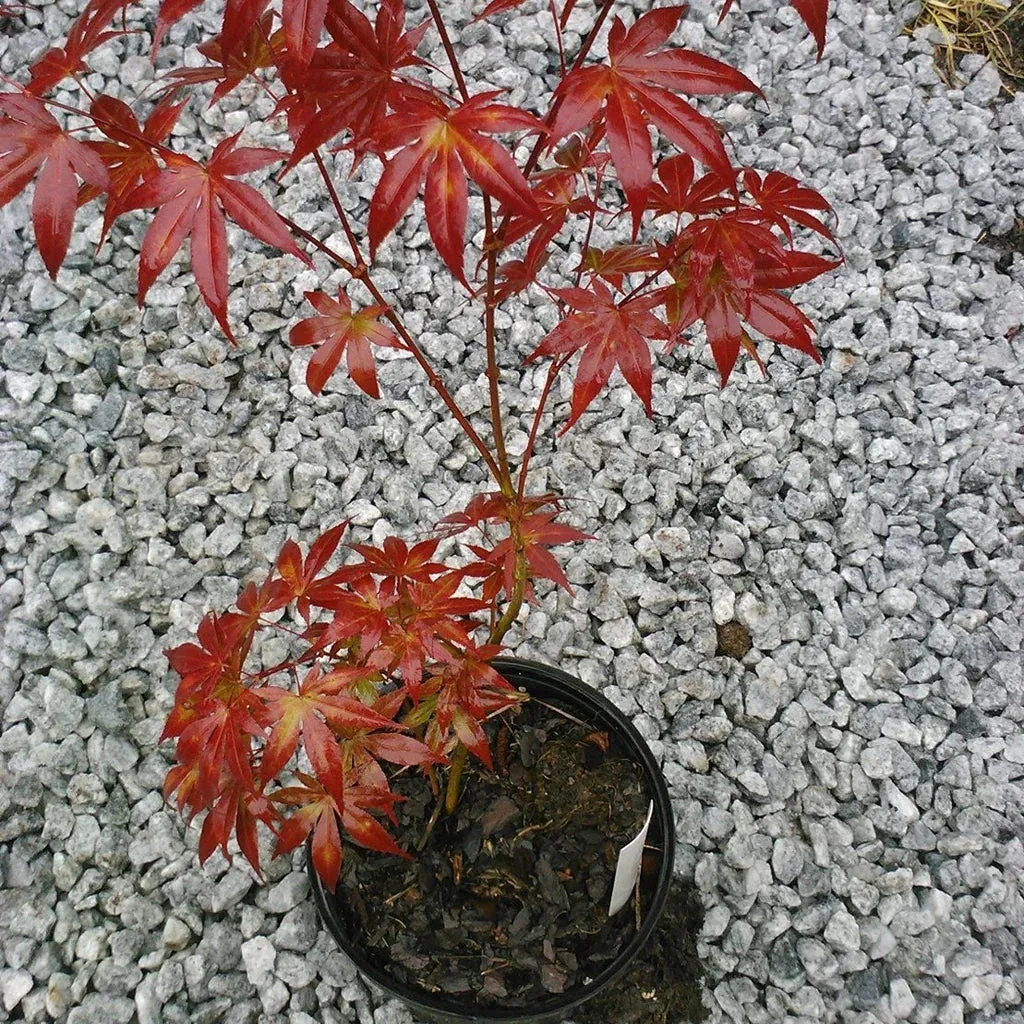
The plant has deep red-purple leaves with 5–7 slender-pointed lobes, turning red in autumn, and it is deciduous. The deep burgundy spring and summer foliage turns bright crimson in fall.
Look at the verbs. The color turns, which means it changes. NC State does not mention red in winter, and could not, because the leaves are gone by then.
So we split the claim into parts and test each one as the tree lives it, in order. Our Bloodgood FAQ answers shorter versions of these questions, including one on flowers, and this guide gives the longer evidence behind them.
What the Bloodgood Japanese Maple Does Before Leaves Open
The year starts on bare twigs, well before any color arrives. This is the stage where nursery copy gets most generous, so we separate what you can observe from what is sales language.
Bud Swell
In late winter the buds on the twigs fatten as the weather warms. The week this happens depends on your zone and on the spring you get, so we will not put a date on it. The species grows in zones 5a through 8b, and a tree at the cold end wakes weeks after one at the warm end.
Watch the buds instead of the calendar. Plump buds that give slightly when you press them are alive. Brittle buds on twigs that snap dry are a warning that those tips did not survive the winter.
The First Leaves
The leaves open small and folded, then expand and spread into their lobes over the following weeks. In our rows the first flush looks brighter and redder than the tree ever looks again, and it settles into a darker tone within weeks.
Fact Versus Tag Copy
Fact: the leaves are red-purple from the start of the season. Spin: that vivid first red lasts. It does not, and a tag photograph is usually taken at the brightest moment of the year.
A second piece of spin is that a hardy tree shrugs off any cold. Hardiness describes the wood in winter, not tender new leaves in April. A hard frost after leaf-out can blacken that growth, so check your local extension service for your average last frost date and be ready to cover a young tree. Our guide to winter care in cold climates covers the protection side.
Flowers Most Owners Never Notice
Nearly every owner asks whether the tree flowers at all. It does, and most owners still go years without seeing it.
What the Flowers Are
The flowers are small and purple, followed by red fruits. The species' flowers are small and red to purple, and they bloom in spring. Some listings say red and others say purple, which is a reasonable disagreement about a bloom this small. Look at yours up close and decide for yourself.
Why They Are Easy to Miss
Three things hide them. They are small. They open in spring around the time the leaves do, so they sit among foliage instead of on bare wood. And their color falls in the same red-purple family as the leaves, so nothing contrasts.
From across a lawn they simply do not register, which matches the species description as insignificant from a distance. We have had customers grow the tree for years before spotting them.
Flowers Are Not a Reason to Plant One
Buy this tree for the leaves and the layered shape, and treat the flowers as a small bonus for anyone who looks. To find them, walk up to the tree in the weeks right after the leaves open and tilt a branch tip toward the light.
Verdict: real, small and easy to miss. The claim that the tree "blooms" is true, but it is not a selling point.
How Bloodgood Japanese Maple Leaf Color Really Shifts
This is where the red-all-year claim takes its hardest hit. The leaf does change after spring, and three explanations get offered: sun, heat and genetics. They are not equally strong.
Sun and Light
Leaf color is best in partial shade, although full sun can be tolerated. That cuts against the common advice to put a red maple in full sun for the deepest color. We agree with the partial shade advice.
Strong afternoon sun fades and scorches leaves, while light shade after midday holds a darker tone. Our guide to Bloodgood light requirements covers placement in detail.
Heat and Dry Spells
A hot, dry stretch is when owners report a duller, bronzy cast across the canopy, and sometimes browning at the leaf edges. The sources we cite give no temperature thresholds, so we will not invent one.
Even moisture and afternoon shade are the two levers you control. Crisp, curling edges are scorch, which is damage, and that is a different thing from a color shift.
Genetics and the Plant Itself
Genetics sets the ceiling. UF/IFAS lists the species as having green foliage in summer, and Bloodgood is the red-purple selection of that species. A tree sliding toward green is behaving like its parent.
If yours has never held red-purple color in a reasonable site, the plant itself may not be true to the cultivar. Our guide on a Bloodgood turning green lays out the causes and fixes.
Verdict: deep red-purple is the cultivar's normal summer color. A bronze cast in the brightest, hottest weeks is common and comes mostly from light and heat. A fully green tree points at the plant.
Winged Seeds and What They Cost the Tree
After the flowers comes the stage owners ask about least and worry about most. Here is what the fruit is and whether to remove it.
How the Seeds Form
The fruit is a schizocarp of two samaras, with wings incurved to form an arch, becoming reddish. Each is a pair of winged seeds, and they develop through the growing season after the flowers fade.
They are not an ornamental feature on their own. They add a reddish note against leaves that are already red-purple, which is why many owners never notice them either.
What the Seeds Cost the Tree
You will hear that heavy seed set weakens a maple. None of our sources measures this, so treat it as a claim without evidence. What we can offer is practice.
On an established, healthy tree, leave the seeds on. Stripping them by hand is a poor use of your time. On a tree in its first seasons in the ground, or one in a container, we would rather the energy go to roots. Snip the clusters off while they are small, using clean pruners.
One more point: seedlings that sprout under the tree are not reliable copies of Bloodgood. Do not count on one to replace the parent.
Leaf Drop, Then the Bare Branches
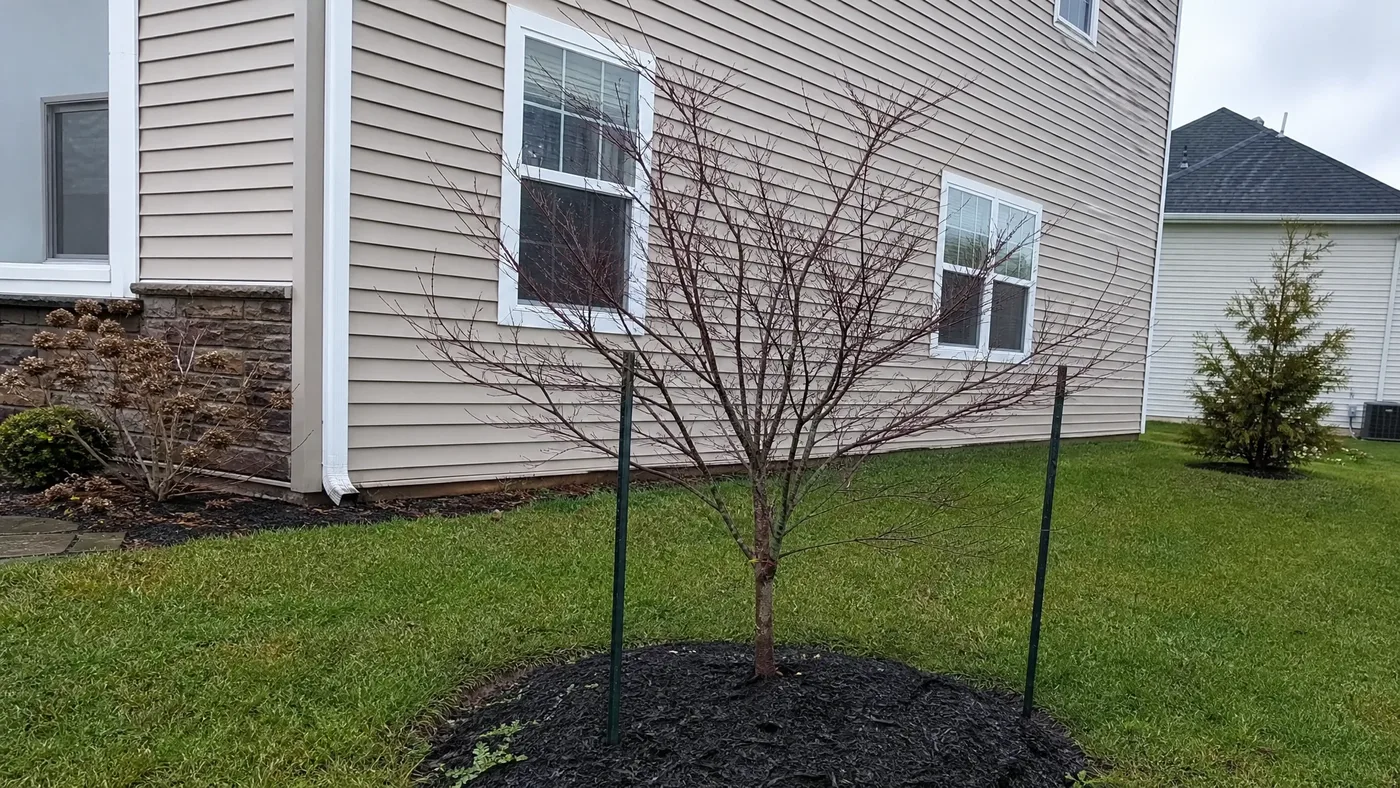
The red does not carry into winter. The leaves drop, and what remains shows what kind of tree you own.
The Drop
The crimson of autumn is covered in our fall color guide, so we will not repeat it. Once that color peaks, the leaves fall. A hard freeze or a windy week speeds it. By the time the ground freezes in colder zones, the canopy is gone.
The Leafless Frame
The species takes on a layered look with a low, dense, rounded top and spreading branches. In leaf, that layering is partly hidden. In winter it is the whole show, and the horizontal tiers read clearly.
The cultivar's ultimate height is 2.5–4 meters, about 8–13 feet, while NC State lists the species at 15–25 feet. Judge your own tree's mature size over many years rather than from one table.
Bark and Twigs
Young stems vary from green to polished reddish brown, and older branches assume a gray cast. That is a species description, so check your own twigs before assuming they match.
Winter is also when you can see the buds that will open in spring. They are already sitting on the twigs, which is why cutting hard in winter removes next year's leaves.
Is Bloodgood Japanese Maple Evergreen? The Evidence Says No
This is the question the whole calendar leads to, and the evidence is one-sided.
Where the Confusion Starts
Tags and photographs show the tree in leaf, and the deep red-purple tone looks permanent in a nursery row. A potted tree in a garden center stays leafed for much of the year, and the mind fills in the rest.
One of the most common questions we get is whether it keeps its leaves through winter. It does not.
What the Record Shows
It is a large bushy deciduous shrub with leaves turning red in autumn. None of the sources we read calls it evergreen or semi-evergreen, and none says mild winters change that. Expect bare branches for the cold months wherever you grow it.
We grow and sell Bloodgood, and we would rather you buy it knowing it goes bare than be disappointed in January.
Verdict: not evergreen. Red in spring and summer, crimson in fall, bare in winter.
Judging Your Bloodgood Japanese Maple by Its Own Branches
Held up: small spring flowers, reddish winged seeds, deep red-purple leaves through the growing season, a crimson fall and a layered bare frame. Did not hold up: red all year, evergreen, flowers worth planting for, and full sun as the way to the reddest leaves.
Bloodgood Japanese Maple
Nursery-grown Bloodgood Japanese Maple in sizes from QT Container, shipped to your door.
From $49.49
Shop Now →Whatever a tag or a guide says, judge the tree by what it does on your own branches across a full year, and note what you see. On our farms we give Bloodgood the partial shade, even moisture and well-drained, acid to neutral soil the sources call for, so the trees we send you start from conditions that favor good color.