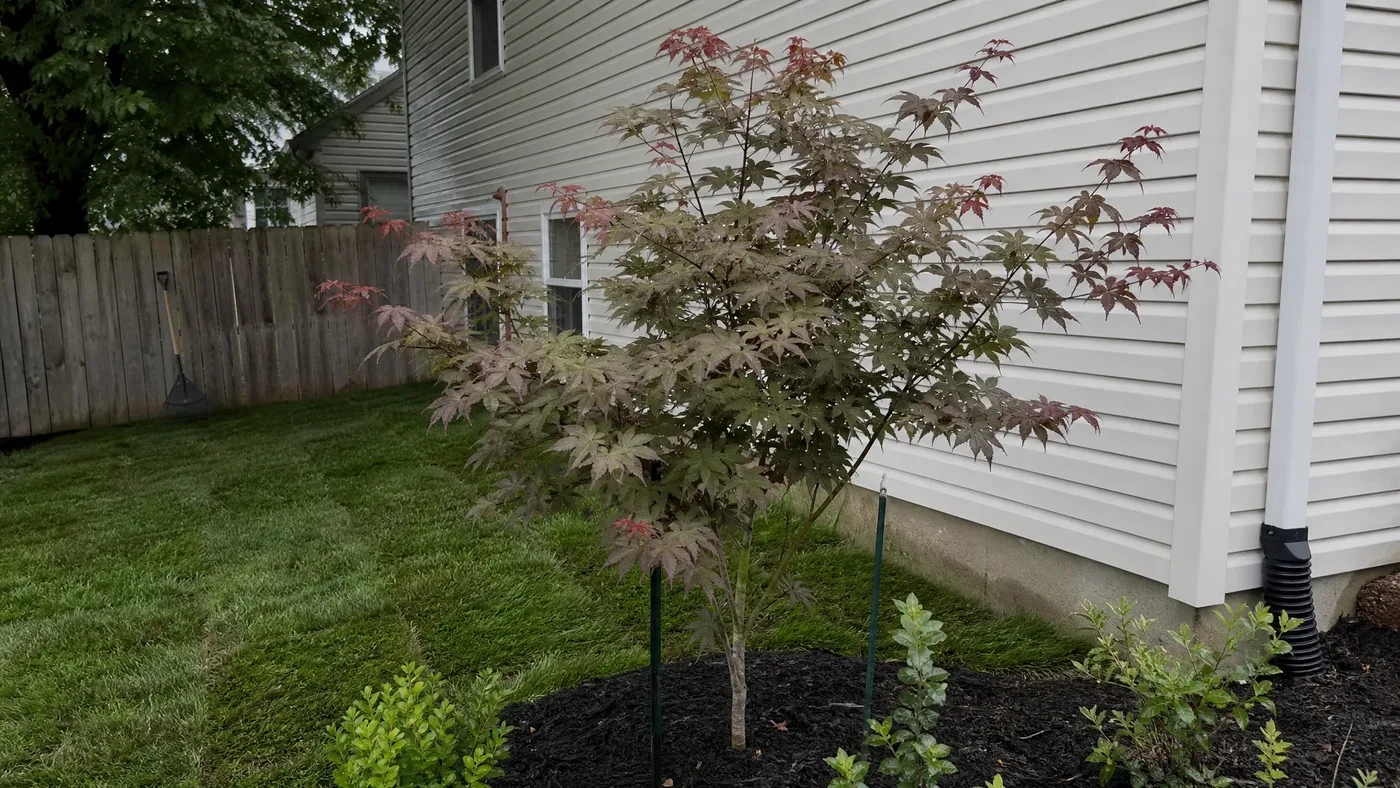
Why Is My Bloodgood Japanese Maple Turning Green? Causes and Fixes
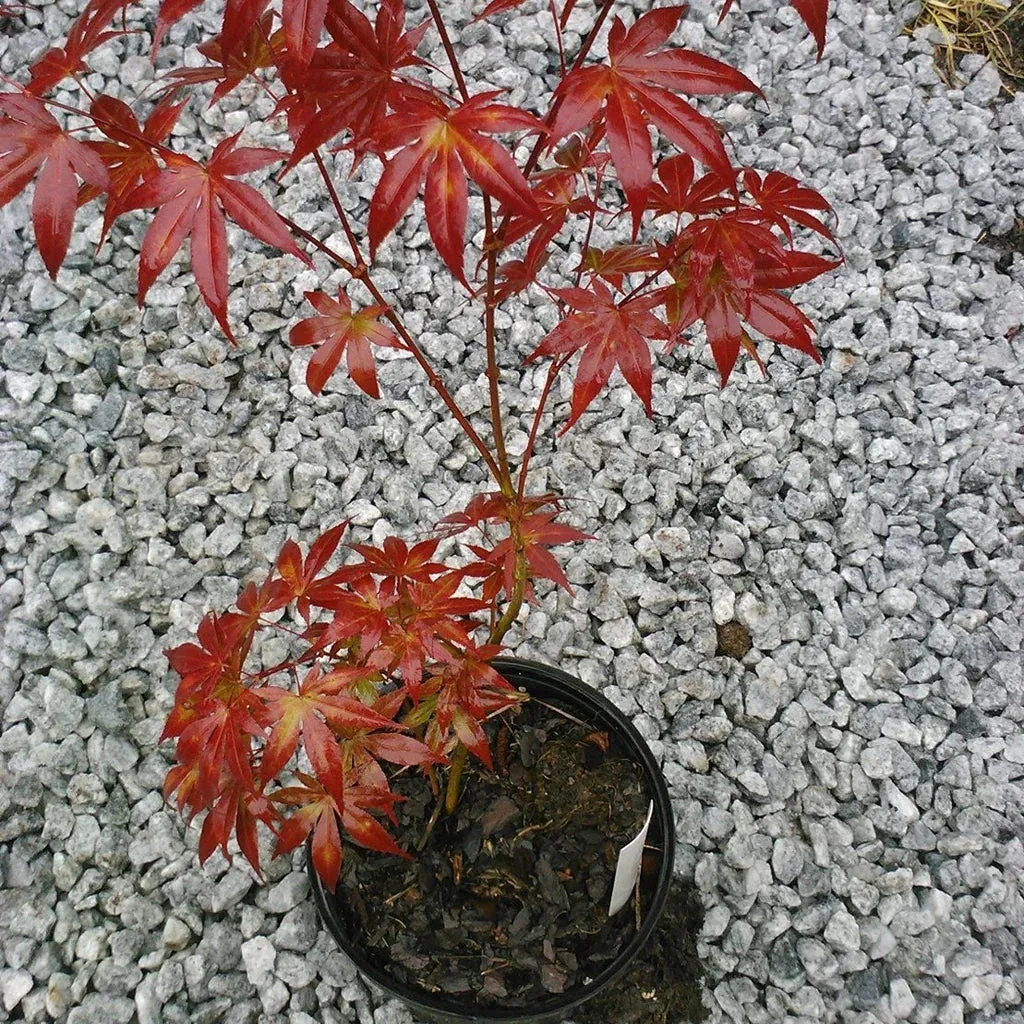
The photo on the nursery tag shows one glossy wine-red leaf in perfect light, and every Bloodgood buyer carries that picture home. It is a fine photograph. It is also the reason you may be standing in the yard in July, staring at a tree the color of an old doorknob and wondering what you did wrong.
Most of the time you did very little wrong, and a good share of the time the tree is doing exactly what Bloodgood does. Sometimes, though, the green is a real signal, and the cause is something you can fix.
This article talks about why a Bloodgood Japanese Maple loses its red and answers the questions customers ask us most. Read on to learn how to judge a tree before you buy it, how to spot a seedling, what the first weeks and first year look like, how feeding and shade push leaves green, and what normal drift looks like on an older tree.
Reading a Bloodgood Japanese Maple Before You Buy
Most color disappointments are settled at the nursery bench, months before the tree meets a hot afternoon. That makes the buying stage the cheapest place to prevent them.
Nursery Leaf Color Proves Very Little
Here is what a tree in leaf at the nursery can and cannot tell you.
New Bloodgood foliage opens deep red-purple, with 5–7 slender-pointed lobes on each leaf. Nearly any red-leaved maple looks convincing in that first flush. So the bench tells you the tree can make red. It does not tell you whether the tree will hold red once summer settles in. Customers usually ask us in July why the tag lied, and usually the tag told the truth about the spring leaves.
Treat that first flush as the trailer, not the film. The cultivar's leaf color is best in partial shade, with full sun tolerated, so ask where the tree spent its season. A plant that stood in open light and still shows dark leaves has told you something real. One that sat tucked behind a bench has told you very little.
Read the Whole Tree, Not One Branch
Look past the brightest shoot and check the parts of the tree that have had time to age.
Compare the newest leaves at the branch tips with the older leaves behind them. A gentle softening from tip to base is normal. Next, look at leaf margins for brown, crisp edges, which mean the tree has already been through a dry or windy spell. Last, step back and look at the form. A tree with an open, balanced branch pattern has had enough light on every side, which is the kind of tree that holds its color later.
Questions for the Seller
Keep this short list handy and ask every item, even if the seller looks at you oddly.
- Ask how the tree was propagated. Bloodgood is propagated by grafting or softwood cuttings, so a straight answer should name one of the two.
- Ask to see the graft union if the tree is grafted. It shows as a bulge or step low on the trunk, though a cutting-grown tree will not have one, so the answer to the first question matters more.
- Ask how long the tree has stood outdoors in full exposure. Leaves that have already weathered some sun and wind are more honest than leaves from a protected greenhouse.
- Compare several trees under the same label side by side. If one is visibly greener or browner than its neighbors, leave it on the bench.
- Ask where the tree came from. A seller who can answer is worth more than a discount.
Seedlings Sold Under the Bloodgood Japanese Maple Name
A cultivar name promises identical copies of one original tree, and seed cannot keep that promise. This is the one cause no amount of good care repairs, so it pays to know about it early.
Why Seed Cannot Copy a Cultivar
The short version of the genetics, and why a label alone proves nothing.
UF/IFAS describes the species as having green foliage in summer, and a seed from a red maple carries some of that green background. Bloodgood stays Bloodgood because it is propagated by grafting or softwood cuttings, so every true tree is a piece of the same original plant.
A seed is a new individual. Some seedlings come out red, some muddy, and some are green by midsummer. That is how green trees end up under a Bloodgood label: a seedling from a good red parent sells on its spring looks, and nobody checks again until July.
The Bloodgood we sell is a propagated plant, not a seedling, and we are glad to say how a given tree was started. Our guide to grafted or seedling trees covers the buying side in detail.
Spotting a Seedling Early
You can often catch it in the first season if you compare instead of guess.
Compare against a known tree. Find a true Bloodgood in similar light and look at both in the same hour of the same day. A seedling usually sits visibly paler, browner or greener than the real thing in identical conditions.
Watch each new flush. A true Bloodgood opens deep red-purple every time it pushes new leaves. A seedling tends to open in a lighter tone, or greens up fast as the leaves age, well before heat can take the blame.
Rule out the site first. Correct the light and feeding problems covered below and give the tree a full season. A tree that stays green in good conditions is your seedling.
Then be honest about it. No fertilizer program, pruning cut or move makes a seedling into a Bloodgood. If you bought it recently, take your photos back to the seller. If not, enjoy it as a different maple or replace it.
The First Weeks After the Tree Comes Home
A tree that just left its pot or was dug from the ground is busy rebuilding roots, and the leaves are the first place that effort shows. Judge color after the tree settles, not during.
Expect a Dull, Slow First Flush
Here is what a stressed new tree typically does, so none of it surprises you.
Leaves on a transplant may open smaller than usual, a muddy red-brown instead of clean burgundy, and a few may hang back while the rest of the branch moves ahead. The tree is spending its energy below ground. A bronzy look in these weeks usually reflects the move and the new flush, not a color fault in the tree.
Leaf edges are the exception worth watching. Japanese maples may suffer leaf scorch with excess sun, wind, or drought, and a young root system is the least able to cope with any of the three. Brown, crisp margins are damage, not fading, and they have their own fix in our leaf scorch guide.
What Not to Fix Yet
The urge is to do something. Most of the useful moves here are restraint.
Do not feed it. A transplant with a disturbed root system cannot use fertilizer, and as a later section shows, extra nitrogen is a common cause of green leaves.
Do not prune the dull leaves. They are the tree's only income right now. Let them stay until they drop on their own.
Do not move it. Pick the spot, then leave it alone for a full season before you judge the light. Our guide to planting a Bloodgood the right way helps you get the spot right the first time.
Do water on a real check. Bloodgood prefers moist but well-drained soil. Push a finger into the soil at the edge of the root ball and water when it feels barely damp. Soggy is as bad as dry.
What Counts as Progress
You need a few signs to look for, because a settling tree changes slowly.
Watch the newest leaves, not the oldest. If each new leaf opens a little larger and a little darker than the one before it, the roots are catching up and the color will follow. Leaves that stay small, yellow-green and limp for several weeks point to a watering or drainage problem, and that is where you act. Hold a steady routine, keep a thin layer of mulch over the root zone, and keep it off the trunk.
Year One Heat and Shade for Bloodgood Japanese Maple
By the first full summer the tree has settled in, and the site starts doing the talking. Heat and shade pull in opposite directions, yet a Bloodgood answers both the same way: it loses its dark red.
Check the Site Before You Change It
Do this before you cut or dig anything, because the wrong fix costs a season.
On a bright day, visit the tree mid-morning, at noon and around 4 p.m. Note which leaves sit in direct sun at each visit, where shadows from fences and neighbors fall, and which side of the tree stays dark all day. Then match what you see to the two cases below. Trees in the same yard can have opposite problems on opposite sides, so check each side separately.
Heat Fades Leaves to Bronze
Dark leaves in a hot spot take the worst of the afternoon.
Reflected heat off a south or west wall, a driveway or a gravel bed pushes color toward bronze, then toward brown at the margins. Bloodgood does tolerate full sun, but tolerating it and looking its best in it are different things. Leaf color is best in partial shade, although full sun can be tolerated.
So shade the tree from the hottest part of the afternoon, keep the root zone under a layer of mulch, and water deeply when the soil begins to dry. A tall shrub or a fence on the west side often does the job without touching the tree.
Too Much Shade Greens the Tree
Too little light does the opposite damage, and it looks like a tree that was never red enough.
Under a dense neighbor canopy or on the north side of a house, leaves lose red and lean green or brownish. Plenty of advice says Japanese maples want deep shade. That is species advice, and it costs a Bloodgood its color. Aim for partial shade, which still means some direct light, not a gloomy corner. Our light requirements guide goes deeper on the balance.
Fix it in this order:
Prune the neighbors first. Raise the canopy of overhanging trees or cut back the shrub that blocks the tree's light.
Move the tree if pruning is not enough. Move it while dormant, dig a wide root ball, and ask your local extension service for the right dormant window in your zone.
Then wait a full season. New leaves show the improvement. Existing leaves will not recolor.
Feeding Can Turn a Bloodgood Japanese Maple Green
Of all the causes in this guide, this is the one we create ourselves with a bag and good intentions.
How Nitrogen Greens the Leaves
The reasoning is simple, and it explains why a healthy-looking tree can still lose its red.
Nitrogen drives soft, fast leaf growth, and soft growth tends to run greener than slow, firm growth. The species grows at a slow to moderate pace, which tells you what the tree is built for. A Bloodgood pushed past that pace gives you big, floppy, green-leaning leaves.
We often see that the source is not a deliberate feeding at all. Lawn fertilizer spread across turf that includes the tree's root zone does the same job, as does rich compost mounded against the trunk or a bed dosed for roses and annuals.
A Plan to Stop and Correct It
Work through these in order, then wait for the next flush before you judge.
- Stop every product containing nitrogen near the tree, including lawn feed and bedding-plant boosters, and keep the spreader out of its root zone.
- Check what is piled around the trunk. Pull back rich compost or manure and replace it with a thin layer of plain bark mulch kept clear of the trunk.
- Water deeply and slowly a few times when the soil is dry, so soluble nutrients move down past the roots. Keep the soil moist but well-drained.
- Leave the green leaves alone. They will not turn red again this year, and the new flush next spring is where recovery shows.
- If you feed later, base it on a soil test and your local extension service, and read our guide on whether Bloodgood needs fertilizer first.
Soil pH matters here too. Bloodgood suits acid or neutral soil, so a soil test tells you whether you are in range before you add anything at all.
Normal Shifts in an Established Bloodgood Japanese Maple
After a few years in the ground, a Bloodgood stops being a problem to solve and becomes a tree to read. Most of the change you see is calendar and canopy, not trouble.
The Normal Color Sequence
This is the yearly pattern a healthy tree follows.
Leaves open deep red-purple. The cultivar's deep burgundy spring and summer foliage turns bright crimson in fall. In a real yard the middle stretch is where the doubt lives, because summer heat softens burgundy toward bronze or a dull maroon. A tree that does this and then lights up in fall is healthy. Our fall color guide covers that last stage.
Judge the trend, not the day. A cloudy week or a heat spell changes how leaves read in a photograph, and only a run of months shows the real direction.
Why the Inner Canopy Runs Greener
An older tree makes its own shade, and that is the part most owners miss.
Outer leaves catch full light and hold the dark color, while leaves deep inside sit under their neighbors and turn greener. In our rows, the inner leaves always look a shade greener than the tips, and nobody loses sleep over it. The cultivar's ultimate height is about 8–13 feet, and the more leaves it carries, the more shade it throws on itself.
If the interior shading bothers you, thin a few crossing or crowded branches while the tree is dormant so light reaches the middle. Take only what is clearly in the way and never strip the tree.
Signs That Are Not Color Drift
Color is only one signal, and a few others point to a different problem.
A branch that wilts and drops leaves in midsummer, or margins that brown and crisp, are health questions, not color questions. The cultivar may be susceptible to Verticillium wilt, acer leaf scorch and honey fungus. Send clear photos to your local extension service and ask.
When Green Is Fine and When It Is Not
Green is fine when it shows up as a gentle summer softening, on the inner leaves of a mature canopy, with crimson following in fall. It is a problem when it arrives on a new tree after heavy feeding, under dense shade, or on a seedling that never held red. Fix the cause you can reach: light, fertilizer or the tree itself. Brown, crisped edges and dying branches are a separate matter.
Bloodgood Japanese Maple
Nursery-grown Bloodgood Japanese Maple in sizes from QT Container, shipped to your door.
From $49.49
Shop Now →Photograph the same branch each month this year, then let the pictures settle the argument. On our farms we grow and sell top-quality Bloodgood Japanese Maples in open ground with good light, evenly moist, well-drained soil and light feeding, because red is the whole point of this tree.