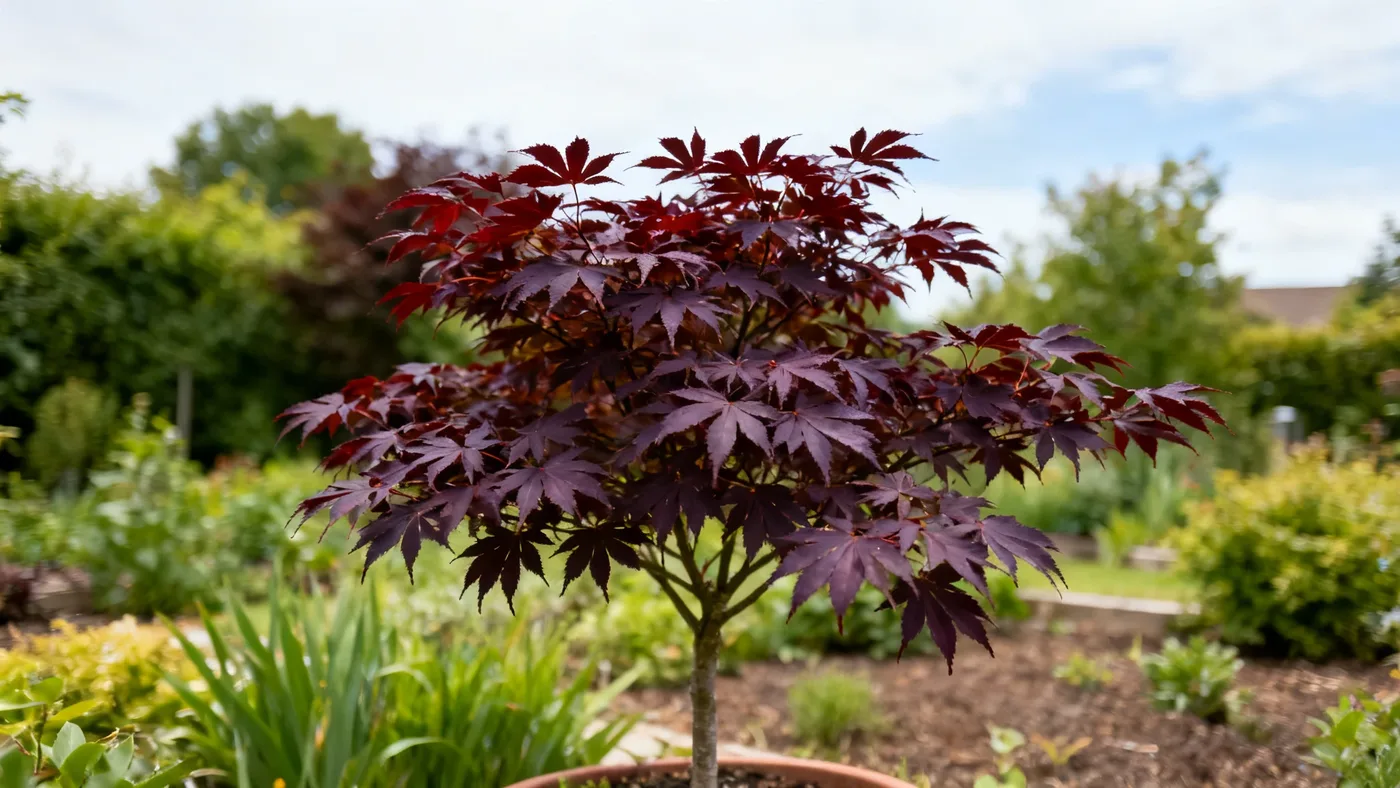
Bloodgood Japanese Maple FAQ: 12 Questions Answered
Growing Bloodgood Japanese Maple raises specific questions about site preparation, watering, light, and seasonal care. This guide answers the most common questions about bloodgood japanese maple care and helps you solve problems before they take hold.
Planting and Site Selection
Q: When should I plant a Bloodgood Japanese Maple?
A: Plant in early spring or fall, when the tree is dormant or just breaking dormancy. Avoid planting in extreme summer heat, which stresses young trees and increases watering needs. Fall planting gives roots 2 to 3 months to establish before winter dormancy, while spring planting allows immediate growth into the warmer season.
Q: How much space does a Bloodgood Japanese Maple need?
A: Space the tree 12 to 20 feet from structures, property lines, or other trees, depending on the mature width you expect. A mature Bloodgood reaches 15 to 20 feet wide, so account for that spread when deciding placement. This spacing prevents crowding as the tree matures and ensures good air circulation.
Q: Can I grow Bloodgood Japanese Maple in a container?
A: Yes, especially when young. Container-grown trees are practical for patios, decks, and small spaces, though they need larger containers and winter root protection in colder zones as they mature. Move potted trees to a sheltered location (unheated garage or against a south-facing wall) in zones 5 and 6 to protect roots from hard freezes.
Q: What hardiness zones can grow Bloodgood Japanese Maple?
A: The cultivar thrives in USDA zones 5 through 8. Some sources extend the range to zone 9 with afternoon shade protection in those hotter regions. Always check your local zone before planting, and provide afternoon shade if you're in the warmest end of the range.
Q: Do I need to amend soil before planting?
A: Test your soil pH and drainage first. Bloodgood prefers slightly acidic to neutral soil (pH 5.5 to 6.5) that is well-drained and rich in organic matter. If your soil is heavy clay, work in 3 to 4 inches of compost or aged bark to improve drainage; if it is sandy, add compost to boost water retention.
Watering and Soil
Q: How often should I water a Bloodgood Japanese Maple?
A: Water consistently to keep soil moderately moist but not waterlogged, especially during the first two growing seasons. Once established (after 2 to 3 years), the tree handles brief dry spells but performs best with regular moisture during droughts lasting more than a week or two. In hot climates, deeply water 1 to 2 times per week rather than light daily sprinkles.
Q: Is Bloodgood Japanese Maple drought tolerant?
A: No. The tree is not drought tolerant once established, though it can handle brief dry spells better than younger trees. Consistent, reliable moisture is essential for healthy growth and vibrant foliage color. If your area experiences regular droughts, plan for supplemental irrigation or site the tree where it receives natural moisture from runoff.
Q: What should I do if my tree is in poorly drained soil?
A: Poor drainage and compacted soil are serious problems for Bloodgood, leading to root rot and girdling roots. If the planting site has clay or standing water, either amend the soil heavily with compost before planting or choose a different location. You can also build up the planting bed slightly to improve surface drainage.
Q: Should I fertilize my Bloodgood Japanese Maple?
A: Apply a light feeding of balanced, slow-release fertilizer formulated for acid-loving, woody ornamentals in early spring as growth begins. Avoid over-fertilizing, which promotes weak, leggy growth and can scorch foliage. Established trees in reasonably fertile soil often need no fertilizer at all; rely on annual mulch renewal instead.
Sunlight and Growing Conditions
Q: How much sun does Bloodgood Japanese Maple need?
A: The tree grows best in full sun to part shade (4 to 6 hours of direct sun). Full sun deepens the red-purple color of the foliage throughout summer. In hotter southern climates, provide afternoon shade (2 to 4 hours of midday shade from 2 to 5 PM) to prevent leaf scorch and heat stress.
Q: Why is my Bloodgood's color fading to green?
A: Insufficient light is the most common cause. Move the tree or prune nearby branches to increase sun exposure. Extreme heat or sustained drought can also fade color, so ensure consistent moisture and afternoon shade in hot regions. A tree in deep shade will rarely develop the signature deep red-purple color that makes the cultivar desirable.
Q: What is leaf scorch and how do I prevent it?
A: Leaf scorch is browning or bleaching of foliage caused by too much sun, wind, or heat stress, especially in hot southern climates. Prevent it by providing afternoon shade in zones 8 and 9, ensuring consistent soil moisture, and sheltering the tree from strong, dry winds. Once scorch occurs, it is cosmetic; the tree typically recovers the following season.
Q: Are spring frosts a problem for Bloodgood Japanese Maple?
A: Late spring frosts can damage tender new growth in zones 5 and 6. Plant in a location with morning sun but afternoon/evening shade to slow early bud break, reducing the window when frosts can burn new leaves. If a hard frost threatens after buds have opened, run a sprinkler on the foliage to coat it with ice, which paradoxically protects the plant from frost damage.
Pruning and Maintenance
Q: Does Bloodgood Japanese Maple need pruning?
A: Minimal pruning is needed. Remove dead branches, crossing branches, or those growing inward to maintain an open, natural form. Prune only during late fall to mid-winter dormancy to avoid excessive sap bleed (the "bleeding" of sap from fresh cuts in spring). Never prune heavily in spring or summer.
Q: When should I prune my Bloodgood Japanese Maple?
A: Prune from late fall through mid-winter while the tree is fully dormant. This timing minimizes sap loss and disease risk. Avoid pruning in spring (April and May) and summer, when active growth and warm temperatures cause heavy sap bleed and stress the tree.
Q: How fast does Bloodgood Japanese Maple grow?
A: Growth is slow to moderate, averaging 12 to 18 inches per year. The tree reaches a usable landscape size (6 to 8 feet tall) in about 5 to 7 years, but full mature size (15 to 20 feet) takes 15 to 20 years or more. For faster visual impact, buy larger nursery stock or combine younger trees with other fast-growing specimens.
Common Problems and Solutions
Q: What pests affect Bloodgood Japanese Maple?
A: Aphids, scale insects, and Japanese beetles occasionally infest the foliage. Borers attack only stressed or damaged trees. Monitor for sticky residue, yellowing leaves, or visible insects starting in late spring. Treat minor infestations with horticultural oil spray; severe problems may require insecticide applied by a certified arborist.
Q: What diseases affect this cultivar?
A: Verticillium wilt, anthracnose, and root rot can occur, especially in poorly drained soil or humid climates. Prevent these by ensuring excellent drainage, removing dead branches promptly, and avoiding wounding the tree. If disease occurs, consult a local arborist, as treatment varies by condition.
Q: Why are my tree's roots circling in the pot?
A: If you bought a potted Bloodgood, girdling roots develop when the tree stays in its nursery container too long before planting. Girdled roots eventually choke the tree as it matures. Inspect the root ball at planting; if roots are circling tightly, gently tease them outward or make 3 to 4 vertical cuts into the root ball to encourage outward growth.
Growth and Appearance
Q: What color are Bloodgood's flowers, and when do they bloom?
A: Small reddish-purple flowers appear in mid-spring (April to May) but are not showy. The real attraction is the deep reddish-purple foliage that holds its color through summer better than many red-leaf Japanese maples. Fall color transitions to crimson to bright red, making the tree striking from spring through autumn.
Q: Is Bloodgood Japanese Maple toxic to pets?
A: No. The ASPCA lists Acer palmatum (including 'Bloodgood') as non-toxic to dogs and cats. The tree is safe for households with pets and children, so there are no toxicity concerns when planting near play areas or pet-frequented spaces.
Q: How long does a Bloodgood Japanese Maple live?
A: Well-maintained trees are long-lived, often reaching 80 to 100 years or more. This makes Bloodgood a generation tree, worth the initial care and patience. Over decades, a single tree becomes an estate feature, deepening in character and presence.
Quick Reference: Bloodgood Japanese Maple At a Glance
| Characteristic | Details |
|---|---|
| Hardiness Zones | 5-8 (zone 9 with afternoon shade) |
| Mature Height / Width | 15-20 feet each |
| Growth Rate | Slow to moderate (12-18 inches per year) |
| Years to Landscape Size | 5-7 years (to 6-8 feet) |
| Sun Requirement | Full sun to part shade; afternoon shade in hot climates |
| Soil Type | Well-drained, rich loam; pH 5.5-6.5 |
| Water Needs | Moderate, consistent moisture; not drought tolerant |
| Pruning | Minimal; prune only in late fall to mid-winter |
| Fertilizing | Light feeding in early spring; avoid over-fertilizing |
| Spacing | 12-20 feet from structures or other trees |
| Bloom Time | Mid-spring (April-May); flowers not showy |
| Fall Color | Crimson to bright red |
For detailed growing instructions and seasonal maintenance steps, see the complete Bloodgood Japanese Maple care guide.