Bloodgood vs Coral Bark Japanese Maple: Leaf Color or Bark?
Choosing between two maples you already love is a good problem to have, and we hear it from customers all the time. Bloodgood and Sango Kaku are both Japanese maples (Acer palmatum), both grow at a slow to moderate pace, and either one will earn a place near a window. The real question is what you want to see out there on a gray January morning with a coffee in your hand: a dark, quiet frame of twigs, or branches glowing coral against the snow?
Below, you'll find out all about how these two trees differ, including summer leaf color, size and shape, the bare-branch picture in winter, the red and gold of spring and fall, light and heat, and how to decide. We'll tell you which one we would pick and for whom, and show our reasoning so you can disagree with us if your yard says otherwise.
Burgundy Summer Leaves on Bloodgood Japanese Maple, Chartreuse on Sango Kaku
Summer is when most people first notice the gap between these two, so it makes sense to start with the leaves themselves.
What Bloodgood Gives You
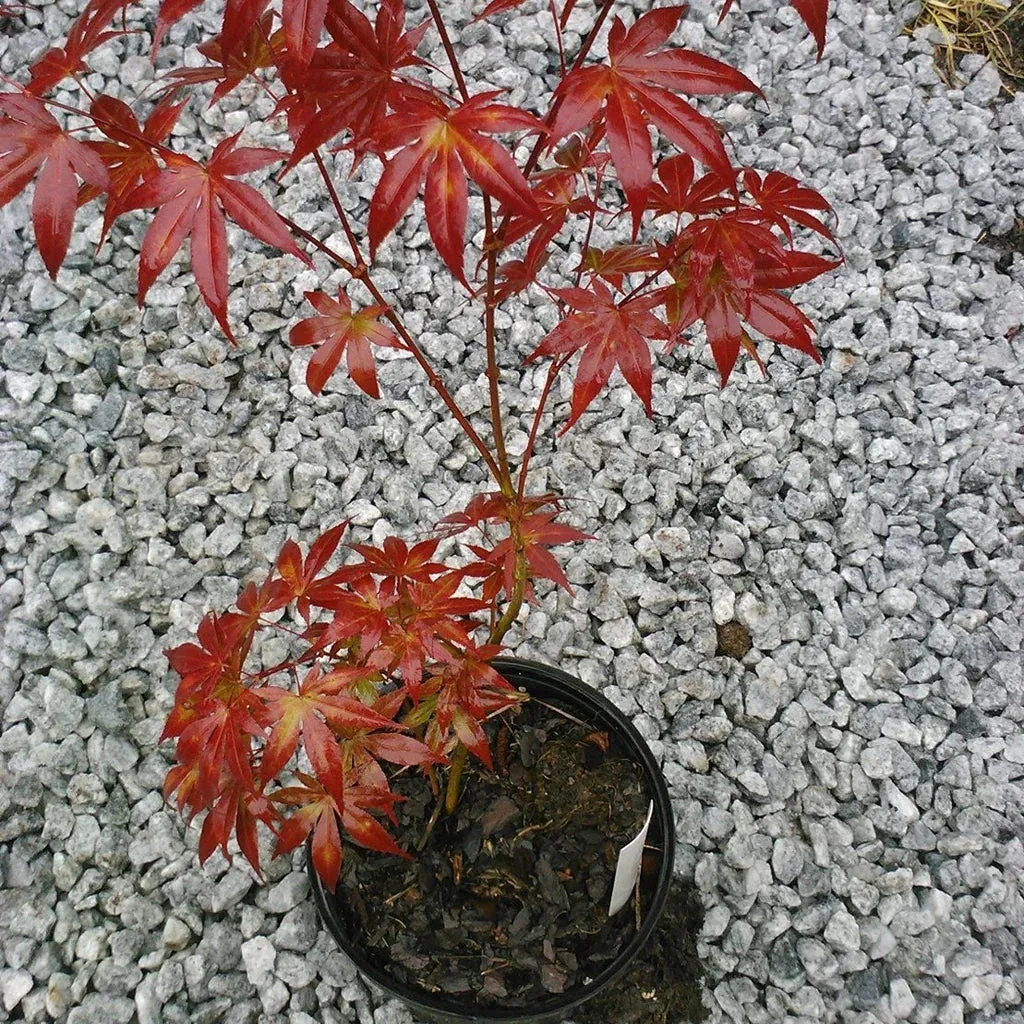
Bloodgood has deep red-purple leaves with 5–7 slender-pointed lobes, and that color is the whole reason most people buy it. The plain species is green in summer, so Bloodgood's dark foliage is a selected trait of this cultivar, not something you get from just any Japanese maple.
That depth of color makes Bloodgood an anchor. Put it in front of a green hedge or a pale wall and it reads as a solid dark shape from across the yard, which is why designers lean on it so often. The color also holds through the heat of summer, so the tree looks much the same in August as it did in June.
What Sango Kaku Gives You
Sango Kaku works the other way around. Its emerging leaves carry a pink flush and then turn pale green as summer goes on. It is a light, fresh, almost chartreuse color that brightens a shady corner instead of weighing it down.
If your garden already has plenty of dark evergreens, a light-leaved maple may be exactly what the picture is missing. If your garden is mostly green, a burgundy tree gives you the contrast. For anyone who wants a tree that stands out against a green backdrop, we point to Bloodgood, because dark foliage separates from green far more than pale green does.
One small caution: Bloodgood's red-purple can slip toward green when it sits in deep shade. If that worry sounds familiar, our guide on why a Bloodgood turns green covers the causes and the fixes.
Tall and Upright Bloodgood Japanese Maple, or Tall and Airy?
Both trees are sold as small ornamental trees, but neither stays shrub-sized forever, and we would rather you plan for that now than at year ten.
How Big Bloodgood Gets
Sources do not agree on a single number. Purdue gives Bloodgood a height of 12–20 feet and a width of 15–20 feet, while an ultimate height of 8–13 feet (2.5–4 meters) is also quoted. The plain species runs 15–25 feet at NC State and 10–20 feet at UF/IFAS. We suggest planning for the larger Bloodgood figures and being pleasantly surprised if yours stays smaller.
Because the width comes close to the height, the crown fills out sideways as well as up. That makes it a good tree for a corner, a lawn edge, or any spot where you want a defined canopy. Our size guide for Bloodgood goes through the details year by year.
How Sango Kaku Carries Itself
Sango Kaku is also a tall, upright maple, and the overall impression is airier, with a lighter canopy and branches that show through the leaves. We do not have a verified height figure for it from our sources, so please check the mature size on the plant tag or with your local extension service before you choose a spot.
The reassuring part is that both trees want the same thing from you: room. Neither belongs two feet from a window, a walkway or a foundation. If your space is tight, pick the location first and the tree second, and remember that a tree you can see in full is a tree you will enjoy.
What the Window Sees in January
This section settles most of the questions we get, because a deciduous tree is bare for months and winter is when you look at it from indoors.
Coral Twigs on Sango Kaku
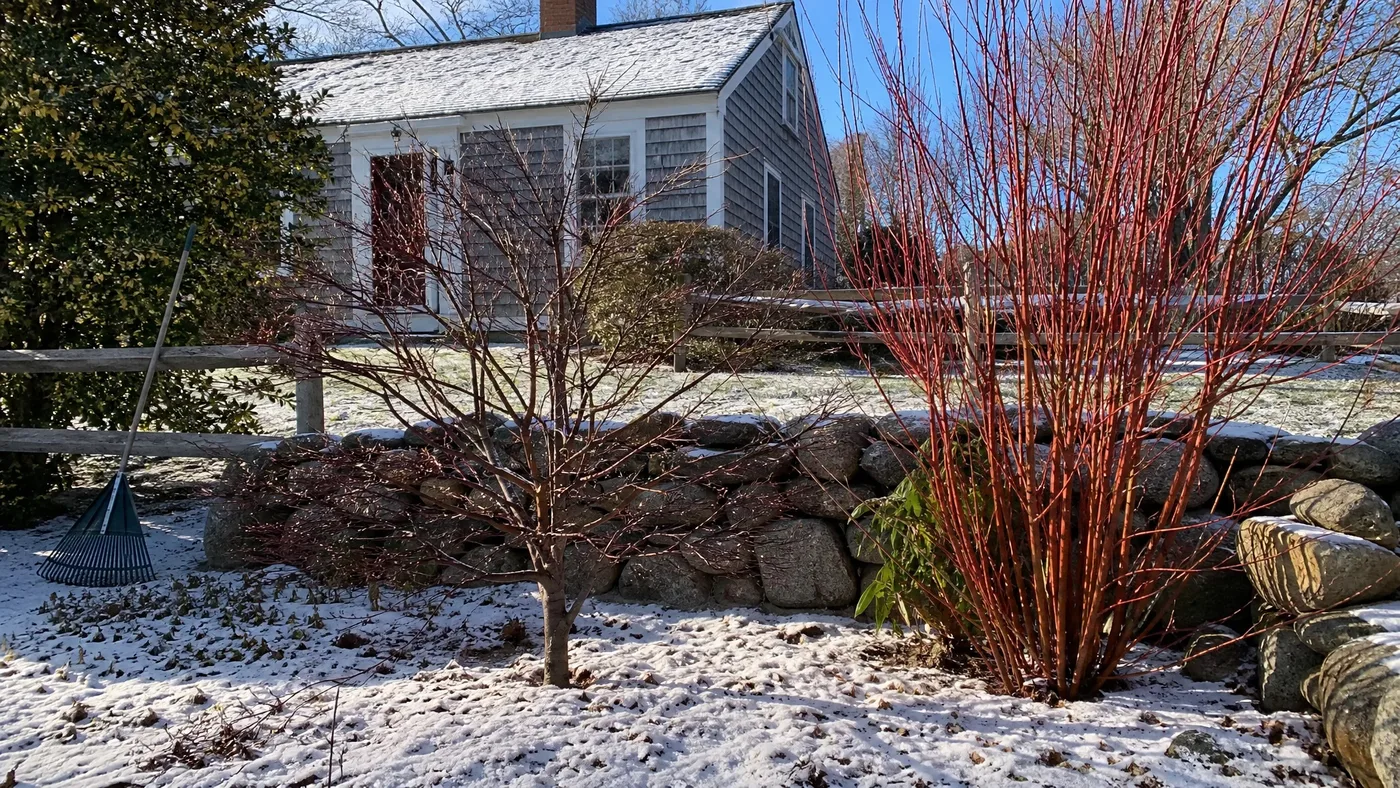
Sango Kaku's bark takes on a coral flush that makes it a valuable tree for adding color to the garden in winter, and that is where the common name coral bark comes from. After the leaves fall, those coral twigs are the tree's whole show, and they glow most on a gray or snowy day.
The color carries from winter into early spring, so you get the display for the full cold season and not just a few weeks of it. Plant it where the low winter sun catches the branches, with evergreens or a plain fence behind, and the effect is hard to miss.
The Quiet Bloodgood Silhouette
Bloodgood's winter picture is different. The bark is a plain gray-brown, and the bare branches make a dark, fine-textured pattern. It is handsome in a quiet way, especially with frost or snow lying on the twigs, but nobody will slow their car to look at it in January.
Here is our honest opinion: if winter interest is your main reason for planting, Bloodgood will disappoint you and Sango Kaku will not. We do not think it is fair to sell a burgundy-leaf tree as a winter feature. That said, against a pale fence or a snowy lawn, Bloodgood's branches look almost like an ink drawing, and some people prefer that calm to a bright color.
Spring and Fall: Where Bloodgood Japanese Maple Pulls Ahead
Outside winter, the two trees trade the lead, and Bloodgood holds it for most of the growing year.
The Long Red Run
Bloodgood's deep burgundy spring and summer foliage turns bright crimson in fall. So the red starts the moment the buds open and carries straight through to leaf drop, with no awkward green stage in between. The small red flowers in spring are easy to miss from a distance, so the leaves do the work.
Sango Kaku opens with a pink flush, which is soft and pretty but short-lived, since the leaves turn pale green as summer progresses. If you love a tree in strong color for the whole season, Bloodgood is the steadier performer, and the spring leaf-out is where the gap is widest.
Gold Against Crimson in Fall
Bloodgood finishes in bright crimson, which echoes its summer color and gives the year a strong ending. The shade can vary from one autumn to the next, and our fall color guide for Bloodgood explains why.
Sango Kaku has its own good fall, with yellow and golden hues. Gold against a blue October sky is lovely, and some people prefer it to crimson. Then the gold drops away and the coral bark takes over, so Sango Kaku has two strong chapters, fall and winter, where Bloodgood has spring, summer and fall.
A Bloodgood Japanese Maple in Sun, Sango Kaku in Shade
Light is where a good tree most often goes wrong, so plan the site before you fall for the color.
Bloodgood and Afternoon Sun
Bloodgood suits full sun or partial shade, and leaf color is best in partial shade although full sun can be tolerated. In hot summers we recommend morning sun and afternoon shade, since the thin, dark leaves take up heat and the edges can crisp and brown in hot wind.
Our guide to Bloodgood light requirements goes deeper. For the species as a whole, dappled shade and protection from drying winds work best, and that suits Bloodgood well.
Where Sango Kaku Is More Forgiving
In our rows, the pale-leaved maple shows heat stress less dramatically than the dark one, and Sango Kaku tolerates a little more sun than Bloodgood does. We have no verified figure for that, so treat it as a rule of thumb and not a guarantee. Afternoon shade and shelter from wind help both trees.
Deep shade does not suit Sango Kaku either, because you want the winter twigs to be visible and the tree to leaf out well. A site with bright light that eases off by mid-afternoon suits both. If your only open spot is full sun with reflected heat from pavement, we would choose Sango Kaku and keep it watered, and save the Bloodgood for the shadier corner.
Choosing the Tree You Will Still Love in Winter
When customers call undecided, we ask one question: in which season do you spend the most time looking at this tree?
Choose Bloodgood If
Pick Bloodgood if your view is mostly from May through October, such as a patio, a deck or a front walk. You get the burgundy anchor, the crimson finish and a tree that makes a green garden look deliberate.
Zones matter too. The species is rated 5a to 8b by NC State and 5B through 8B by UF/IFAS, and our cold-climate winter care guide covers the colder edge of that range.
Choose Sango Kaku If
Pick Sango Kaku if your best view is a kitchen or living room window in the cold months, when you see the tree every morning. The coral twigs are the reward for the whole winter, and the gold fall color is a bonus. Check its hardiness for your zone with your local extension service before you buy, since we have no verified zone range for it here.
If you cannot decide, there is a middle road: plant one where you see it in summer and one where you see it in winter, each with the room it needs.
A Good Spot for Bloodgood Japanese Maple or Sango Kaku
Both of these trees are easy to love, and neither is a mistake. Bloodgood gives you red from spring leaf-out to crimson fall, with plain gray-brown bark in winter. Sango Kaku gives you pale green summers, golden fall and coral twigs through the cold months. Give either one room, shelter from afternoon heat and wind, and moist but well-drained soil, and it will reward you for years.
Bloodgood Japanese Maple
Nursery-grown Bloodgood Japanese Maple in sizes from QT Container, shipped to your door.
From $49.49
Shop Now →If you are still undecided, go with the season you look out at most. We are a small business, and every tree we grow gets patient, unhurried care. Every Bloodgood we ship is potted and packed so it arrives ready to plant, with its roots and branches protected on the way to your yard.