Bloodgood vs Crimson Queen Japanese Maple: Which One to Plant?
If you're shopping for a red Japanese maple, you've likely seen both Bloodgood and Crimson Queen mentioned as top picks. They're both stunning, but they're fundamentally different trees. One grows upright and compact; the other weeps gracefully to the ground. The difference matters more than you might think when you're planting something that could live 80 years or more in your yard.
This comparison will help you see which one fits your space, your garden style, and what you actually want to look at every day.
The Fundamental Difference: Form
The biggest split between these two starts with their basic structure.
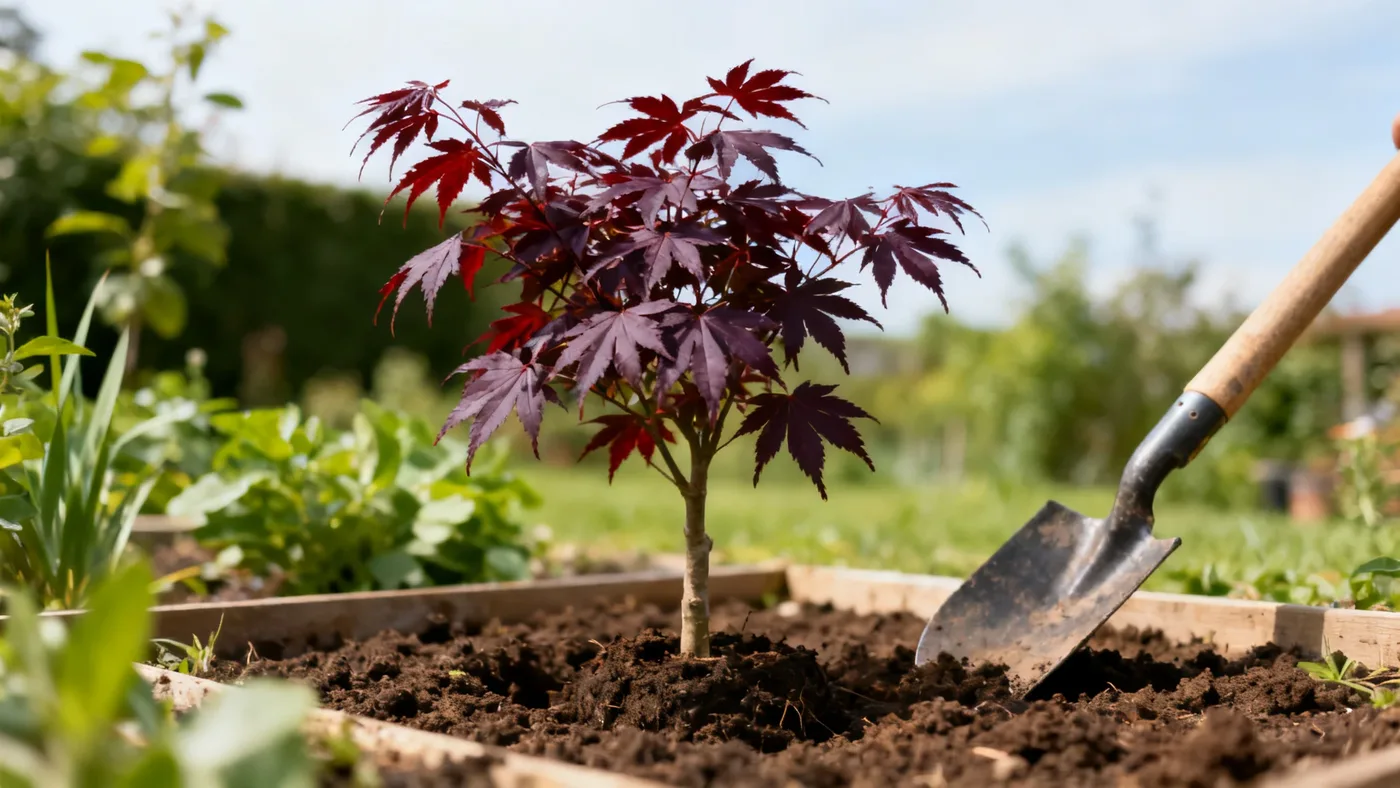
Bloodgood is an upright, vase-shaped tree. Its branches grow outward and slightly upward, creating a tidy, architectural silhouette. This is the classic Japanese maple form that most home gardeners picture when they think of the plant. The trunk is visible from nearly every angle, and the branching structure remains tight and controlled even as the tree matures.
Crimson Queen is a dissectum or weeping cultivar. Its branches are pendulous, meaning they grow downward and drape gracefully toward the ground. The overall shape is more of a mounding or fountain-like form, especially when young. As it ages, the branches can weep so dramatically that they touch or sweep across the soil.
This single difference shapes almost everything else: your spacing decisions, pruning needs, and how the tree reads in your landscape.
Foliage and Color
Both Bloodgood and Crimson Queen display deep red to burgundy foliage throughout the growing season, which is why they're both prized for year-round color. But the shape of that foliage is strikingly different.
Bloodgood leaves are palmate with 5 to 7 lobes, giving them a broader, more familiar maple appearance. They're roughly hand-sized and hold their deep reddish-purple color well into fall, when they shift to crimson and bright red before dropping.
Crimson Queen leaves are finely cut and lacy. The foliage is so dissected that it almost looks feathery at a distance. This fine texture is one of its signature features. The color is equally vibrant but the leaf structure gives the whole tree a softer, more ornamental, almost ethereal quality compared to Bloodgood's bolder presence.
Both hold their color better than many red Japanese maple cultivars in hot or deep-shade conditions, but afternoon shade is still recommended in the hottest parts of zones 8 and 9 to prevent leaf scorch.
Size and Growth Rate
This is where you need to pay close attention to your available space.
Bloodgood reaches a mature height of 15 to 20 feet, with a similar spread of 15 to 20 feet. Growth is slow to moderate, typically around 12 to 18 inches per year, so it takes time to fill its footprint. Even so, at full maturity it's a substantial tree and needs adequate room to develop its characteristic branching structure. It should be spaced 12 to 20 feet from structures or other large trees, depending on your design intention and the mature width you expect.
Crimson Queen is a smaller tree overall. It typically tops out at 8 to 12 feet tall and spreads to about 10 to 15 feet wide when mature (though these figures can vary by growing zone and care). The weeping habit makes it appear even more compact horizontally, and the arching branches can create a dramatic umbrella effect that's actually less imposing than its upright counterpart, even at the same height. This makes it an excellent choice for smaller yards, patios, or container planting when young.
Both are slow-growing, so patience is part of the deal. But if you're working with a modest lot or a tight corner, the size difference alone may settle the question in Crimson Queen's favor.
Growing Requirements Comparison
| Factor | Bloodgood | Crimson Queen |
|---|---|---|
| USDA Zones | 5–8 (zone 9 with afternoon shade) | 5–8 (zone 9 with afternoon shade) |
| Light | Full sun to part shade; afternoon shade in hot climates | Full sun to part shade; afternoon shade in hot climates |
| Water | Moderate, consistent moisture | Moderate, consistent moisture |
| Soil | Well-drained, rich loam; pH 5.5–6.5 (slightly acidic) | Well-drained, rich loam; pH 5.5–6.5 (slightly acidic) |
| Drought Tolerance | Low to moderate when established | Low to moderate when established |
| Salt Tolerance | Low | Low |
| Mature Height | 15–20 ft | 8–12 ft |
| Mature Spread | 15–20 ft | 10–15 ft |
The good news: both cultivars want the same basic growing conditions. They're both selections of Acer palmatum, so their cultural needs overlap almost completely. Neither tolerates salt, poor drainage, or prolonged drought without regular supplemental water once established. Both prefer slightly acidic, well-drained soil rich in organic matter.
Pros and Cons
Bloodgood Japanese Maple
Pros:
- Iconic upright form that works as a specimen tree or focal point
- Bold palmate foliage creates strong visual impact
- Holds deep red color exceptionally well through the growing season
- Branches visible year-round add winter interest to the landscape
- Easier to site near patios or walkways because the form is predictable and controllable
- Works as a large container plant or in constrained spaces, unlike weeping types
- Minimal pruning required compared to some cultivars
Cons:
- Requires more space at full maturity (15–20 ft height and spread)
- Not ideal for very small yards or tight urban lots
- Less dramatic texture than finely dissected cultivars
- Needs consistent water and well-drained soil; sensitive to girdling roots if planted too deep
- Leaf scorch can occur in extreme heat, wind, or full sun in hot climates
Crimson Queen Japanese Maple
Pros:
- Smaller mature size makes it perfect for modest gardens and containers
- Weeping form is more ornamental and unusual than upright types
- Finely cut foliage creates a delicate, sophisticated appearance
- The graceful drooping branches can frame a vista or soften hardscape
- Excellent for Japanese gardens, Zen landscapes, and Asian-inspired designs
- Can be trained or limbed up to create an elegant small patio tree
Cons:
- Weeping branches require more space horizontally than vertically, so it's not suitable for very narrow planting areas
- The drooping form means lower branches may touch soil or mulch, increasing disease risk in wet conditions
- More delicate appearance can look sparse compared to a full upright tree
- Container growing is necessary in colder zones (below zone 5) and requires winter protection in zones 5–6
- Harder to find in the nursery trade than Bloodgood
- More expensive when available
Best For: Matching the Tree to Your Needs
Choose Bloodgood if you want:
- A focal point specimen tree with strong visual presence
- Year-round architectural interest from visible branching
- A tree that holds deep red color exceptionally well
- A medium-sized tree for a conventional landscape layout
- A reliable choice that's widely available and affordable
- A container-friendly option when young
- A tree to anchor a perennial border or mixed foundation planting
Choose Crimson Queen if you want:
- A smaller, more delicate tree for a modest space
- Ornamental, feathery foliage as the defining feature
- A weeping form for a Japanese or Zen garden aesthetic
- A tree that works well as a patio or courtyard focal point
- The option to keep the tree in a large container for several years
- A tree with more texture and movement in its branching
- A specimen that commands attention for its unusual form, not just color
The Verdict
There's no "wrong" choice between these two. They're both outstanding trees that earn their place in ornamental gardens. The decision comes down to three things: your available space, your garden design style, and how much size you're comfortable managing.
If you have room for a 15 to 20 foot upright specimen and you want bold, reliable deep red color from a tried-and-true cultivar, Bloodgood is your answer. It's the most versatile, most available, and most forgiving of the two. It works in conventional landscapes and stands out immediately.
If you're working with a smaller footprint or you want the sophistication of a weeping form with lacy foliage, Crimson Queen delivers a more refined aesthetic. It's also easier to accommodate in a container while young, which gives you flexibility if you're testing the site or planning ahead.
Both are slow-growing, long-lived investments. Both reward consistent moisture and well-drained soil. Both hold their red color better than many alternatives. Choose the one that fits your space and matches the mood you want to create.
Quick Reference
| Attribute | Bloodgood | Crimson Queen |
|---|---|---|
| Form | Upright, vase-shaped | Weeping, mounding |
| Leaf Type | Palmate, 5–7 lobes, bold | Finely dissected, lacy |
| Foliage Color | Deep reddish-purple to burgundy | Deep reddish-purple to burgundy |
| Fall Color | Crimson to bright red | Crimson to bright red |
| Height at Maturity | 15–20 ft | 8–12 ft |
| Spread at Maturity | 15–20 ft | 10–15 ft |
| Growth Rate | Slow to moderate (12–18 in/yr) | Slow to moderate (varies by zone) |
| Hardiness | Zones 5–8 (zone 9 w/ shade) | Zones 5–8 (zone 9 w/ shade) |
| Light Needs | Full sun to part shade | Full sun to part shade |
| Best For | Focal specimen, conventional gardens | Small spaces, Zen gardens, containers |
| Availability | Widely available, most affordable | Less common, typically pricier |