Grafted or Seedling? Buying a True Bloodgood Japanese Maple
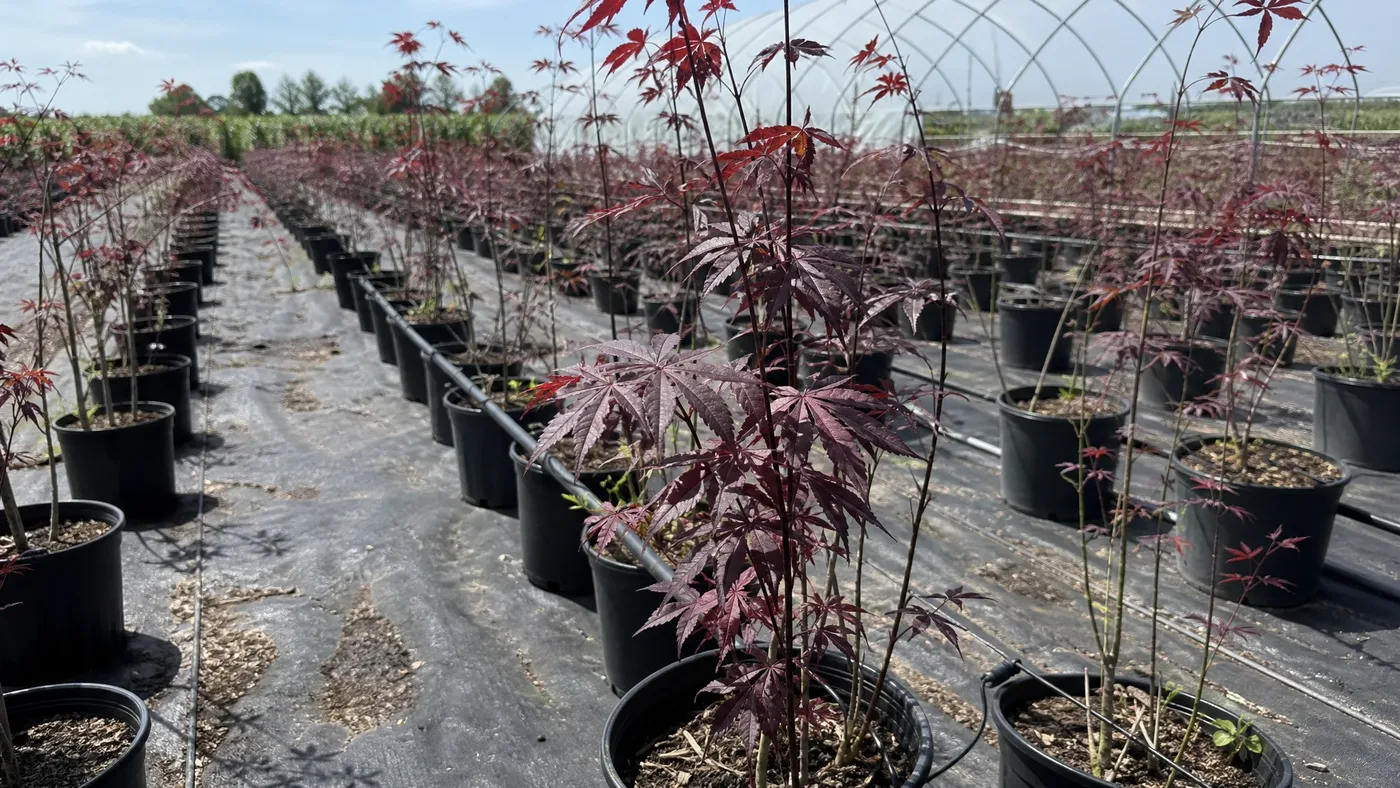
In our rows this season, the idea we found ourselves repeating most was a definition. A cultivar is a single individual tree, cloned: every true Bloodgood Japanese Maple is a piece of one original plant, carried forward by propagation.
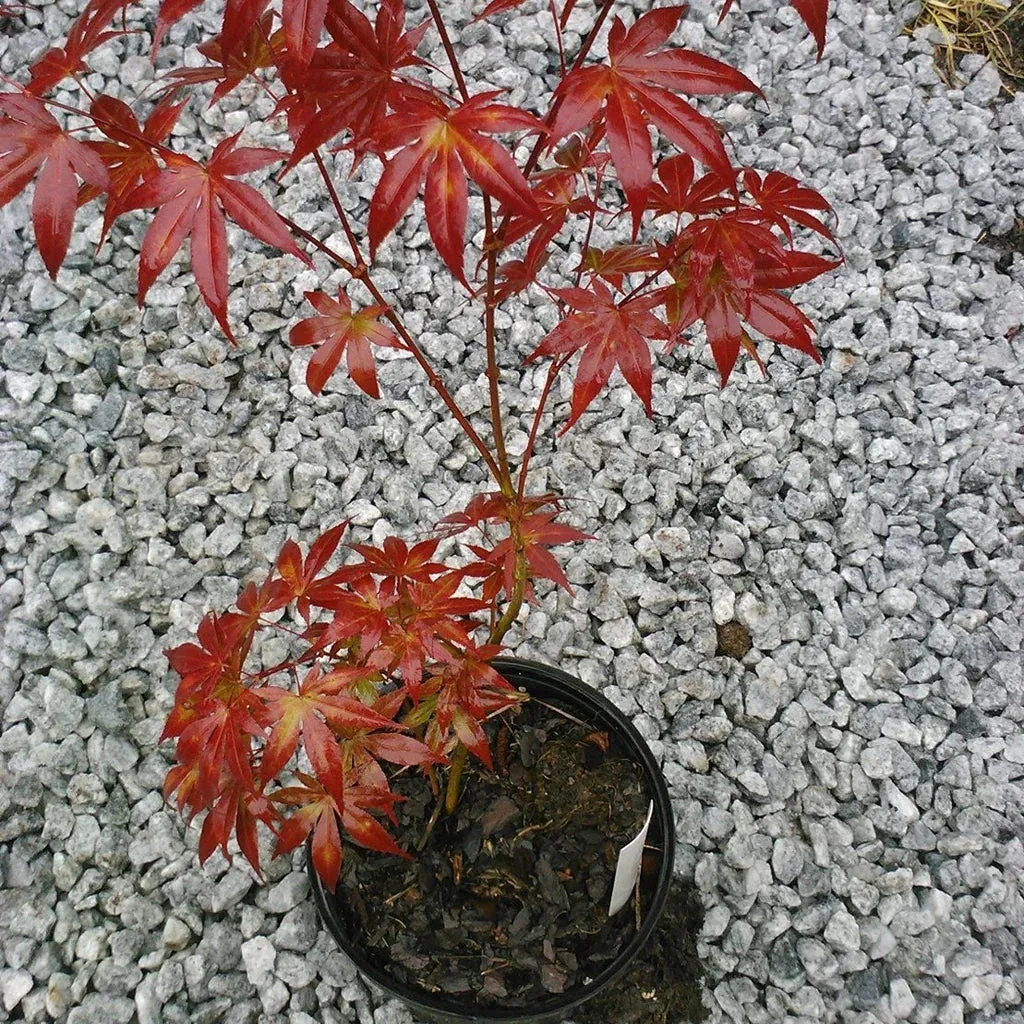
That makes the name on a pot label a claim, not proof. A seedling can wear the same tag and look the part while it is dormant, then leaf out in a color you never chose.
We'll walk you through the beliefs that trip up most buyers, then give you the checks that settle them: what grafting really does, how atropurpureum seedlings end up sold as Bloodgood, what a graft union can and cannot prove, and where the name came from. It matters because you will live with this tree for decades, and a true Bloodgood gives you deep red-purple leaves you can plan a border around.
Does a Seedling Count as Bloodgood Japanese Maple?
Many buyers assume that any red-leaved Japanese maple with the right look can carry the name. We start with the words themselves, then settle the question.
Cultivar and Clone, Defined
Two terms do most of the work in this guide, and both are simpler than they sound.
A cultivar is a named plant selected for particular traits and kept the same on purpose. A clone is any plant made from living tissue of one original, so every clone shares that original's genes exactly. Bloodgood is a cultivar, which means every true one is a clone of the same tree.
A seed works differently. It forms after pollination, so it mixes genes from two parents and produces a new individual that nobody has seen before.
What the Sources Say About Seed
Here is how the belief holds up against the references we trust.
Japanese maples can be grown from seed, but named cultivars and selections will not breed true. That settles it. A tree grown from Bloodgood seed is a seedling, not a Bloodgood, even if the seed fell from a true Bloodgood in a neighbor's yard.
It may still be a handsome tree, and some are. But if the tag says Bloodgood, you are owed a cloned, grafted tree. Anything else should be sold under a plain description such as red Japanese maple seedling, and priced to match.
Grafting Is Only a Nursery Shortcut
We hear this belief in several forms: grafting cuts corners, or a grafted tree is somehow less real than one grown from seed. The truth runs the other way.
What Grafting Does
A graft joins two plants into one, and each half has a job.
The top, called the scion, is a piece of wood from a true Bloodgood. The bottom, the rootstock, is a separate plant that supplies the roots. The place where they knit together is the graft union. Because the scion is Bloodgood wood, everything that grows from it is Bloodgood, whatever the roots underneath started as.
Why It Is the Standard Method
Seed cannot repeat the tree, so propagation has to be vegetative, and the references point to grafting first.
Most cultivars are grafted and can be grown as a single or multi-stemmed small tree. Bloodgood can be propagated by grafting or softwood cuttings. Either route makes a clone, and a rooted cutting would be just as true. Grafting is simply the method we see named most.
Home grafting is another matter. Commercial nurseries graft maples, but it is not an easy technique for most home gardeners. If you want a second Bloodgood, buy one rather than gathering seed from the first.
Atropurpureum Seedlings Wearing the Bloodgood Japanese Maple Label
Of all the beliefs, this one costs buyers the most, because the substitute looks so close to the real thing.
How the Substitution Happens
It rarely starts as fraud. More often it is a chain of loose naming.
Atropurpureum is a descriptive name used for purple-leaved Acer palmatum. It describes a look and does not name one tree. Seed from red-leaved maples produces a mixed batch, and some of those seedlings do come up reddish. A grower or reseller who sees red in the batch may tag the whole lot Bloodgood, and the tag then travels with the trees.
Reading a Tag
Tag wording tells you more than the photo printed on it. This table shows how to read the common versions.
| Tag wording | What it promises |
|---|---|
| Acer palmatum 'Bloodgood' | A cultivar name in single quotes, which claims a cloned tree. Still worth checking against the union and the leaves. |
| Acer palmatum atropurpureum | A purple-leaved type. It does not promise Bloodgood, and the tree may well be seedling-grown. |
| Red Japanese maple | A color description only. It could be any red cultivar or a seedling. |
| Bloodgood type or Bloodgood style | A comparison, not an identity. Treat it as a different tree. |
Some listings combine the two names. If you see that, ask the seller which one they mean. A cultivar name with no word on grafting is a starting point for questions, not an answer.
A Smooth Graft Union Guarantees the Cultivar
Buyers often tell us they look for the graft, find a clean one and consider the matter closed. A union is useful evidence, but only for one narrow question.
Where to Look and What You See
The union sits low on the trunk, and on a young tree it is usually easy to find.
Look near the base for a slight swelling, a change in bark texture or a diagonal scar line where two pieces were joined. On older trees the bark grows over it and it fades to a gentle bulge. The join should be knitted shut, with no gaps, cracks or weeping.
Also look below the union for shoots. Growth from the rootstock often looks different from the scion, with plainer, greener leaves, and it should be removed.
What a Union Cannot Prove
A union answers one question and leaves the next one open.
It proves the tree was grafted, so the top is a clone of something. It does not prove what that something was. A nursery that grafted from the wrong scion wood, or from a seedling that merely looked red, produces a flawless union under a false name.
Customers usually ask us whether a smooth union means a better tree. Smooth means well healed, which is good news for strength, but it says nothing about the name. A tree with no visible union is a seedling, a rooted cutting or an old graft that has healed over, so ask which.
Once you trust the tree, our guide to planting a Bloodgood Japanese maple covers depth and hole preparation.
A Seedling Will Behave Just Like Bloodgood Japanese Maple
This belief sits behind most disappointed emails, so we want to be concrete about color, vigor and form. Think of seedlings as siblings and a clone as an identical twin. Brothers and sisters can differ in height, coloring and temperament, while twins differ only by circumstances.
Color
Color is the first place the siblings part ways.
A true Bloodgood has deep red-purple leaves with 5 to 7 slender-pointed lobes. The foliage is deep burgundy in spring and summer and turns bright crimson in fall. The species, by contrast, shows green foliage in summer, and a seedling can land anywhere between those two.
The Yale Nature Walk notes that Acer palmatum undergoes considerable genetic variation, which is why leaf size, shape and color differ even among seedlings from one parent. If a true Bloodgood of yours is greening, that is a separate problem, covered in why a Bloodgood turns green.
Vigor and Form
Size and shape are harder to judge at purchase, which makes them the bigger gamble.
Bloodgood has an ultimate height of about 8 to 13 feet, while Purdue lists 12 to 20 feet. The species runs 15 to 25 feet. A seedling carries no such promise, so it may stay smaller or outgrow the spot you picked. Our page on how big a Bloodgood gets describes a true tree.
Branch habit follows the same pattern. A grafted Bloodgood grows as a single or multi-stemmed small tree. Seedlings vary in structure, and you often see it only after several seasons. So the belief fails: a seedling may be lovely, but its color and size are a gamble you take on the tree's behalf.
Where the Bloodgood Japanese Maple Name Came From
Buyers sometimes ask for the tree's history as proof of authenticity. We'll tell you what we can stand behind and where we stop.
What We Can and Cannot Say
Honest limits are more useful here than a tidy story.
Bloodgood is a cultivar of Acer palmatum, the Japanese maple, valued for its red-purple leaves. The sources we rely on for this guide do not name a breeder, a place or a year, so we will not offer any. A confident origin story with an exact date is worth asking a seller to document. For the recorded history, public gardens and maple collections are the right people to ask.
How the Name Spread Through the Trade
The part that matters for your purchase is how a single tree became many.
Because the tree can only be repeated by grafting or cuttings, every true Bloodgood descends from wood passed from one nursery to the next. Each hand-off is a chance for a mix-up, and popularity adds pressure. A name that sells attracts look-alikes, and the label traveled faster than anyone's checking.
A well-known name does give you one advantage. Plenty of published descriptions exist, so you can hold a seller's claims against them: deep red-purple leaves, 5 to 7 lobes, crimson in fall.
Telling a True Bloodgood Japanese Maple Apart
No single check is enough, so we use several in sequence and let each rule out what the last cannot.
Checks You Can Make Yourself
These checks take a few minutes at the pot and cost nothing.
- Read the tag, and treat a cultivar name in single quotes as a claim of a clone, while atropurpureum alone or "Bloodgood type" is not.
- Find the graft union near the base of the trunk and confirm it has healed cleanly, with no growth coming from below it.
- Look at leaf color on every branch, which should be deep red-purple with 5 to 7 slender-pointed lobes. Green leaves or sharp differences between branches are warnings.
- Compare trees from the same batch. Clones match, so a spread of color and leaf shape among trees under one label points to seedlings.
- Check the size against the container. Our guide to container sizes helps you judge whether the trunk and height make sense.
- Confirm in autumn when you can, since a true tree turns red, as described in our fall color guide.
What to Ask the Seller
Questions work better than suspicion, and an honest grower answers them easily.
Ask whether the tree is grafted or seedling-grown. Ask where the scion wood came from, and whether you can see the union on the very tree you are buying. Ask who wrote the label, the grower or a reseller. A grower who propagates their own trees can usually answer all three in a sentence each.
One Question to Put to Any Bloodgood Seller
A true Bloodgood is a clone, and in practice that means a grafted tree whose scion came from a Bloodgood. Seed cannot repeat it, a smooth union only proves a graft, and atropurpureum on a tag describes a look without naming a tree. Check the tag, the union, the leaves and the batch.
Bloodgood Japanese Maple
Nursery-grown Bloodgood Japanese Maple in sizes from QT Container, shipped to your door.
From $49.49
Shop Now →If you carry one question to a seller, make it this: can you show me where this tree was grafted and tell me what wood it was grafted from? A good answer points to the union without hesitation, names Bloodgood scion wood from the grower's own stock, and admits plainly when a detail is unknown. Our growers watch Bloodgood through the year, from the color of the first leaves to the knit of each union and the turn in fall, and we are growers with our own farms who grow and sell top-quality trees.